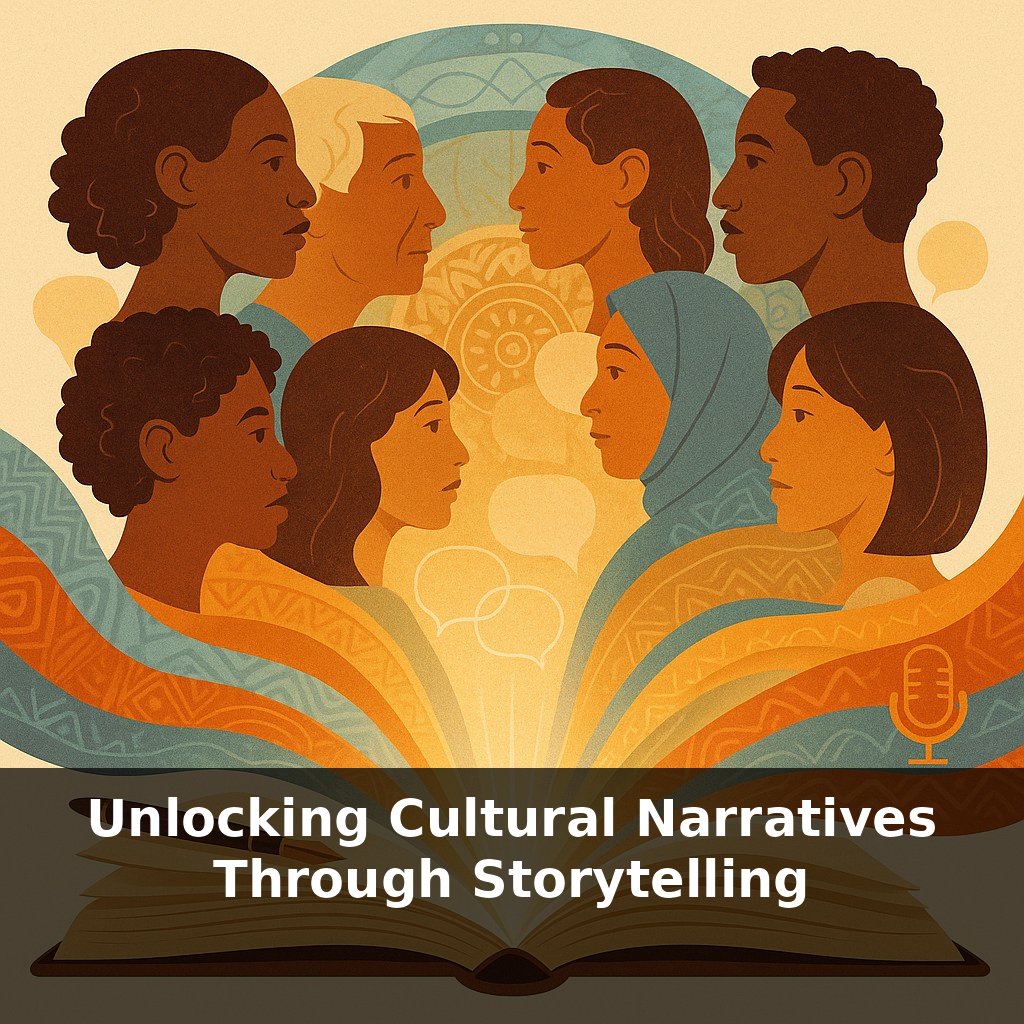
About half the world’s languages have never been written down. A grandmother sings a lullaby, a fisherman recites the tides from memory, a healer chants plant names in the dark. The paradox is this: the stories most “unrecorded” on paper may be the ones most fully alive.
Those moments aren’t “content”—they’re living archives with no pause button, no save icon, no automatic backup. Lose the person, and you risk losing the memory. Yet, for the first time in history, the tools in many people’s pockets can keep pace with the spoken word: a cheap smartphone can capture a chant on a riverbank as faithfully as a studio once could. Across the world, communities are turning kitchens into recording booths and village squares into editing rooms, not to fossilise what’s said, but to keep it circulating. A simple voice note can travel from a remote valley to a global library in hours, carrying rhythm, accent, and breath. But here’s the tension: how do we amplify these voices without extracting them—how do we record without turning relatives into “sources” and homes into “field sites”?
In many places, oral traditions are already shifting from “endangered” to “in demand.” UNESCO now tracks hundreds of recognised performances, and projects like StoryCorps or the Māori Te Reo archive show how careful recording can expand—rather than shrink—the circle of listeners. What’s changing isn’t only the technology but the ownership model: grandfathers curating playlists, youth councils setting access rules, elders approving edits. Instead of a one-way export to distant institutions, communities are experimenting with local password‑protected libraries, pop‑up listening sessions, and consent‑driven remixing.
When people talk about “preserving” oral traditions, they often picture a vault: locked shelves, perfect recordings, silence. But the most effective projects today work more like rehearsal spaces than museums—places where material is practised, adapted, argued over, and sometimes withheld on purpose.
That starts with how recordings are made. In many Indigenous radio projects in Latin America and Australia, the person holding the mic is a local youth, not an outside expert. They don’t just “collect” performances; they co‑produce them, asking elders what should stay off‑record, who can hear sacred sections, and when a story is “ready.” The result is less polished but more accurate to community priorities: some clips are edited into public podcasts, others are stored under restricted access, and some are deliberately left as fleeting, one‑time events.
Context is the other invisible track. A bare audio file can’t tell you whether a proverb is joking, sacred, or tied to a specific conflict. That’s why projects like Te Reo archives and StoryCorps attach layered metadata: who’s speaking, where, in which season, for what purpose, and under what permissions. Increasingly, communities are adding “narration around the narration”—short commentaries by younger speakers explaining slang, clan histories, or land references for future listeners who may share bloodlines but not background.
Translation is treated less as a one‑way bridge and more as a set of parallel paths. Some projects create multilingual “stacked” recordings: the original performance, followed by a rough explanation for insiders who know related dialects, and only then a carefully negotiated version for national or global audiences. Instead of smoothing out every ambiguity, translators flag untranslatable concepts and, crucially, who has the right to interpret them.
Ethical frameworks tie this together. Community charters now spell out who owns the recordings, how revenue from platforms like Audible is shared, and how to handle takedown requests when a family or clan changes its mind. Rather than freezing the past, these agreements acknowledge that relationships, politics, and even the meanings of old epics shift over time—so access rules and descriptions are designed to be revised, not carved in stone.
A community radio station in a coastal town starts hosting “memory hours.” Elders drop by with work songs, protest chants, or jokes from migration days. Youth volunteers run the mixer, but an auntie decides when the red “record” light goes off for parts meant only for those in the room. Later, they tag each clip not just by date, but by mood—“for children,” “for healing,” “for teasing leaders”—so future listeners know how to receive it.
Elsewhere, a language collective treats their archive like a rotating gallery. Each month they “exhibit” three recordings in a public playlist, paired with new responses: a rap verse, a dance remix, a short monologue reflecting on a proverb’s relevance to climate or land rights. Material can move back into the private vault if families request it, or if a ritual becomes sensitive due to local events. The point isn’t to make a perfect, permanent exhibit, but to keep curating: revisiting, re‑labeling, and sometimes repainting the frame as the community itself changes.
5G, local recorders, and community platforms could turn whole villages into co‑curated soundscapes, where performance, consent, and access rules update as quickly as a group chat. Synthetic voice tools might let future singers duet with ancestors, but only if cultural protocols travel with the code. Think of each recording less as a relic than as a studio session: layered, revisitable, and open to new collaborators under community direction, not platform default settings.
Conclusion: Oral traditions gain new futures when microphones, memory, and mutual consent move together. A kitchen chat can become a reference for climate claims, a chant can guide land mapping, a joke can soften a truth in court. Your role might be tiny—sharing an elder’s blessing before a protest—but like a lantern on a trail, it can change how others walk.
To go deeper, here are 3 next steps: (1) Pick one story you heard about in the episode—say, a grandparent’s migration tale or a local legend—and record it today using the free app Otter.ai, then export both the audio and transcript into a folder titled “Family/Community Oral Archive – Volume 1.” (2) Spend 20 minutes reading (or sampling via Amazon/Google Books) *Storyworthy* by Matthew Dicks or *Braiding Sweetgrass* by Robin Wall Kimmerer, and highlight at least three storytelling moves (like repetition, imagery, or humor) you want to try in your own oral retellings. (3) Open YouTube or Spotify and search for a traditional storyteller from the culture mentioned in the episode (for example, “griot storytelling West Africa” or “Dinétah Navajo storytelling”), then listen to one performance and jot three timestamped moments you want to imitate in your next live telling for friends or family.