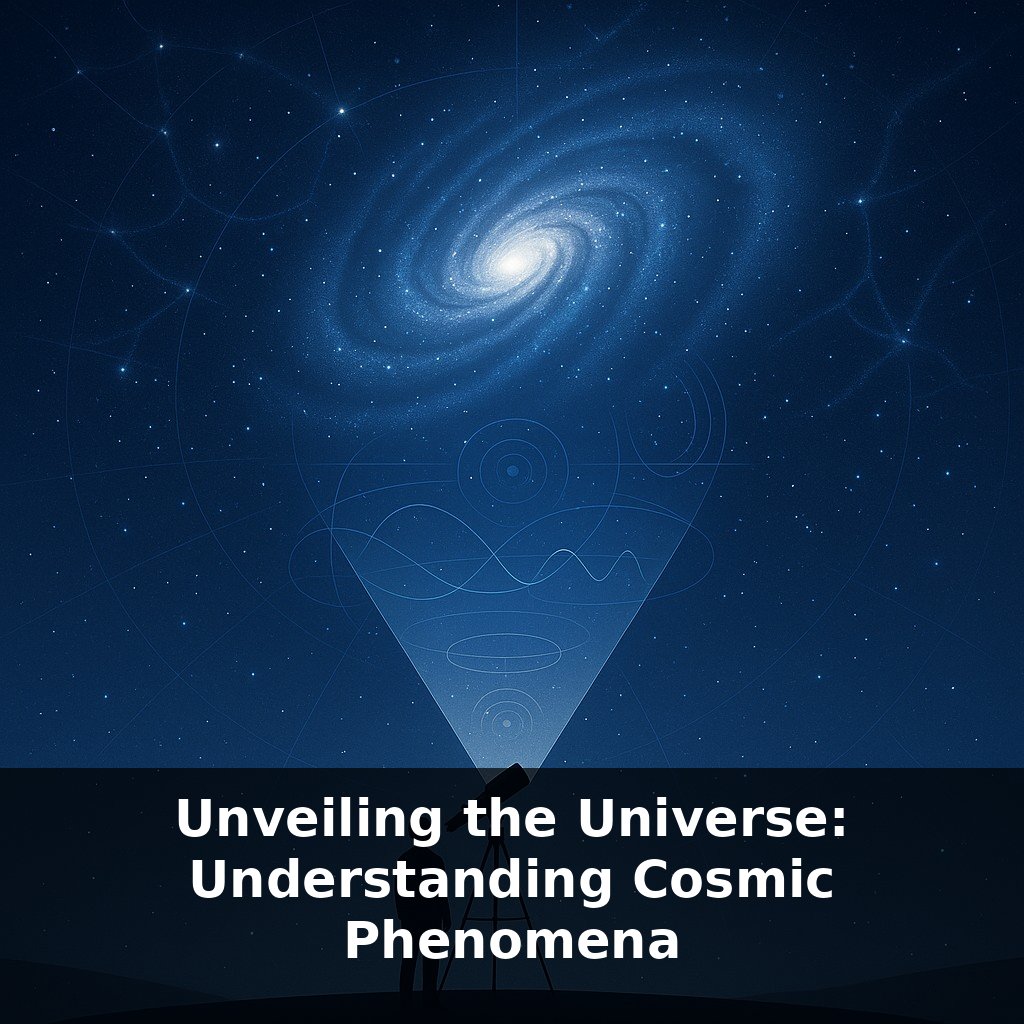
Somewhere overhead, the sky is being scanned so fast that every few nights we have a fresh “movie” of the entire southern hemisphere. Yet we’re still missing most of the action—because light is only one voice. The real story starts when the universe speaks in several languages at once.
A single cosmic event can now set off alarms in labs scattered across Earth. A blip in a gravitational‑wave detector pings observatories on mountaintops; a high‑energy neutrino in Antarctic ice triggers telescopes to swivel; space‑based instruments comb X‑ray and gamma‑ray skies for a flash that might last less than a heartbeat. Multimessenger astronomy is the art of chasing these fleeting coincidences and turning them into stories we can trust. It’s less like staring at one beautiful photograph and more like following a breaking news story across channels, each adding a crucial detail. With new facilities like IceCube, Rubin, and upgraded wave detectors coming online, this coordination is shifting from rare, lucky catch to daily routine—inviting not just professionals but volunteers at home to help decide which cosmic alerts become discoveries.
Instead of waiting passively, today’s observatories subscribe to an automated “cosmic group chat.” When one instrument spots something unusual, it blasts out coordinates within seconds to hundreds of partners on Earth and in orbit. Software filters decide what looks boring and what could be historic. The timing is brutal: some signals fade in minutes, others in days. To keep up, teams rehearse joint “fire drills,” testing how fast telescopes can pivot, data can be shared, and humans—plus algorithms—can agree on what the sky is really trying to tell us.
Call‑outs from that group chat only matter if we can combine them into one coherent story. That’s where the four “messengers” each earn their role.
Start with the heavy hitters: spacetime ripples from a merger give you the masses, spins, and distance of the compact objects involved. On their own, they tell you “two things collided, roughly here, roughly this far away.” But pair that with a rapidly fading flash in optical and infrared and you suddenly know *what kind* of collision it was. That’s how GW170817 went from “some merger” to “a neutron‑star smashup that forges gold and platinum,” and why models of how fast the universe expands had to be re‑checked afterward.
High‑energy neutrino detections add another layer. When IceCube flags a neutrino with a precise direction and orbiting telescopes then spot a flaring active galaxy in that same patch, you don’t just have a coincidence—you have evidence that supermassive black holes can accelerate particles to energies far beyond human accelerators. Cosmic rays then close the loop: their arrival directions are smeared by magnetic fields, but when their energy spectrum and composition line up with what neutrino and gamma‑ray data suggest, you can finally pin down likely launch sites.
Next‑generation facilities will sharpen each voice. The Rubin Observatory’s rapid sky coverage will reveal optical counterparts to many daily mergers, not just the bright, lucky ones. Upgraded wave detectors will hear fainter, more distant events, pushing observations deeper into cosmic history. Planned neutrino observatories in the Northern Hemisphere will complement IceCube’s Antarctic view, turning Earth itself into a kind of stereoscopic detector.
The real revolution, though, is in how all this information is shared. Open alert streams and public archives mean an advanced amateur with a modest telescope or a laptop can meaningfully contribute. When a new alert lands, machine‑learning systems will propose likely interpretations, but humans—spread across professional teams, backyard observatories, and citizen‑science platforms—will still decide which weird light curve, odd spectrum, or out‑of‑place flicker deserves a closer look.
A thunderstorm is easier to understand when you don’t just *see* lightning but also *hear* thunder, feel the pressure change, and watch the radar. In practice, that’s how researchers now treat extreme cosmic weather. A short burst of high‑energy particles might appear first in a space telescope’s feed; seconds later, a catalog cross‑match reveals a known galaxy in that direction; minutes after that, ground‑based spectra hint at fast‑moving material rich in heavy elements. By stacking these clues, scientists can test whether an event fits existing models or demands something new, like an unexpected kind of stellar remnant. Even timing offsets carry meaning: if one messenger lags another by a fraction of a second, that delay can probe exotic physics—such as tiny violations of relativity or hints of interactions with dark sectors. In the coming decade, this layering will be routine: dozens of overlapping datasets for a single transient, all archived so future students can re‑ask questions no one has yet thought to pose.
Future observatories will treat each event like a live concert recorded from many seats at once: close‑up, balcony, even backstage. Cross‑checking these viewpoints could expose tiny cracks in today’s “standard model” of cosmology, or confirm that gravity behaves differently on the largest scales. You might help flag an odd signal whose pattern hints at unknown particles, or even a new kind of remnant star that doesn’t fit neutron‑star or black‑hole categories.
Soon, “missing” events will mostly be those we choose not to chase. As more instruments come online, the challenge shifts from detection to interpretation—like sorting overlapping melodies in a dense jazz improv. Your lifetime will span this transition from occasional alerts to a continuous cosmic soundtrack we’re only beginning to learn how to read.
Try this experiment: Tonight, pick one transient cosmic event you can actually track—like a known pulsar, a recent supernova remnant, or a gravitational-wave candidate listed on the LIGO/Virgo public alerts page—and follow it across *at least two* “messengers” (e.g., its light curve on ZTF or Gaia plus any neutrino or GW data, if available). Open two tabs or apps (for example, Stellarium or SkySafari for the sky view, and an archive like NASA’s HEASARC or a multimessenger portal) and see how the same object “sounds” differently in photons vs. waves/particles. Then, map that idea onto your life by choosing one decision or goal you’re wrestling with and deliberately observe it through two distinct “channels” (e.g., numbers/data vs. conversations/feelings) for 24 hours, noting how your conclusion changes when you treat it like a multimessenger signal instead of a single data point.