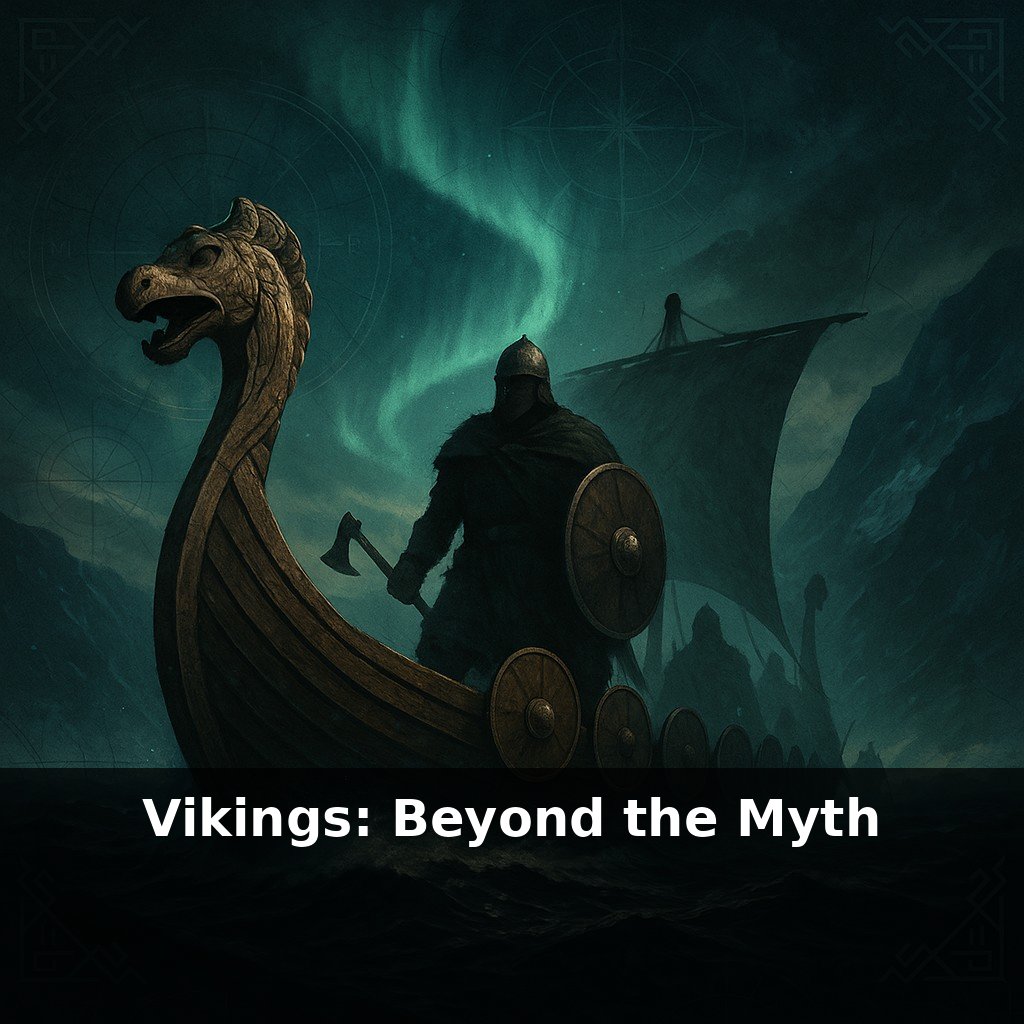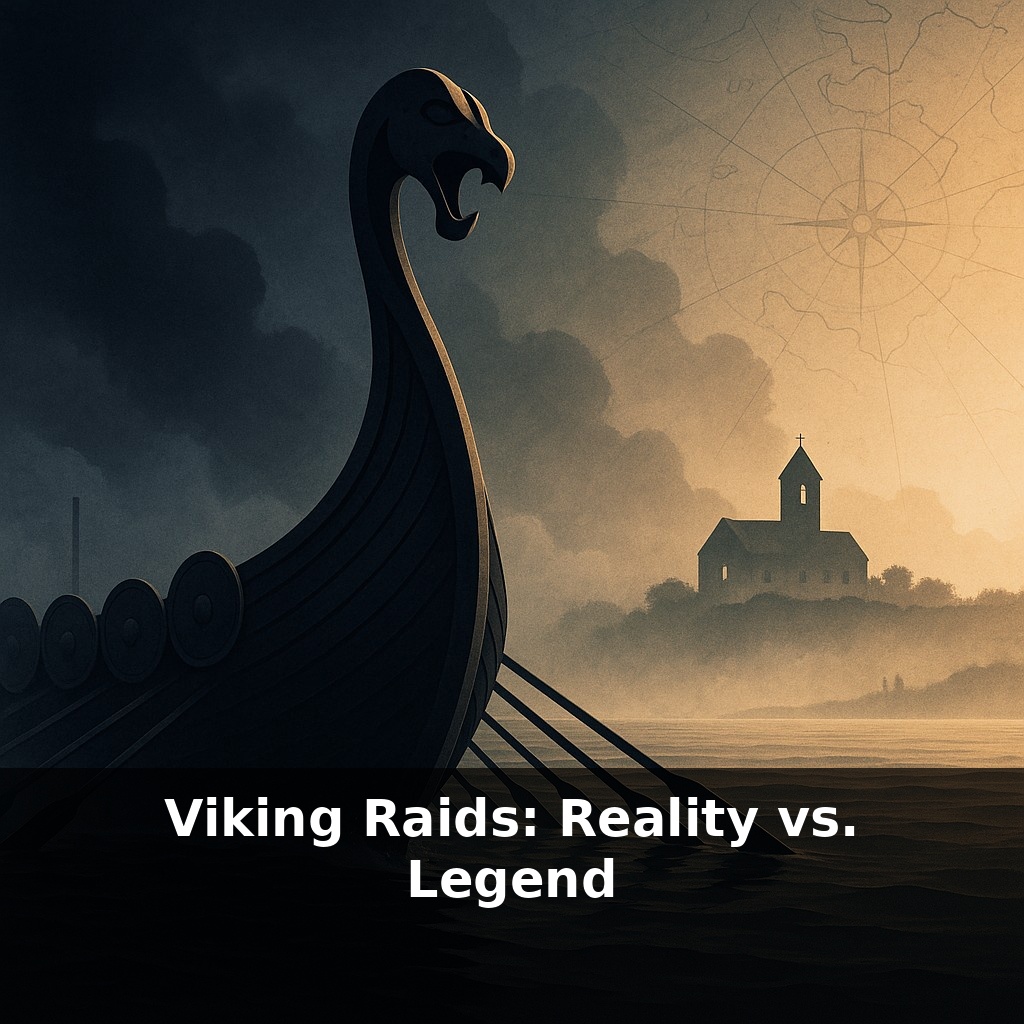
Monks heard them before they saw them: oars beating like a war drum, a black dragon-ship sliding out of morning fog. Here’s the twist—those “bloodthirsty savages” were also shrewd entrepreneurs, reading Europe’s weaknesses like a profit map. Who were they really?
They weren’t raiding at random. They knew which monasteries stored portable wealth, which river systems cut deep into a kingdom, which lords were busy feuding instead of guarding their coasts. To a Viking captain, a political crisis in Francia or a disputed succession in England looked less like “European history” and more like a tide chart: a signal that defenses would be thin and payoffs high.
This is where the legend distorts the reality. The stories zoom in on flaming roofs and clashing steel, but skip the quiet work behind it all: scouting harbors, timing the seasons, building networks of informants and local allies.
Think of how a good navigator treats the sea—not as chaos, but as patterned and predictable if you watch closely enough. Viking raiders did the same with human landscapes, reading power and weakness the way others read wind and wave.
Their world was changing fast. Population was rising in Scandinavia, farmland was finite, and local chiefs were busy fusing power into larger kingdoms. That meant fewer safe havens for ambitious young warriors and more pressure to look outward. At the same time, Christian Europe was rich but distracted: rival kings feuding, coastlines thinly guarded, river towns swollen with trade. Archaeology adds another layer—hoards of hacked-up silver, imported glass, and exotic coins show how raids, trade, and ransom blurred together like ingredients in a stew, all feeding the same hunger for status and survival.
Most raids started small. A local chieftain might gather a few ships’ worth of men for a single summer, test a new coastline, and be back home before the snows. Success bred ambition: a profitable hit on an isolated church could, within a generation, evolve into overwintering bases, tribute agreements, even full-scale conquest. Archaeology along the English and Irish coasts shows this escalation in layers—early fire-scarred sites, then fortified river camps, then planned towns with workshops and marketplaces.
The people on those ships weren’t a uniform mass. Some were landless younger sons looking for a stake, others seasoned fighters tied to a lord, others craftsmen who might raid one year and trade the next. Isotope analysis of teeth from burial grounds at places like Repton in England reveals a mix of origins: not only Scandinavians, but locals who joined, married in, or were absorbed as these groups settled. “Viking” was often a role you stepped into, not an ethnicity you were born with.
The ships themselves were tools of flexibility. One week a crew could hit a coastal storehouse; the next, they might escort merchants up a river or sell their services as mercenaries. Their longships were closer to multi-purpose platforms than single-use weapons: light enough to portage between rivers, tough enough for open sea, shallow enough to nose right onto a beach or slip into a marshy creek others ignored.
This flexibility helped blur moral lines too. A monastery might be sacked one year and paying for protection the next. Towns along the Seine or the Irish Sea developed a harsh calculus: is it cheaper to fight, to flee, or to buy the raiders’ goodwill? Written sources grumble about “tribute,” but the pattern looks a lot like contract negotiation under extreme pressure.
Think of a modern software tool that can be used for art, for business, or for crime, depending on who picks it up and why. Longships and warbands worked the same way: technology and tactics that could underpin piracy, policing, migration, or state-building.
Over time, success at raiding fed back into politics at home. Silver and slaves flowed north, funding larger halls, grander feasts, and more loyal retinues. Ambitious leaders parlayed overseas loot into domestic authority, edging toward kingship. By the late Viking Age, some of the most feared raiders were no longer freebooters probing weak spots—they were proto-states projecting power, using fear carefully, almost as a brand.
A Viking crew launching in June wasn’t just “going raiding”; they were choosing from a menu of tactics. One coastal town might be worth a lightning strike, another better suited for ransom, a third for recruiting locals who knew the inland routes. In Frankia, some leaders specialized in squeezing tribute along the Seine; in Ireland, others carved out bases that evolved into hubs like Dublin, where human beings were a primary export. Silver dirhams traced in Scandinavian hoards hint at yet another layer: goods and captives could ripple east along river systems to markets a raider would never see, handled by intermediaries who were more broker than warrior. It’s closer to a loose franchise model than a single, unified “Viking strategy”: different groups learning from each other, copying what worked, dropping what didn’t. A chieftain who mastered river access or negotiation skills could suddenly punch above his weight, not because he swung a harder sword, but because he understood how many ways there were to turn one voyage into leverage for the next.
Viking raids hint at a wider pattern: when mobile groups master transport tech and information flows, they can reshuffle entire regions without founding formal empires. Their shore camps became switchboards where goods, stories, and tactics crossed borders faster than laws could. Your challenge this week: pick one modern sea lane or migration route and trace how it silently shifts power—who gains, who loses, and whose “barbarian” label masks strategic adaptation.
Viking raids, then, sit awkwardly between banditry and statecraft. They forced kings to rethink coastlines as systems to be managed, not edges to be ignored—more like firewalls than frontiers. As you look at modern piracy crackdowns or cyberattacks on ports, you’re seeing an old pattern replay: mobility testing how slowly power can adapt.
Start with this tiny habit: When you plug in your phone to charge at night, whisper one sentence describing a real Viking raid as you now understand it (for example, “Many Vikings came to trade at coastal markets, not just burn monasteries”). The next night, when you plug it in, add one quick contrast sentence about the legend (“In movies they’re always foaming berserkers, but sagas also show careful planners and farmers”). Keep doing this one‑sentence reality + one‑sentence legend contrast each night, so the true history slowly replaces the movie version in your mind.