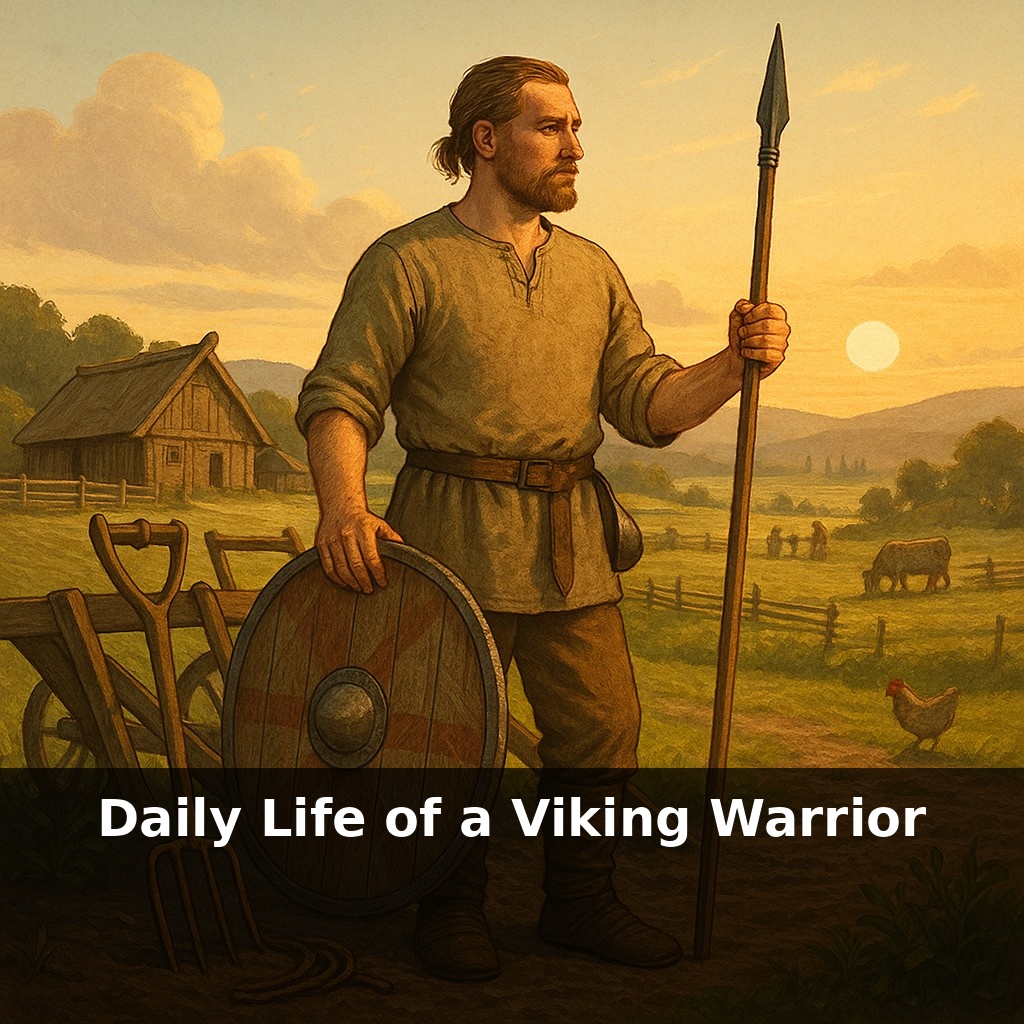
A “Viking warrior” spent more time with a plow than a sword. Before raiding seasons, he’s hauling hay, fixing roofs, drilling with spear and shield at dusk, then arguing law at the village þing. Not a full-time killer—more like a hard-pressed local multitasker with sharp steel.
Sixteen hours. That’s a typical high-summer workday for a Scandinavian farmer who also expects to stand in a shield wall. Dawn doesn’t start with battle cries but with checking livestock, judging the weather, and deciding whether today’s priority is hay, timber, or repairing a leaky boat that might decide if the family eats next winter.
Combat training is threaded into that day, not separated from it. A spear isn’t just a weapon—it’s something you adjust while waiting for milk to warm, the way someone today might tweak a favorite tool while the kettle boils. Silver doesn’t just jingle on the arm; it moves quietly in deals, a wearable bank balance that can be broken up or paid out.
By the time evening comes, our “warrior” may be more worried about a neighbor’s boundary dispute than distant enemies. The same hands that grip a shield also mend nets, carve wood, and pass judgment.
Some days lean heavily toward survival logistics: sharpening scythes, smoking fish, checking roof beams before storms. Other days tilt toward readiness—testing shield grips, oiling a seax, listening to an older fighter dissect past battles like a coach replaying game footage. Religious duties weave through it all: small offerings at a household shrine, larger rituals when a ship is launched or a sworn brother departs. Law, faith, and labor are less separate “departments” than strands in one rope, pulled tighter whenever danger, famine, or feud threatens to unravel the household’s fragile security.
A long day begins with tools, not weapons. Before a shield is lifted, there’s a quiet audit of gear that keeps a household alive: checking the haft on an axe that will fell timber as well as enemies, running a thumb along the edge of a seax that cuts cheese at noon and leather at night. Archaeology shows just how multipurpose their kit was: the same grindstone that hones a scythe also brings a spearhead back to biting sharpness; the same woodworking skills that shape a barn door carve the curved boards of a warship.
Food doesn’t appear by magic for these “warriors.” Summer days fold in preserving fish, turning milk into durable cheese, and baking dense loaves that travel well. Experimental reconstructions of Viking farms reveal how physically brutal this was: hauling water, stirring heavy cauldrons, lifting grain sacks. All of it builds the exact muscles needed to carry a shield and wear mail without collapsing.
Social obligations bite into those sixteen hours too. A free man is expected at local gatherings beyond the þing: weddings that double as networking events; funerals where alliances are reaffirmed; seasonal feasts where poets recite verses that quietly praise some fighters and undercut others. Reputation is a form of armor here. Sagas emphasize how a careless joke or drunken boast can spark a feud, so a disciplined warrior watches his tongue as carefully as his sword edge.
Law codes like the Frostathing’s weapons requirement show that being armed is less a privilege than a duty. Not owning basic arms marks a man as unreliable in crisis. But having splendid gear—fine inlaid spearheads, mail with foreign rivets, an imported sword—signals reach and connections. Those silver arm-rings glinting at a wrist aren’t just currency; they’re visible proof that a man has sailed, traded, or fought far from home and come back successful.
The one complete helmet from Gjermundbu, sturdy but plain, hints at another reality: headgear like that was rare, costly, and precious. Most fighters probably relied on thick caps and luck. Protection, for many, came less from iron and more from tight-knit neighbors willing to stand in line with them when trouble finally reached the fjord.
On some days, the “warrior” barely leaves the home farm yet still moves through several worlds. Morning might mean teaching a younger sibling how to notch arrow shafts, using offcuts from yesterday’s woodworking. Midday could be spent helping a traveling smith repair a broken mail link, paying partly in food, partly by promising a place on an upcoming voyage. Late afternoon, he might test a new shield boss near the shoreline, watching how salt spray bites into different metals over time.
Archaeologists pick up these quiet experiments in the debris: layers of trial-and-error ironworking, discarded antler carvings, loom weights re-used as fishing line sinkers. Household rubbish reads almost like version histories in a software project—each correction and upgrade preserved in soil instead of on a server. Evenings often close with story-sharing that doubles as training: older relatives recount feuds or shipwrecks, and listeners mentally map who failed, who adapted, and who kept their honor intact when fortune turned.
Future tools may let us follow a single iron rivet from a distant mine into a warrior’s mail, then into the grave that preserved it—like tracing a digital file’s edit history across devices. Isotope “fingerprints” in tooth enamel could show who grew up inland yet died by a foreign shore. VR þing reconstructions might soon let us test: if one influential vote changes, how do alliances, voyages, even burial customs shift in response across a whole fjord network?
Their world blurs our categories: “civilian” and “soldier” fold into one, like layers in laminated steel. Next to fields lie hidden training spots; beside law-rocks, spaces for quick spar drills. Your challenge this week: map your own day as if an archaeologist will study it—what tools, habits, and small rituals would they say you’re preparing for?