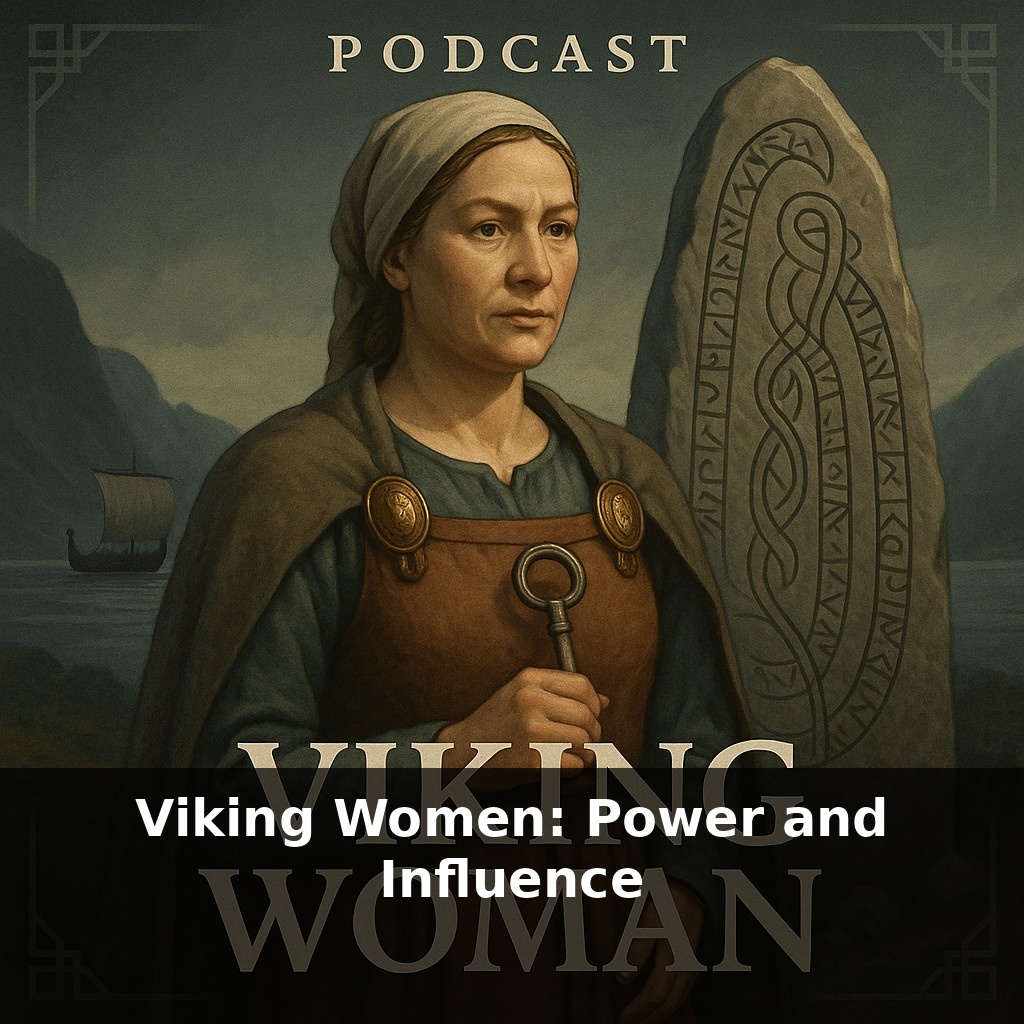
Up to one in five Viking runestones were raised by women—yet most of us still picture only bearded raiders. A ship leaves harbor, its captain overseas for years. Back home, his wife controls the farm, the trade deals, even the family’s legacy in stone. Who really held the power?
Ten percent of Viking graves contain keys—literal iron keys—often placed with women. Not decorative trinkets, but the kind that lock chests, storehouses, and doors. In a world where security meant survival, being buried with the keys was like being remembered as the household’s password manager and head of logistics in one. These objects tell us something the loudest battle stories don’t: control of goods, food, and information flowed through women’s hands. Add to that the legal right to reclaim dowry and property, and their role starts to look less like “supporting cast” and more like co‑architects of family strategy. While raiding parties chased silver abroad, women managed the slow, steady wealth that made voyages possible—fields sown, cloth woven, alliances maintained. To see Viking power clearly, we have to follow not just the swords, but the keys.
Legal codes, sagas, and soil layers all point in the same direction: women were wired into every level of Viking society. Law books coolly record who could end a marriage or claim compensation; sagas add sharp dialogue around household disputes and political marriages; archaeology uncovers loom weights, imported beads, and weighing scales in women’s spaces like quiet receipts of their reach. When you line up these sources, a pattern emerges less like a backdrop and more like a network map—nodes of influence running through farms, workshops, and even ritual sites. To understand Viking expansion, we have to trace those hidden circuits.
Textiles are the quiet engine behind much of this story. In trading towns like Birka and Kaupang, fine woollen cloth, sail canvas, and embroidered bands were high-value commodities, not background chores. Experimental calculations suggest that weaving a single ship’s sail could take years of women’s labor. No sail, no voyage—raiding, trading, and colonizing all depended on this invisible infrastructure. Loom weights, spindle whorls, and shears pile up in excavations, especially in areas linked to long-distance exchange, telling us that skilled cloth‑workers fed directly into the cash economy of silver and weighed bullion.
Legal texts add another layer. Sections of the Icelandic Grágás and Norwegian laws detail what happened when a marriage dissolved or when a husband vanished abroad. They assume that a woman might need to shutter deals, reclaim assets, or reassign labor if the household’s male leader died on campaign or simply never returned. This isn’t emergency improvisation; it’s baked-in procedure, acknowledging that women routinely stepped into full public authority.
Then there’s seiðr, high-status ritual practice often associated with women. Seeresses described in sagas travel between households, paid in fine textiles and hosting rights, offering prophecy and curse‑work that could shape when a voyage sailed, who entered an alliance, or how a feud unfolded. Excavated graves of such ritual specialists—staffs, unusual garments, imported objects—hint at a kind of spiritual consultancy woven into political life.
The warrior question is thornier. Genome work on the Birka Bj 581 burial overturned a century of assumption by confirming that its well‑armed occupant was biologically female. Similar, though more ambiguous, burials exist in Norway and Denmark. Yet the rarity of clear cases, and the theatrical way sagas treat shield‑maidens, suggest that women in combat were exceptions rather than a hidden norm. The point is less that women commonly fought, and more that the cultural toolkit for imagining and accepting female warriors existed at all.
Taken together—textile wealth, legal agency, ritual power, and occasional martial roles—these sources redraw the map. Influence did not sit only on the prow of the ship; it also sat at the loom, the law court, and the ritual platform, where women could steer outcomes in ways our stereotype of the Viking Age usually erases.
In one saga scene, a woman named Aud the Deep-Minded quietly organizes an entire migration from Norway to Iceland. While male relatives argue over honor, she commissions a ship, liquidates movable wealth, lines up followers, and then distributes land on arrival. It reads less like a family drama and more like a startup founder relocating a whole company to a new market—she controls capital, talent, and timing.
Archaeology gives similar snapshots. In some trading towns, scales and silver weights show up in female-associated contexts, hinting that women handled bullion the way a modern CFO tracks foreign currency exposure: converting cloth, furs, and food rents into spendable metal. Diplomatic marriages worked like long-term investment vehicles. A woman married into another chieftain’s household might bring portable wealth and contacts; years later her kin network could tip the balance in a dispute or open a trade corridor. Even fosterage—sending children to be raised in another home—often ran through women’s negotiations, seeding alliances the way strategic partnerships do today, quietly binding distant farms, ports, and assemblies into a shared enterprise.
Future work will not just “add women in” to Viking stories; it will force us to rewrite the plot. As digital tools re‑label burials and map movements, classroom timelines may shift from king lists to network diagrams that show households, craft hubs, and ritual experts as interconnected nodes. Think of it like updating old accounting ledgers into live spreadsheets: once every contribution is visible, the whole economy of power looks different—and harder to dismiss as a footnote.
Seeing Viking women clearly nudges us to audit our own blind spots. Which “supporting roles” today quietly dictate outcomes—project leads, carers, back‑office staff? Your challenge this week: scan the credits of any success story you hear—news, work, sports—and note whose names sit in the middle, not the headline. That middle column is where power often hides.