Right now, in a typical office, most people couldn’t tell you their company’s vision even if their bonus depended on it. Yet one short story from their leader—told the right way—could quietly change what they work on first tomorrow morning.
Most leaders don’t struggle with *having* a vision; they struggle with making it stick in other people’s minds long enough to change what they actually do. That gap between “I said it” and “they’re acting on it” is where strategy quietly dies. Research shows the missing piece isn’t more slides or town halls—it’s the *way* you make the future feel specific, personal, and hard to forget.
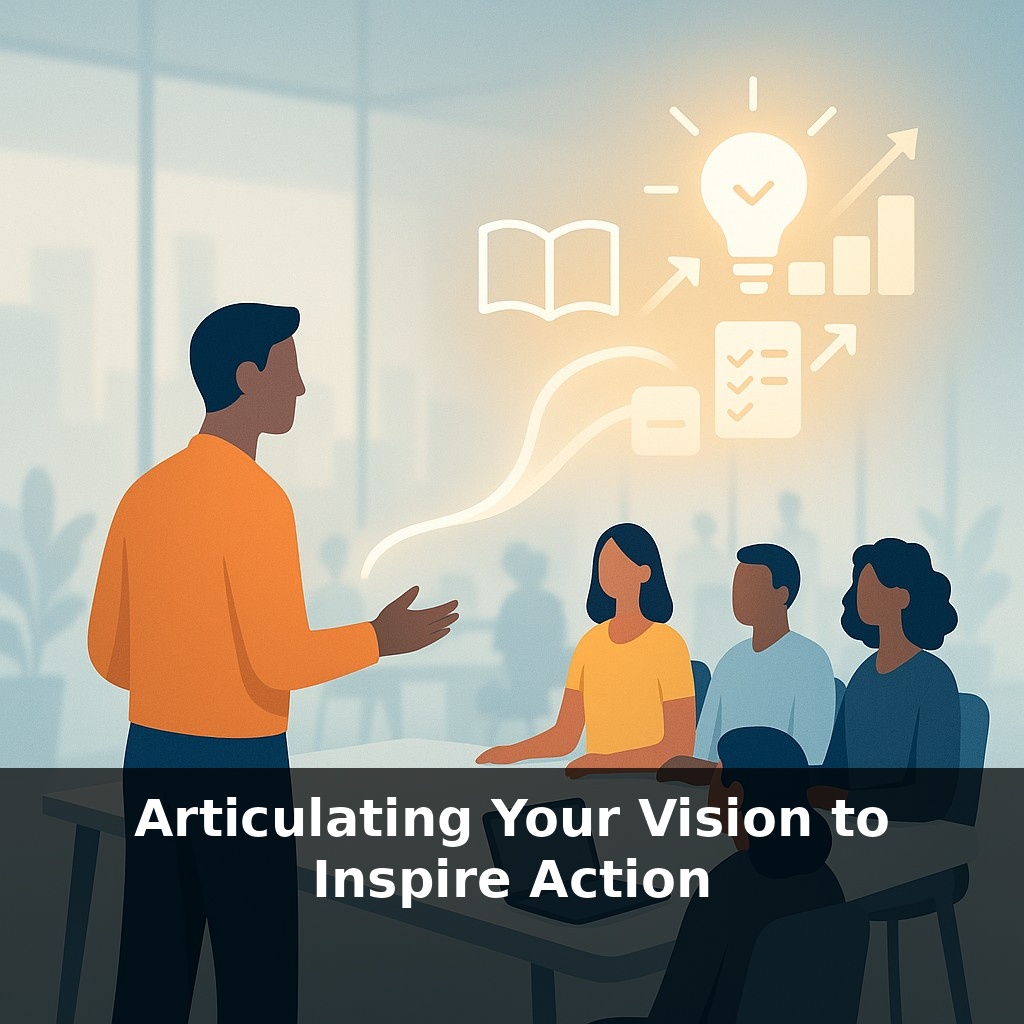
This is where the neuroscience gets practical. When your team can almost “see” the future you’re pointing to—who you’ll serve, what will be different, what wins will look like—their brains start tagging that future as rewarding and relevant. Suddenly, your vision isn’t background noise; it’s a mental shortcut they use to prioritize, say no, and persist when work gets messy.
The skill to build now: turning an abstract future into a concrete mental movie your people can replay without you in the room.
Most leaders stop at “words on a wall” and wonder why nothing changes. The real pivot is treating your vision less like a slogan and more like a product you’re designing for your team’s minds. Products have user needs, prototypes, launch plans, and updates; vision needs the same discipline. Your engineers, sales reps, and operators don’t need identical messages—they need tailored angles on the same future that speak to the trade-offs they face today. When you frame your vision this precisely, it starts to operate like a quiet background app—always on, nudging choices in the right direction.
Most leaders start drafting statements; the better starting point is drafting *moments*. Ask: “In three years, what specific scene would prove we’ve won?” A client’s email you’d frame on the wall. A metric on a dashboard that makes the room go quiet. A candidate saying, “I left a safer job because I had to be part of this.” These concrete snapshots are raw material for a vision people can actually remember and repeat.
From there, layer in three elements:
**1. Clarity people can *visualize*** Write one short paragraph that passes the “movie test”: could someone sketch it after hearing it once? Swap abstractions (“category leader,” “operational excellence”) for sensory anchors: who is doing what, with whom, using which tools, and what feels different in their day. Uri Hasson’s work suggests this kind of detail literally syncs brains; that’s what you’re aiming for.
**2. Meaning that hooks into *their* values, not yours** The same future looks different to a new grad, a tenured expert, and a skeptical middle manager. Instead of repeating “why this matters” from your perspective, map the personal stakes for each group: growth, craft pride, autonomy, impact, security. You’re not changing the destination; you’re surfacing different “doors” into the same building so more people decide to walk in.
**3. A cadence that makes it feel *current*, not ceremonial** The data is blunt: quarterly mentions are background noise. Weekly doesn’t mean weekly speeches; it means small, consistent tie-backs: - In 1:1s: “Which part of that future did you move an inch closer this week?” - In standups: “Name one task you dropped because it doesn’t serve where we’re headed.” - In reviews: adjust goals that drift from the destination, even if they look impressive on paper.
Think of your vision like a software release: the first version ships when you can describe a testable future scene; every meeting is a patch update where you resolve bugs between what you’ve said and what you’re actually rewarding. Over time, the story and the system converge—and that’s when behavior really starts to change.
A useful stress test is to ask: “If my team had to *act* on this tomorrow with no further instructions, what choices would clearly be ‘on‑vision’ or ‘off‑vision’?” Think of a product leader who says, “In 18 months, customers will brag that we’re the only tool they don’t have to train people on.” Suddenly, engineers know simplicity beats feature creep. Support knows every macro that confuses users is suspect. Recruiting knows they’re hiring for empathy as much as algorithms.
You can also prototype this in low‑risk settings. Share your future scene with a cross‑section of people and ask each one privately, “Based on this, what would you start, stop, or double‑down on?” If the answers are wildly scattered, your picture’s still fuzzy. If patterns emerge—more direct user testing, faster cycle time, fewer internal handoffs—you’re getting closer.
The subtle win: when your description is concrete enough, people can disagree constructively with *how* to get there, without debating what “there” even is.
Your future edge won’t be owning the best words; it will be owning the most believable *trajectory*. As AI summarizes, translates, and broadcasts your message, people will care less about how polished it sounds and more about whether your daily decisions line up with it. Expect candidates to arrive quoting your town halls, investors to replay clips side‑by‑side across quarters, and teams to treat inconsistency like a bug report in your leadership “source code.”
Treat this less like writing a speech and more like tuning an instrument: you’ll learn what resonates only by playing it often, listening hard, and adjusting. Over time, patterns in questions, resistance, and unexpected enthusiasm become your best data. Follow that signal, and your “vision” evolves into a shared, evolving bet the whole team helps refine.
Try this experiment: For the next 24 hours, share your vision with three different people using a short, vivid story instead of a bullet-point explanation—describe a specific future moment as if it’s already real (what’s happening, what people are feeling, what’s changed). With Person 1, focus purely on emotion (“Here’s what will feel different when we nail this…”); with Person 2, focus on concrete outcomes (“Here’s what will actually be happening in our day-to-day…”); with Person 3, blend both. After each conversation, immediately ask them to reflect back what they heard in one sentence and note which version made them most energized and clear. Use what you notice to tweak the way you talk about your vision tomorrow.