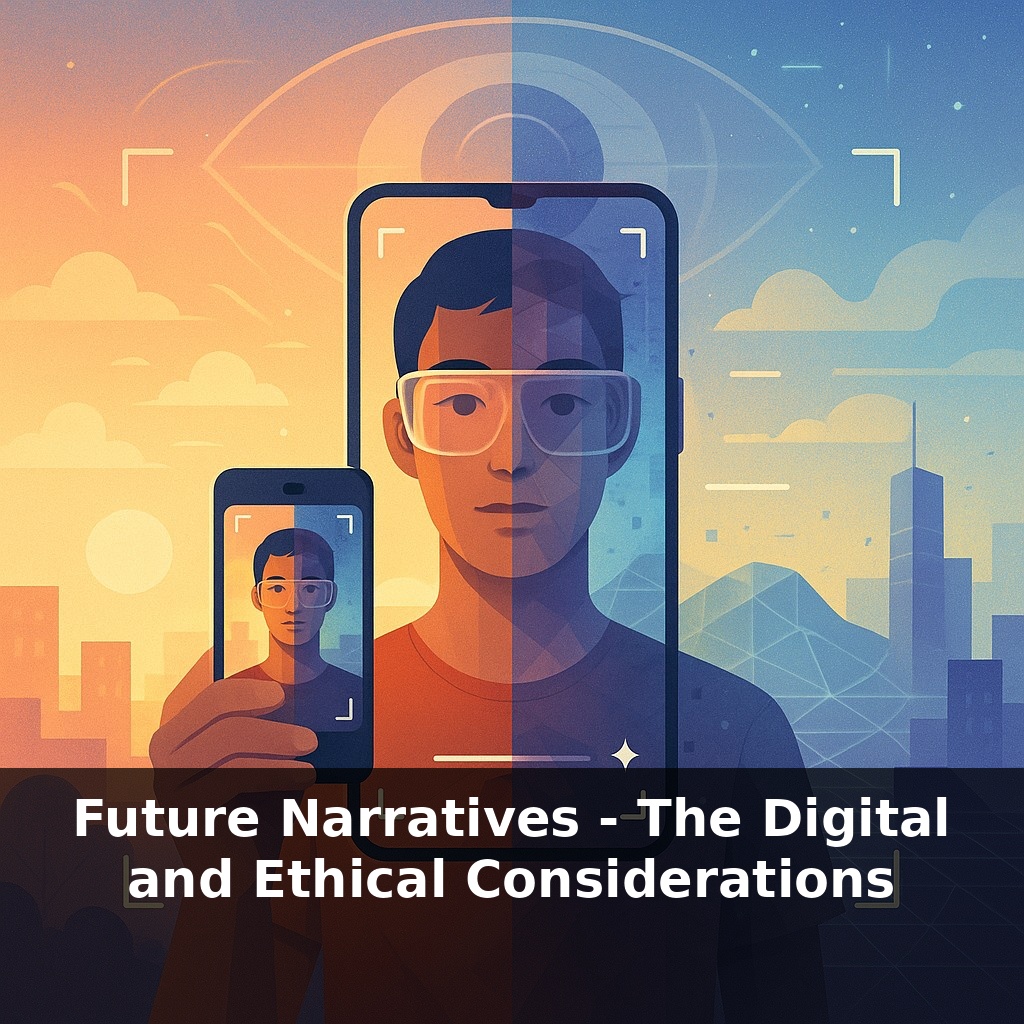
A selfie you took this morning may have more AI decisions baked into it than an entire studio shoot from a decade ago. You tap the shutter once; unseen software chooses your skin tone, smooths the sky, and quietly rewrites what “real” looks like—before you even see the photo.
In a few years, you may stand in front of a landscape that never really existed—generated on the fly by your glasses—yet feel as moved as if you’d watched the actual sunrise. That’s the strange territory photography is entering: less about capturing what stood before the lens, more about assembling what could have been there.
As cameras become more like creative partners than passive tools, every frame starts to feel closer to a draft than a document. Sliders, presets, and prompts don’t just polish a moment; they can redirect its meaning. A news image, a family portrait, a protest photo—each now sits on a spectrum from “witness” to “fiction.”
For visual storytellers, this expands the canvas but squeezes the conscience. The question stops being “Can I make this?” and becomes “Should I—and must I say how?”
In this shifting terrain, the numbers tell their own story. In 2016, no phone silently “thought” about your image; by 2023, 1.4 billion shipped with AI co‑processors deciding details in real time. Photo contests now drop entries not for staging scenes, but for invisible digital excess—World Press Photo cut 20% of its 2015 finalists for going too far. At the same time, over 2,000 organizations back Adobe’s Content Authenticity Initiative, treating provenance like a visible signature. Yet each AI‑generated frame, nearly effortless to make, still draws power—almost negligible per shot, suddenly weighty at planetary scale.
“Photography is truth. The cinema is truth twenty-four times per second,” Godard once said. In a code-driven era, that line sounds less like a principle and more like a provocation: whose truth, logged by which system, under whose rules?
Three forces now tug at every digital image: automation, authorship, and accountability.
Automation accelerates decisions you used to make slowly, if at all. Lens blur that used to require a fast prime and careful focus now appears instantly; faces in a crowd are auto-tagged and sorted; your “best” shot is surfaced by ranking algorithms you never meet. Convenience is real—but so is quiet standardisation. When billions of people accept the same default settings, a kind of global house style seeps into everything from holiday snapshots to campaign materials. Distinct visual narratives risk being pulled toward the same glossy median.
Authorship grows fuzzier as tools collaborate—and sometimes dominate. A prompt-fed model can generate a war zone it has never “seen,” stitched from training data that may include uncredited photojournalism. Who, then, is the storyteller: the person who typed the words, the engineers who built the system, or the countless photographers whose images trained it? And if those original works encoded cultural bias—who appears heroic, who appears dangerous—the system quietly replays that casting in new, fabricated scenes.
Accountability, meanwhile, is being rebuilt in layers. Cryptographic watermarks, signing standards, and edit histories attempt to make an image’s journey traceable. Yet social platforms still prioritise engagement over provenance; a compelling fake can travel farther, faster, than a carefully credentialed document. Even when you can prove that a frame hasn’t been altered, you still face older ethical questions: Was consent obtained? Was context preserved? Was harm considered?
The deeper paradox is that these same systems can expose manipulation as effectively as they enable it. Forensic tools flag cloned pixels; pattern analysis reveals coordinated propaganda; open datasets allow communities to debunk misleading composites within hours. The “eye” watching images is now partly machinic as well.
For visual storytellers, the task ahead is less about rejecting technology than about designing practices around it. That means treating defaults as editorial choices, tracing where your tools learned their aesthetics, and deciding which kinds of opacity you are no longer willing to accept—from platforms, from models, or from yourself.
A street photographer covers a protest with two devices: a traditional camera and a phone running real‑time style filters. Later, they publish a diptych—one frame raw, one filtered—clearly labeled, inviting viewers to compare what changed. The point isn’t to prove purity; it’s to make the act of alteration visible, part of the story rather than a hidden step.
In another corner of the field, a conservation NGO uses AI‑generated composites to visualise future flood lines over present‑day coastal towns. These images don’t claim to be documents; captions spell out their speculative nature, linking to the data and models behind them. The narrative shifts from “this happened” to “this could happen to this exact place, and here’s why.”
Think of an image file like a soup simmering in an open kitchen: ingredients and seasonings are listed on the wall, and you’re invited not just to taste, but to understand—and question—what went into the bowl you’re served.
Newsrooms may soon treat image files like sources that must be interviewed: who made you, who edited you, who profits if you spread? Photographers might travel with “ethics kits” as carefully as lens kits—prewritten consent options, clarity on AI use, even carbon‑aware export settings. Viewers, too, will develop new literacies, scanning for context labels the way we now glance at nutrition facts. The most trusted narratives could be those that show their scaffolding, not just their shine.
The next frontier isn’t choosing between “real” and “fake,” but deciding what kinds of fictions we’re willing to live with—and label. As archives swell with both staged and witnessed moments, your role is less archivist, more curator of possible futures, arranging images like seeds in a garden that others will one day walk through and believe.
Start with this tiny habit: When you open a new app or website for the first time today, pause for 5 seconds and whisper to yourself, “What story is this trying to write about me?” Then glance at just one thing: the permissions or data it’s asking for (like location, contacts, or browsing history) and ask, “Do I really want this in my digital narrative?” If the answer feels like “no” or “not sure,” switch off just one permission instead of trying to fix everything.