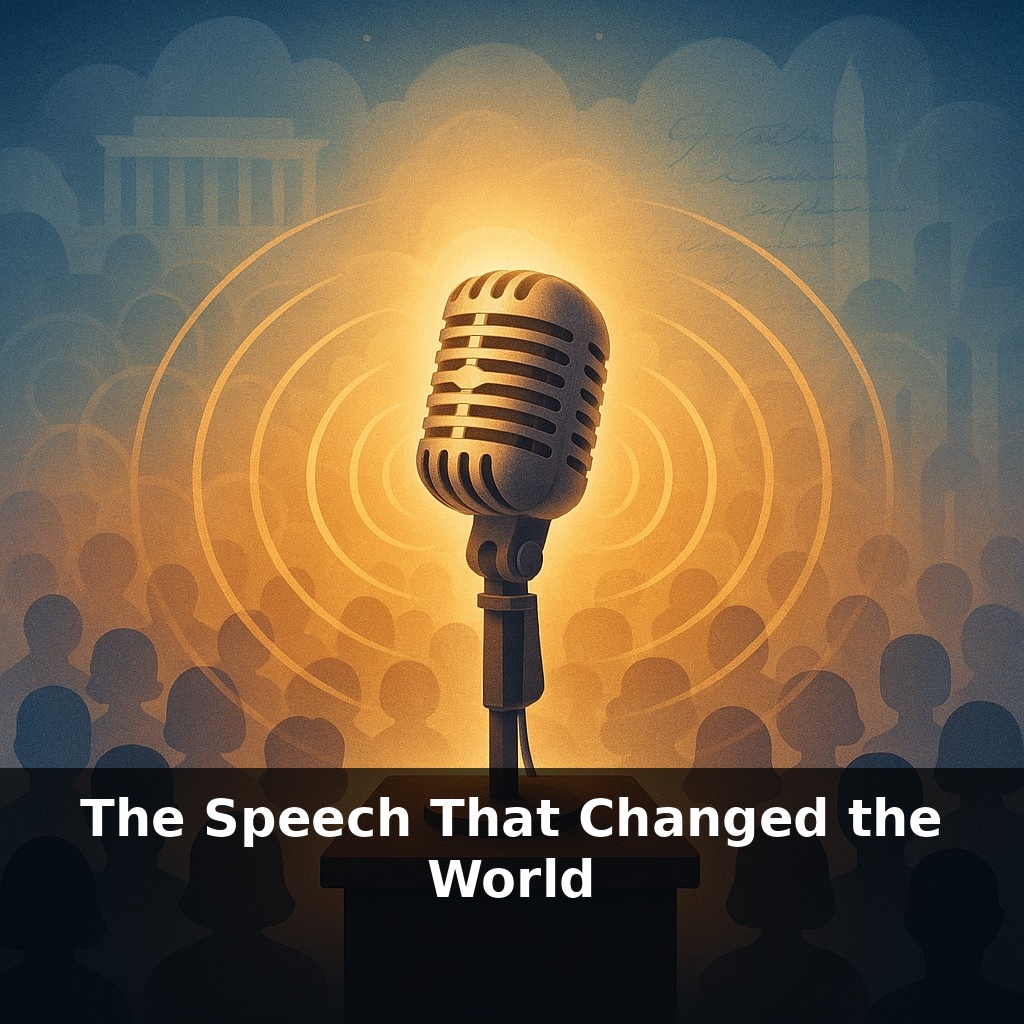
The Speech That Changed the World
📝 Transcript
A crowd the size of a small city stands silent. One voice begins, and within minutes, living rooms across America are leaning in. Here’s the twist: the most famous line of this speech wasn’t in the original script—and it almost didn’t happen at all.
King’s detour from his prepared remarks wasn’t a random burst of inspiration; it was the product of years of practice, pressure, and partnership. By 1963, he had delivered versions of the “dream” theme in churches, gymnasiums, and union halls across the country. The words had been tested like a song played dozens of times on small stages before suddenly going live on the biggest broadcast imaginable. And crucially, he didn’t pivot alone. Gospel singer Mahalia Jackson, standing nearby, called out, “Tell them about the dream, Martin!”—a nudge from a trusted voice that helped unlock the moment. This wasn’t just a man with a microphone; it was a web of relationships—advisers, organizers, critics, allies—that quietly shaped what the world would hear that day.
King’s words landed with force because they were already wired into a larger ecosystem of strategy and trust. Behind the podium were speechwriters refining drafts, lawyers tracking court decisions, labor leaders coordinating turnout, and local pastors who had spent months preparing their congregations for nonviolent protest. The address wasn’t a lightning strike in an empty field; it hit a landscape carefully prepared to conduct that energy—fundraising networks, training workshops, press outreach, and backchannel negotiations in Washington all waiting to turn moral clarity into concrete leverage. Relationships set the stage; the speech flipped the switch.
King’s influence that day didn’t rest only on what he said, but on how the entire operation was choreographed to carry those words into places he’d never stand in person. Start with the setting: the steps of the Lincoln Memorial framed him inside a living argument about American promises. Organizers fought for that location because they understood symbols shape memory. A lesser-known venue might have buried the message in the news cycle; this one forced the country to see Black citizens literally facing the statue of the man who signed the Emancipation Proclamation.
Then there was the broadcast. Television networks had only recently begun covering mass protests live, and civil-rights leaders lobbied hard to secure that coverage. They timed the event for maximum viewership, negotiated camera angles, and coordinated with reporters who’d been following southern sit-ins and Freedom Rides. When King’s voice went out over the airwaves, it arrived in households already primed by months of vivid images—jail cells, police dogs, children confronting fire hoses. The speech offered a narrative that made sense of those scenes: not random unrest, but a moral campaign demanding the country live up to its own documents.
Inside the movement, people were already preparing to turn any surge of public sympathy into bargaining power. NAACP lobbyists tracked which members of Congress were vulnerable to pressure. Local organizers planned voter-registration drives in districts where a few thousand new voters could flip an election. Union allies mapped which companies could be nudged to desegregate with the right blend of protest and negotiation. The relationships were specific: pastors who knew which sheriff might bend, students who knew which lunch counters were strategically located, attorneys who knew which test cases could move through the courts.
And crucially, there were dissenting voices in the coalition—SNCC activists who thought King too cautious, older leaders who feared backlash, women who challenged their marginalization. Those tensions didn’t disappear; they were managed. The capacity to argue internally while presenting a unified front externally made it possible for one speech to sound like the conscience of a whole people rather than the opinion of a single man.
Consider how many small, almost invisible choices had to align for those 17 minutes to matter. A young John Lewis revised his own remarks under pressure from elders who feared alienating key votes; that internal editing didn’t dilute the day’s power, it widened the coalition willing to listen. Behind the risers, Bayard Rustin’s logistics team enforced rules—no homemade signs, no inflammatory slogans—so that cameras captured a disciplined, peaceful crowd that contrasted sharply with segregationist predictions of chaos. In churches weeks earlier, volunteers had rehearsed songs, trained marshals, and practiced nonviolence so thoroughly that, when tensions rose, people knew exactly how to de‑escalate. Think of a forest where root systems quietly share water and nutrients: each tree looks independent, but the health of one depends on the network below. King’s voice traveled through unions, student groups, women’s clubs, and international allies who translated that moral claim into local campaigns, newsroom debates, and, eventually, votes in Congress.
Today, a single livestreamed plea can circle the globe before policymakers draft a response, but speed cuts both ways. Messages can flare and vanish, or be twisted by bad actors. The next “world‑shifting” speech may come from a teenager with a phone—or from a community leader most people have never heard of—yet it will still need disciplined networks to turn echoes into edits of law. Your voice is a seed; without careful gardeners, even the bravest words struggle to take root.
Your challenge this week: notice who quietly shapes your own “speeches”—the friend who edits your email, the colleague who reframes your idea, the neighbor who shares local history. Treat each conversation as a small rehearsal, each listener as a co‑author. Influence rarely arrives as a lightning bolt; it grows like a path, one deliberate step at a time.
From this course
Voices of Influence: How Communication Shapes Us
6 episodesUnlock all episodes
Full access to 6 episodes and everything on OwlUp.
Subscribe — $1.99/monthLess than a coffee ☕ · Cancel anytime