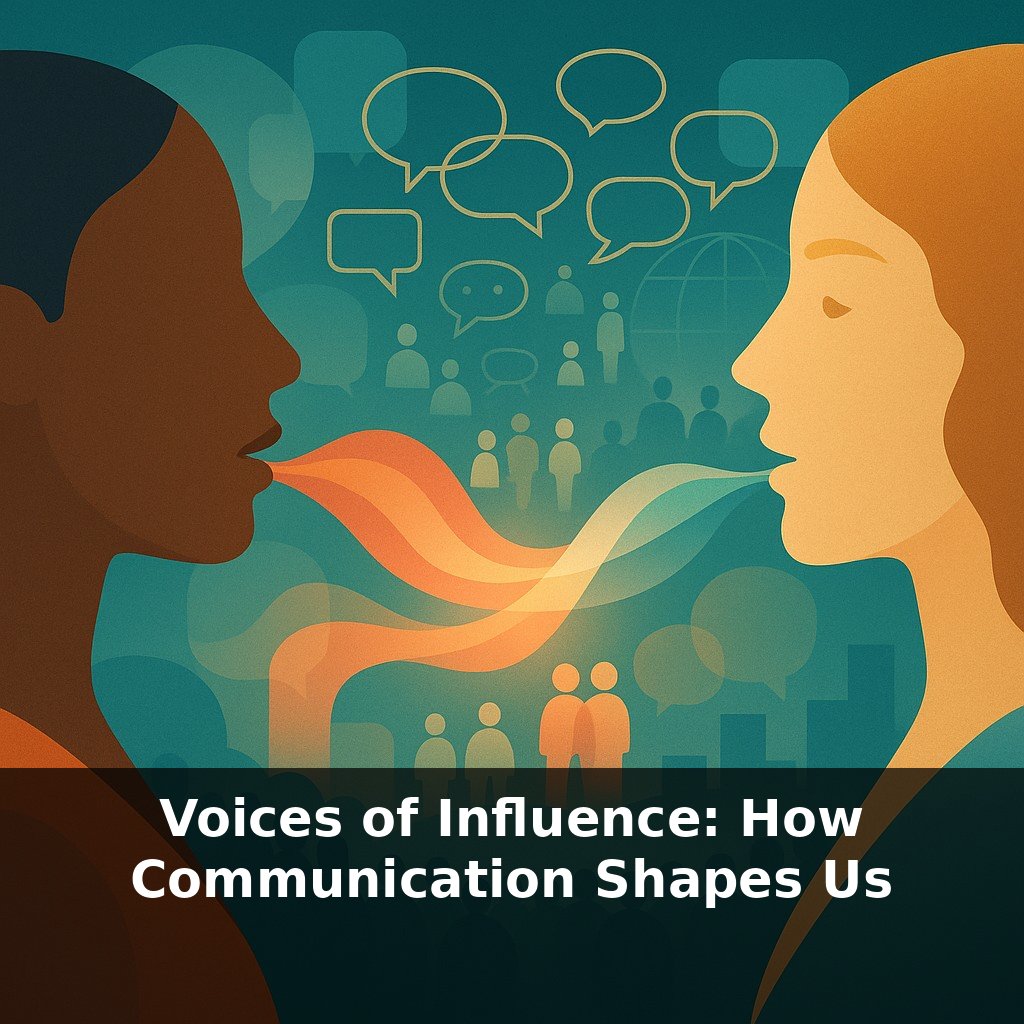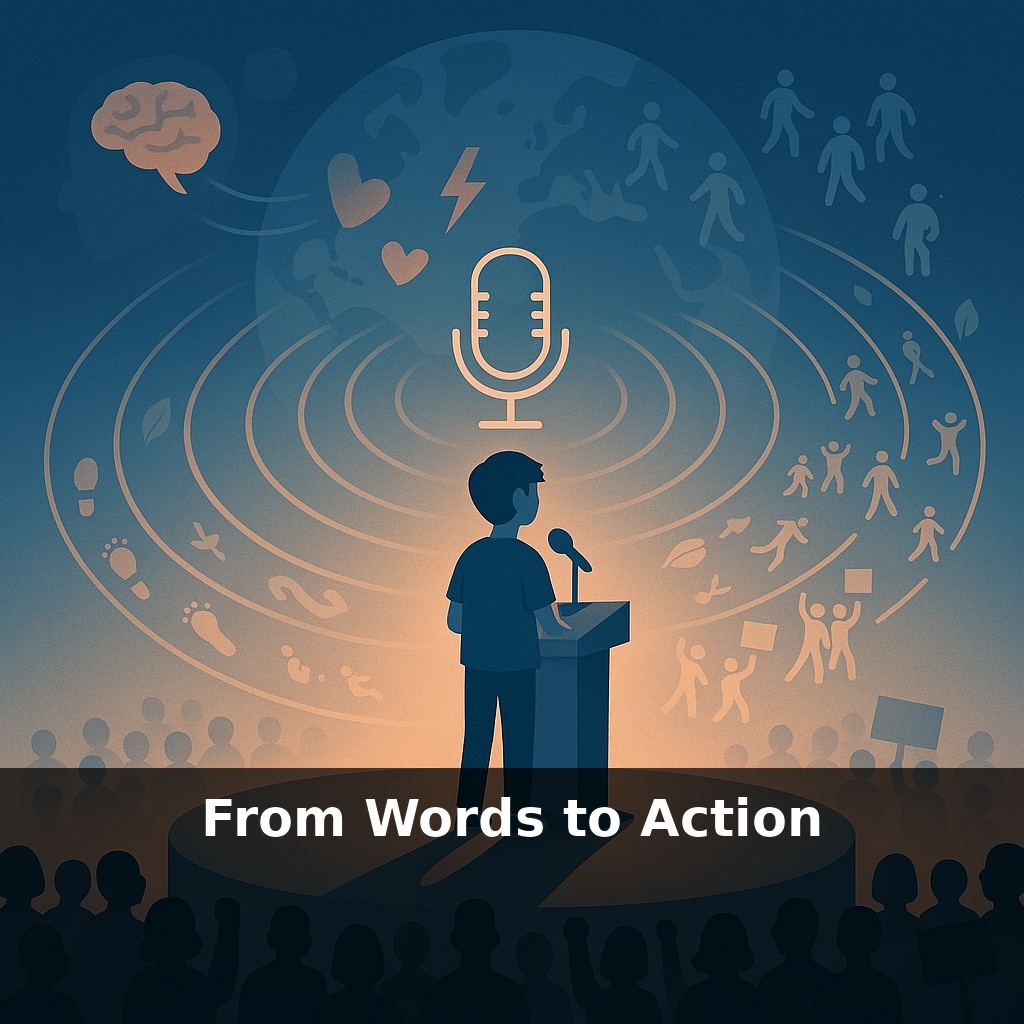
A teenager in Sweden skips school, speaks for barely four minutes at the U.N.—and within a day, searches for “climate strike” explode. Same planet, same facts, completely different behavior. So here’s the puzzle: what quietly turns ordinary words into collective action?
A strange thing happens in the brain when words really land: your language centers light up first, but milliseconds later your emotional circuitry joins in, as if the story you’re hearing is something your body might have to act on. That tiny timing gap is where momentum begins. Most of the time, though, our communication stalls earlier—we share opinions, blast information, or “raise awareness,” and wonder why nothing changes. The missing pieces are less mystical than they seem. Effective changemakers quietly run a repeatable sequence: they zoom in on a concrete situation, surface a feeling people already have, point to one specific next move, and show that others are moving too. It’s less like casting a spell and more like setting up dominoes: each piece small and ordinary, but placed so that, once tipped, they can’t help but carry motion forward.
Most of us try to “be more persuasive” by turning up the volume on what we already do: more data in the deck, more passion in the voice, more posts in the feed. Yet the people who reliably turn rooms, teams, or audiences into action aren’t louder—they’re more *sequenced*. They treat communication less like a speech and more like staging a relay race: each element hands the baton to the next. First, they narrow the lens to a here-and-now moment, then they let emotion breathe, then they name one doable move, then they make that move feel normal. Miss a handoff, and the race quietly ends before the finish line.
Neuroscientists have a blunt way of describing most everyday communication: “low arousal.” The brain hears the words, files them under “interesting, maybe,” and moves on. What shifts that from background noise to “I should *do* something” is less charisma and more architecture: how you stack meaning, feeling, and logistics so that action feels like the next obvious step, not a heroic leap.
One way to see that architecture is to notice that influential messages quietly answer four questions, in order:
1. **What exactly are we talking about?** Not “workplace wellbeing,” but “the way our 3 p.m. meetings leave everyone drained.” The more specific the frame, the easier it is for the brain to simulate change.
2. **Why does this matter to *me* right now?** This is where emotion enters, but usually in a grounded way: frustration at wasted effort, pride in a team’s potential, fear of missing a window of opportunity. You’re not manufacturing feelings; you’re naming ones that are already in the room.
3. **What is the smallest credible move?** Here, vagueness quietly kills momentum. “We should collaborate more” dies in the hallway. “Before Friday, pair up with one person from another team and swap one draft for feedback” gives the brain something it can picture on tomorrow’s calendar.
4. **Who else is doing this?** The shift from “risky” to “normal” often happens the moment we sense we won’t be the only one sticking our neck out. This is why stories of peers, not heroes, are so powerful: “Three other product teams ran this experiment last quarter and kept the parts that worked.”
Look at how effective organisers design text-banking or door-knocking. The script rarely starts with the issue in the abstract. It begins with a concrete local stake, acknowledges a feeling (“a lot of your neighbors are worried about…”), pivots to one sharply defined ask (“can you commit to Tuesday at 6?”), then names others who already have. The technology just accelerates what has always mattered: the sequence.
You can treat this like composing a short piece of music. Data points, stories, and requests are notes; the order you play them in creates or kills rhythm. Rearranging the same material—leading with a feeling instead of a conclusion, saving data to validate rather than overwhelm—often turns a flat update into something people lean toward instead of away from.
Think about a time you actually changed a habit because of someone else’s words. It probably wasn’t the most logical argument you’d heard; it was the one that made you *feel* “this is about me” and “this is doable” in the same breath. That effect isn’t reserved for big speeches. A manager who quietly shifts a team’s workflow, or a friend who gets five people to show up for mutual aid, is running the same underlying pattern, just at a smaller scale.
When volunteers text five neighbors with a specific ask, turnout rises more than with thousands of anonymous emails—not because the words are fancier, but because the interaction feels like a shared moment with a clear next step. The same is true when you convince colleagues to try a small experiment rather than sign up for a grand transformation.
Communication that moves people is less like broadcasting and more like being a trail guide pointing to the next visible marker: close enough to see, safe enough to try, meaningful enough to follow.
Action-oriented communication is about to collide with a world where *any* voice or face can be faked. As AI blends flawlessly with human messaging, the scarce resource won’t be content but **trust** and **context**. Think of your future influence less as a megaphone and more as a campfire: smaller circles, verified identity, shared norms. The paradox is that as tools scale your reach, the most reliable sparks for real-world action may come from the people standing closest to you.
Your words won’t always trigger marches or new policies—and they don’t need to. The real leverage is in nudging the smallest unit you can touch: one decision, one meeting, one nearby relationship. As you practice, notice which phrases make people lean in or follow up. Those micro-signals are your map for turning “that’s interesting” into “I’ll try it.”
To go deeper, here are 3 next steps: (1) Block 25 minutes today to turn one idea from the episode into a concrete experiment using the free “Action Plan” template in Notion or Google Docs, listing exact behaviors, time windows, and who will be affected this week. (2) Read the chapter on implementation intentions in Peter Gollwitzer’s work (or James Clear’s *Atomic Habits*, Chapter “Make It Obvious”) and write one “If X, then I will Y at Z o’clock in [specific place]” plan that matches what the guest described about bridging the intention–action gap. (3) Install a habit-tracking app like Habitify or Streaks and set up a 7‑day streak challenge directly tied to the practice the episode focused on (e.g., initiating one hard conversation, shipping one small piece of work, or making one values-based decision), then share your streak goal with a friend or colleague via text to create the “public commitment” loop they talked about.