“Leaders who put their team first often outperform those who chase power—and they do it with lower turnover and higher loyalty. A manager quietly refills the coffee, remembers birthdays, shields the team from chaos… and somehow their results skyrocket. How does that work?”
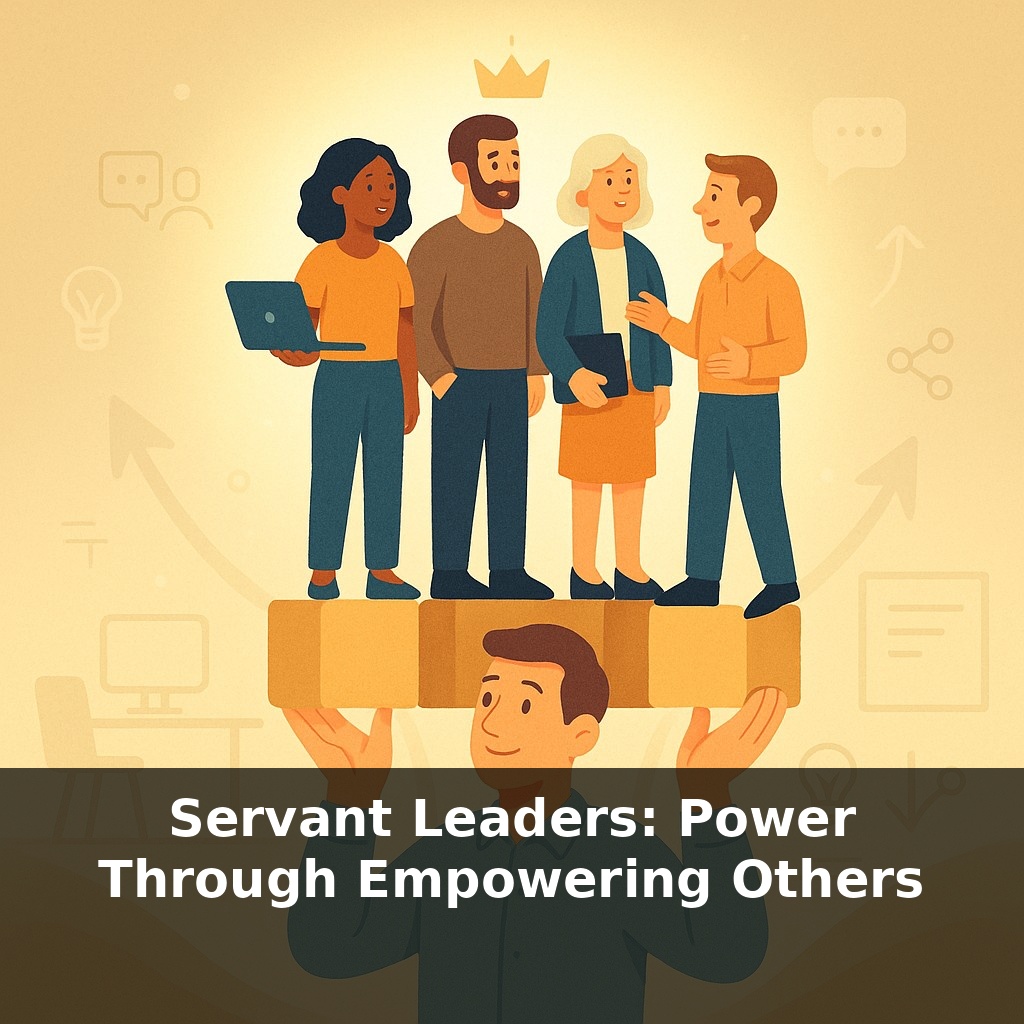
Servant leadership takes that “team-first” intuition and turns it into a deliberate strategy. It asks a provocative question: what if the real job of a leader isn’t to be the smartest in the room—but to make it easier for everyone else to do their best thinking? Research keeps pointing in the same direction: when leaders focus on serving employees, customers, and the community, trust deepens and performance follows. That’s not soft; it’s structural. It shapes who gets heard, how decisions are made, and where power actually sits day to day. Think of a leader who clears roadblocks the way a skilled software engineer refactors old code—removing hidden friction so the system runs smoother and faster. In this episode, we’ll dig into what servant leaders actually do, how it affects careers and culture, and why it’s becoming a competitive advantage, not just a personal philosophy.
In practice, this mindshift can feel awkward at first, especially in cultures that reward visibility over impact. You might worry that if you focus on enabling others, your own contributions will disappear. Yet the data point a different way: companies that score highest on serving their people see measurably lower turnover and more resilient performance. That shows up in careers, too. Leaders known for growing others become the quiet “talent magnets” everyone wants to work with. Their reputation compounds like interest, creating opportunities precisely because others advance around them.
An 8–11% drop in turnover isn’t just a “nice to have”—it’s millions saved in hiring, training, and lost momentum. So what are servant leaders tangibly doing differently day to day?
First, they treat information as a shared asset, not a source of control. Instead of hoarding context, they over-communicate the “why” behind priorities and constraints. That lets people make smarter trade-offs without waiting for sign-off. In high-performing teams, you’ll often see open metrics dashboards, transparent roadmaps, and candid post-mortems where even the leader’s missteps are fair game.
Second, they deliberately invert spotlight time. In meetings with senior stakeholders, they push credit downward and visibility outward. A servant leader doesn’t present every slide; they bring the engineer who solved the root problem, or the store manager who piloted the new process. Over time, that creates a bench of people who can operate at the next level because they’ve already been in the arena.
Third, they use power to remove structural friction, not to micromanage tasks. That could mean redesigning roles so frontline staff have authority to fix customer issues on the spot, simplifying approval chains that waste hours, or changing incentive systems that pit teams against each other. Herb Kelleher at Southwest was famous for backing employees who made judgment calls for customers—even when it cost money in the short term—because it reinforced the behaviors the company needed to scale.
Notice what’s happening here: they’re not “being nice” in the abstract. They’re architecting conditions where good people can win more often. That’s why this style shows up in sustained performance, not just in employee surveys. Starbucks’ early growth under Howard Behar wasn’t just about free coffee and warm smiles; it was about designing store-level autonomy, benefits, and development paths that made people want to stay and grow with the company.
Servant leaders also zoom out beyond the org chart. They ask, “How does our success affect our customers’ lives, our suppliers, our communities?” The Greenleaf Center’s presence in 11 countries reflects how this lens travels across cultures: the specific practices differ, but the core commitment—to use authority in ways that expand others’ capacity—stays constant.
Your challenge this week: run a “power audit” of one recurring situation where you lead—maybe a weekly standup, a client call, or a store opening routine. For five consecutive occurrences, change just one thing: shift a concrete piece of power or ownership to someone else in a visible, consequential way. Examples:
- In your team meeting, instead of you setting the agenda, rotate facilitation and give that person authority to decide which topics get time—and which get parked. - On a client call, intentionally step back and let a more junior colleague lead the solution segment, making it clear to the client that this person owns that area. - If you manage a shift-based team, let the crew design the schedule within fixed guardrails (coverage, budget) and live with their choices for the week.
Two rules: you cannot take the power back midstream, and you must support the person publicly if the experiment creates small, non-catastrophic mistakes.
At the end of the week, don’t ask, “Did they do it as well as I would have?” Ask instead: “What grew in their confidence, skill, or initiative because I gave them real ownership?” Then decide one permanent change you’re willing to make to institutionalize that shifted power—not as a one-off favor, but as the new default.
A practical way to spot this style is to watch what happens when pressure spikes. In a crunch, a non-servant leader often narrows control: more approvals, more reviews, more “run that by me first.” A servant leader does almost the opposite: they clarify the goal, then ask, “What do you need from me to move faster?” and clear paths accordingly. You’ll see them lending relationships (“Use my name to unblock that vendor”), shielding focus work, or quietly reallocating budget so the team’s best ideas aren’t stuck waiting.
Think about how this shows up in career conversations. Instead of asking, “How can you help me hit this year’s targets?” they’ll start with, “Where do you want to be in 18–24 months, and what projects would actually move you there?” Over time, direct reports accumulate stretch assignments that map to their aspirations, not just to the leader’s immediate gaps.
The effect compounds: people learn to bring forward bolder ideas because they’ve learned those ideas won’t be co-opted, diluted, or punished if they fail thoughtfully.
Boards are quietly shifting what “good leadership” means. Expect dashboards that track how often ideas rise from the edges, not the top, and sentiment tools that surface whose voices stay muted. As AI takes over routine calls—approvals, routing, forecasts—the remaining human work will look more like coaching than commanding. Careers will hinge on who can grow others: promotions tied to how many people you’ve advanced, not just what you’ve delivered alone.
Instead of chasing promotions as solo trophies, start tracking how many people you’ve helped level up. Careers are tilting toward those who can quietly multiply others. Like a good investor diversifying a portfolio, you’re spreading opportunity—backing different strengths, timelines, and risks—so your team’s overall “return” keeps compounding over time.
To go deeper, here are 3 next steps: (1) Block 25 minutes today to read Chapter 2 (“The Servant as Leader”) from Robert Greenleaf’s *Servant Leadership* and jot 3 ways it challenges the “boss-as-hero” mindset you heard about in the episode. (2) Pick one team ritual from the podcast—like letting the most junior person speak first in meetings—and implement it in your very next meeting using a simple shared agenda in Google Docs so everyone can add input asynchronously. (3) Set up a free account in a tool like Officevibe or CultureAmp and send out a one-question pulse survey asking, “What’s one thing I could do to better support your success?”—then schedule 30 minutes on your calendar this week to respond personally to every answer.