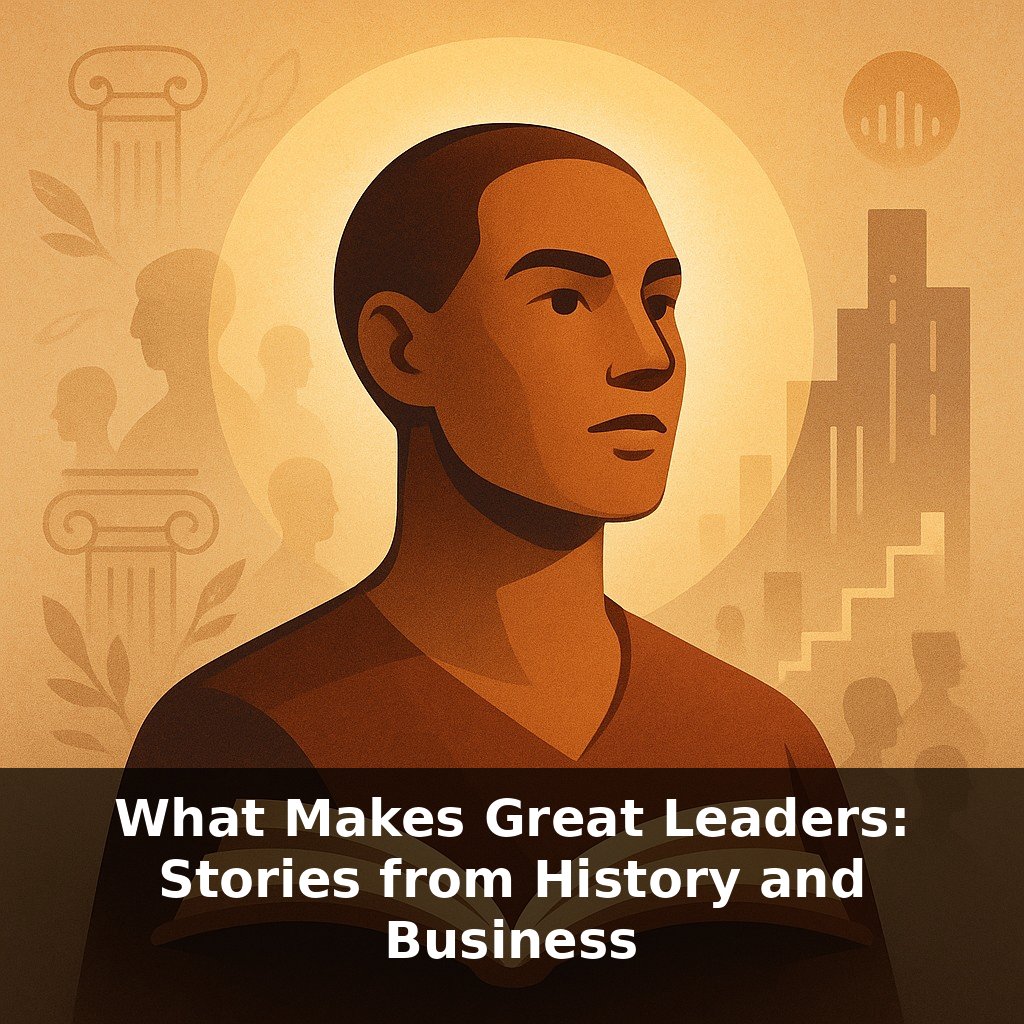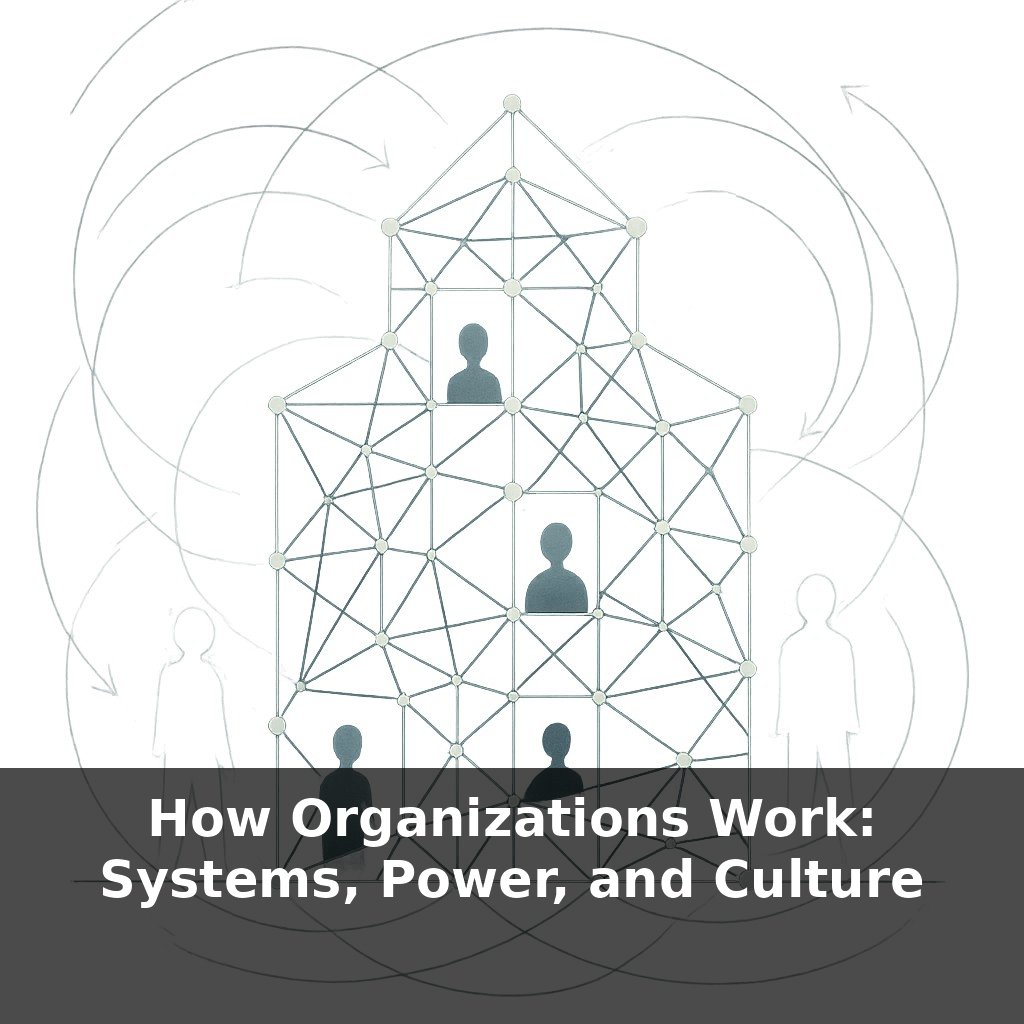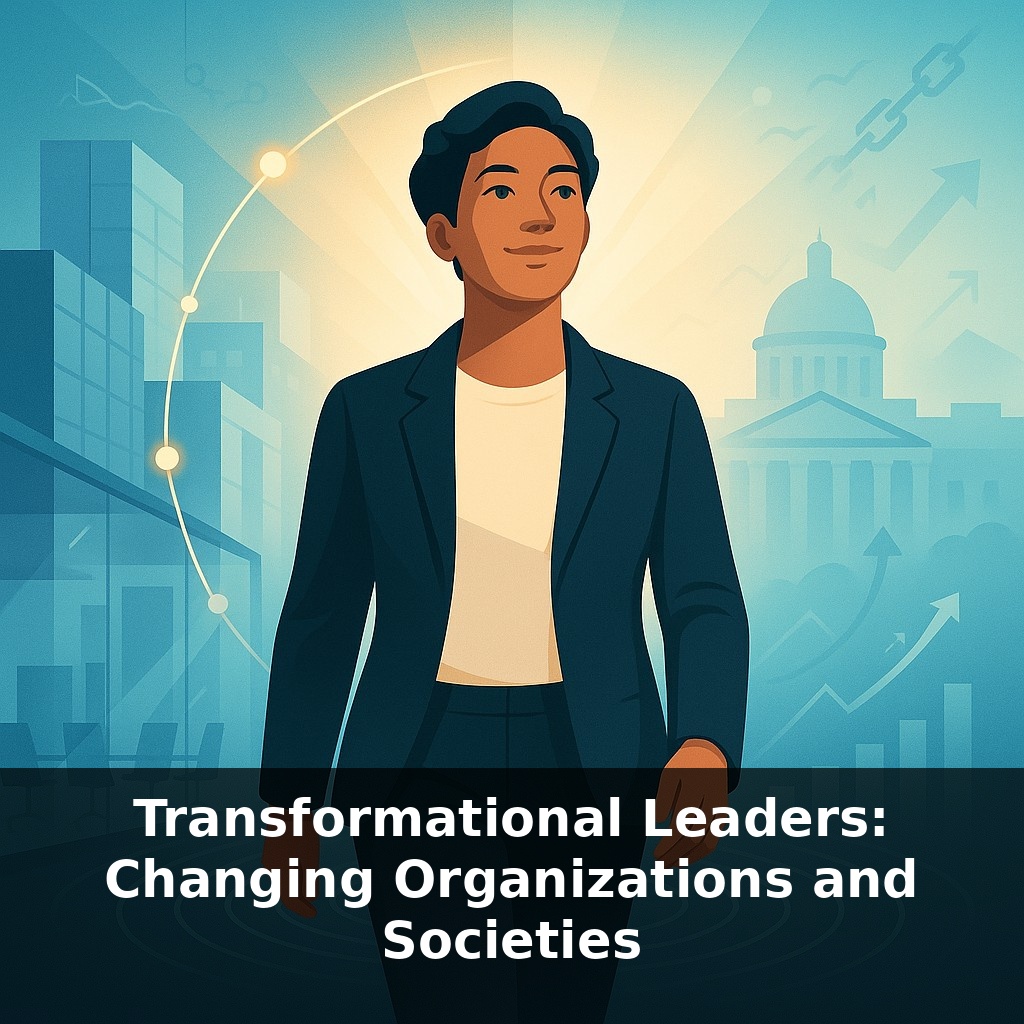
A single leader can lift a company’s value by trillions—or help a war-torn nation slash crushing debt in just a few years. In one boardroom, a CEO quietly scraps a fear-based culture. In another, a president rewrites what’s possible for her country. What exactly are they doing differently?
Seventeen percent. That’s the average productivity jump when teams are led by transformational leaders instead of managers who just trade rewards for results. But the real story isn’t in the number—it’s in *how* those leaders change what people believe is possible.
Some do it inside tech giants, shifting a company from internal rivalries to shared learning. Others do it in fragile nations, turning distrust into cautious optimism. And some use a clothing brand as a kind of “venture fund for the planet,” pouring profits into environmental action instead of squeezing every last cent for shareholders.
In this episode, we’ll unpack what sits beneath those outcomes: the specific behaviors that help leaders rewire culture, unlock creativity, and align everyday work with a mission people are proud to serve. Then we’ll turn it into something you can start practicing this week.
Think about leaders who don’t just “manage” but leave a visible trail of changed behaviors behind them—meetings feel different, problems surface faster, people argue about ideas instead of protecting turf. That shift rarely comes from a single speech or a new values poster. It’s built through dozens of small, consistent moves: who they promote, how they respond to bad news, which experiments they protect when results are uncertain. In this episode, we’ll zoom in on those moves and look at how they turn everyday teams into labs for change, not just units that hit their quarterly targets.
Seventeen percent more output is impressive—but what’s happening inside those teams is even more interesting. When researchers break down transformational leadership, they don’t find vague “charisma”; they find four concrete behavior patterns that show up across cultures and industries.
The first is **idealized influence**: people watch what you *actually* do. In practice, this means leaders taking visible risks for the values they claim to care about. Satya Nadella didn’t just talk about “growth mindset”; he publicly owned Microsoft’s past missteps, invited employees to challenge sacred cows, and modeled learning from failure in executive forums. Ellen Johnson Sirleaf signaled integrity by publishing her own assets and firing allies caught in corruption. In both cases, the signal was: *the rules apply to me first*.
Next is **inspirational motivation**—making the destination vivid and shared. Not “hit 12% growth,” but “make cloud tools so trusted and accessible that every small business can analyze its data like a Fortune 500,” or “turn a country associated with war into one associated with resilience and education.” The goal stretches people, but it’s concrete enough that teams can see how their work ladders up.
Then comes **intellectual stimulation**: inviting people to question default settings. At Microsoft, that looked like senior leaders asking, “What would we do differently if we assumed partners were right when they criticize us?” At Patagonia, it showed up in questions like, “If our real shareholder is the planet, how would we design this product line?” Instead of punishing dissent, these leaders reward well-argued challenges.
Finally, **individualized consideration** turns all this from rhetoric into growth. High-impact leaders don’t just broadcast vision; they tune into what specific people need to contribute to it. A manager at a tech firm might shield an engineer’s “20% time” to explore a risky idea. A school principal might pair a skeptical veteran teacher with a coach rather than sidelining them. The point isn’t pampering; it’s targeted development toward the shared mission.
Across hundreds of studies using tools like the Multifactor Leadership Questionnaire, these four patterns—role-modeling, energizing direction, structured curiosity, and tailored support—show up again and again in teams that not only perform better, but change faster without burning out.
Think of a transformational leader like a software engineer refactoring a legacy system: instead of patching bugs at the surface, they quietly redesign core modules so future features become easier—and safer—to ship. On a project team, that might look like a leader who stops hoarding the “cool” work. They rotate ownership of high-impact tasks, so a quiet analyst runs the client demo, or a junior developer leads the architectural review. Over time, people stop seeing themselves as order-takers and start acting like co-owners.
In a hospital, a nurse manager might ask, “What’s one protocol we’d rewrite if patients designed it?” Then they back that question with a two-week trial where staff can propose and test micro-changes to admission or discharge routines. Not every idea survives—but staff learn that raising problems is a contribution, not a career risk. In a city agency, a director might host quarterly “failure forums” where teams dissect stalled initiatives and extract playbooks, treating missteps as shared R&D instead of private embarrassment.
Boards and voters are already tilting toward leaders who can read weak signals—climate risk, social unrest, AI disruption—and adjust before crisis hits. Think less “hero at the helm,” more “orchestra conductor” who can bring regulators, activists, engineers, and communities into the same score. As metrics shift from quarterly wins to long-term resilience, careers will favor those who can prove they’ve grown not just a team or a P&L, but a whole ecosystem around them.
Treat this as a long game: the leaders who’ll matter most won’t just hit targets, they’ll leave behind people who can lead without them. Like a chef training a brigade, your real test is whether others can improvise when you’re not on the line. Your challenge isn’t to be the hero of every story, but to become the person who quietly multiplies heroes.