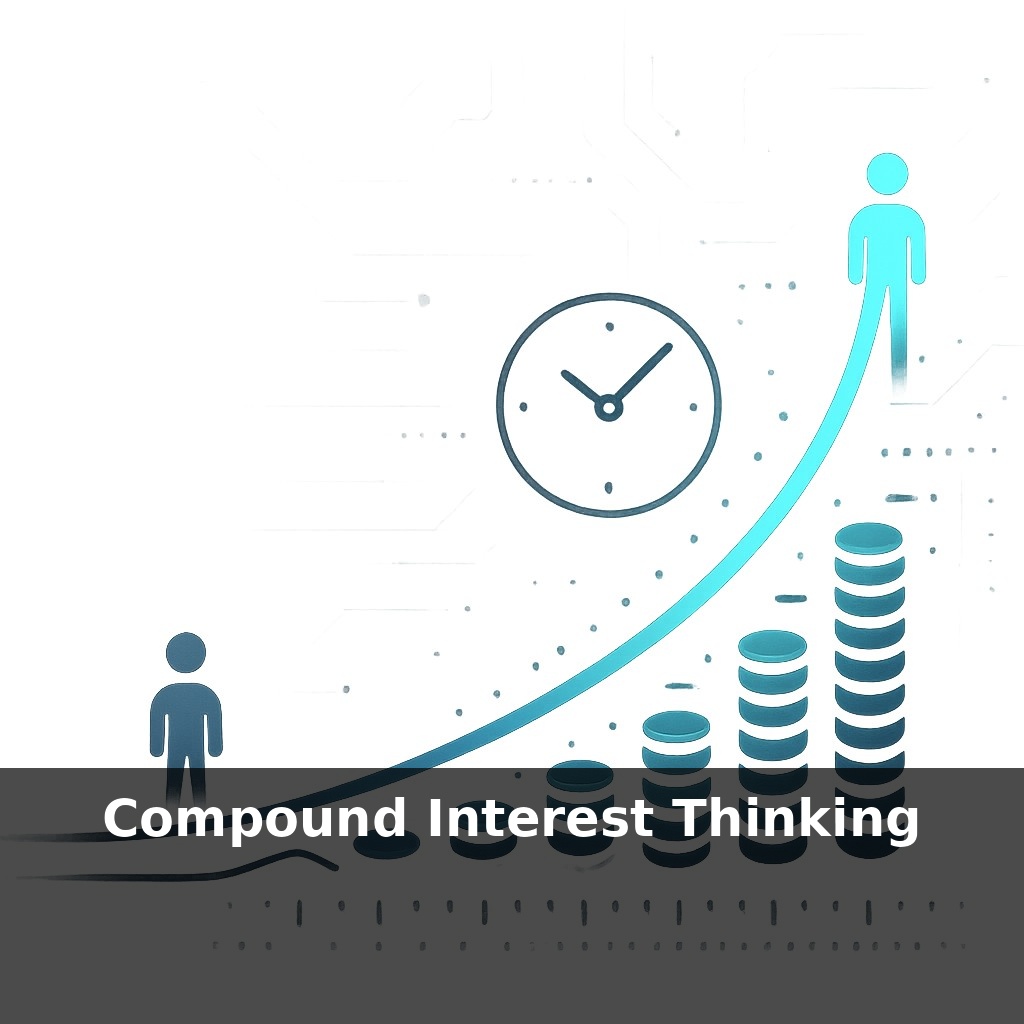
More than 9 out of 10 dollars of Warren Buffett’s wealth showed up *after* his fiftieth birthday. So here’s the weird scene: two friends start with the same paycheck, same bills, same “I’ll invest later” plan… Twenty years on, one is stuck—and the other quietly can’t stop multiplying money.
At 7% a year, skipping just the *first* decade of serious investing can cost you more than all the “smart moves” you make later. That’s the ugly secret behind those two friends: the gap doesn’t come from some magic stock pick, it comes from who let time work hardest.
Here’s where it gets uncomfortable: Most people *know* compound growth matters—and still behave like it doesn’t. They’ll negotiate a $20 phone bill, then casually delay their first $200 investment for “when things calm down.”
This is where rich people quietly think differently. They don’t just see an extra dollar as spending power; they see it as *optional future workers* they can hire. Each invested dollar becomes a tiny employee that never sleeps, never asks for a raise, and brings friends to work every year it stays on the job.
The real question isn’t “Can I afford to invest?” It’s “How many future workers am I firing every time I wait?”
Here’s where technology quietly tilts the game. A few decades ago, turning spare dollars into those “future workers” required brokers, paperwork, and hundreds just to start. Today, an app on your phone can buy you slices of an index fund before your coffee cools. Auto-investments, dividend reinvestment, and tax-advantaged accounts now stitch together small, boring decisions into serious trajectories. Yet most people use the same tools mainly for scrolling and spending. The rich lens is different: every frictionless tap that sends money *out* could just as easily be sending money to work *for* them.
Rich people don’t just “believe in” compound interest—they design their lives so it’s almost *impossible* not to benefit from it.
The big shift is mental: they stop thinking in **events** and start thinking in **systems**.
Most people treat money like one-off choices: - “Should I invest this bonus?” - “Should I pay off this card?” - “Should I max my account *this* year?”
Wealthy people ask: “How do I rig things so the *default* answer is always ‘invest more, earlier, and longer’?”
Technology is their enforcement mechanism.
Three quiet moves show up again and again:
1. **They move decisions from “willpower” to “wiring.”** Instead of trusting future motivation, they set rules the software follows without asking: - Income hits → a fixed % is swept into investment apps before it touches lifestyle. - Card paid off → the *old* payment amount gets redirected, not freed up for spending. - Raise arrives → apps increase contributions the same day, so lifestyle never expands to swallow it.
They decide *once*; the system executes *forever*.
2. **They weaponize “small and boring.”** A $5 subscription trimmed here, a $30 fee avoided there—on their own, trivial. But with tech quietly rerouting those drips into assets, the boring stuff becomes meaningful. Every optimization has a *destination*, not just a pat on the back.
3. **They stack growth loops.** Instead of hunting for the next hot thing, they: - Let one platform round up purchases into investments. - Use another to auto-increase contributions annually. - Let reinvested cashflows keep adding to the base.
None of these moves feels dramatic. That’s the point. The drama shows up twenty years later in the gap between someone who “meant to invest” and someone whose systems never stopped.
Here’s your challenge this week: Pick **one** money flow that currently ends in consumption—food delivery, rides, impulse shopping—and reroute a *fixed percentage* of every transaction into an investment app **automatically**. Don’t do it manually even once. Your only job is to set up the rule, then watch how fast you stop noticing the difference in spending—but can see the difference in what’s quietly accumulating.
A useful trick is to zoom in, not out. Instead of dreaming about “millions someday,” rich people ask: “What’s the *smallest* loop I can automate right now?”
Example: a developer sets her brokerage app to skim 3% off every freelance payment that hits her checking account. No big lump sums, no heroic discipline—just a quiet siphon attached to the one income stream she *doesn’t* emotionally count on. A year later, it’s a noticeable balance built from money she never mentally owned.
Another pattern: they link upgrades to growth. A consultant decides: “Every time I raise my day rate by $50, the *entire* first client at the new rate funds extra contributions.” Tech tags that client, routes the cash, and the promise keeps itself.
Here’s where it gets interesting: those little rules don’t just move dollars, they change attention. Once you see an app execute a rule flawlessly, you start hunting for the next tiny flow to wire up.
As lifespans stretch, the “working years vs. retired years” ratio flips—40 years of checks may need to fund 30+ years of freedom. That pushes tech from “nice-to-have” to survival gear: robo-advisors can juggle taxes, risk, and withdrawals in ways a spreadsheet can’t. Expect default enrollment, micro-investing in everyday apps, and AI that nudges you like a fitness coach—only it’s counting contributions, not steps, and quietly steering you away from lifestyle creep.
When tech handles the math, your real job shrinks to asking better questions: “What else can grow quietly if I step aside?” Maybe it’s skills, relationships, even health habits—each with their own version of auto-contribute and reinvest. Like a playlist you curate once and replay for years, the art is in choosing what loops deserve to run longest.
Before next week, ask yourself: 1) “If I treated my attention like compound interest, what’s one tiny, high-quality habit I’m already doing (reading 10 minutes, daily walk, focused work block) that I could consistently ‘reinvest’ in every day this week?” 2) “Looking at my calendar for the next 7 days, which 1–2 low‑yield ‘mental expenses’ (doom-scrolling, pointless meetings, reactive email checking) can I deliberately cut or cap, and what will I do instead with that freed-up time?” 3) “If I kept up my current habits for the next 5 years, what ‘account balance’ would I realistically end up with in my health, skills, and relationships—and what tiny adjustment today would most dramatically change that long‑term trajectory?”