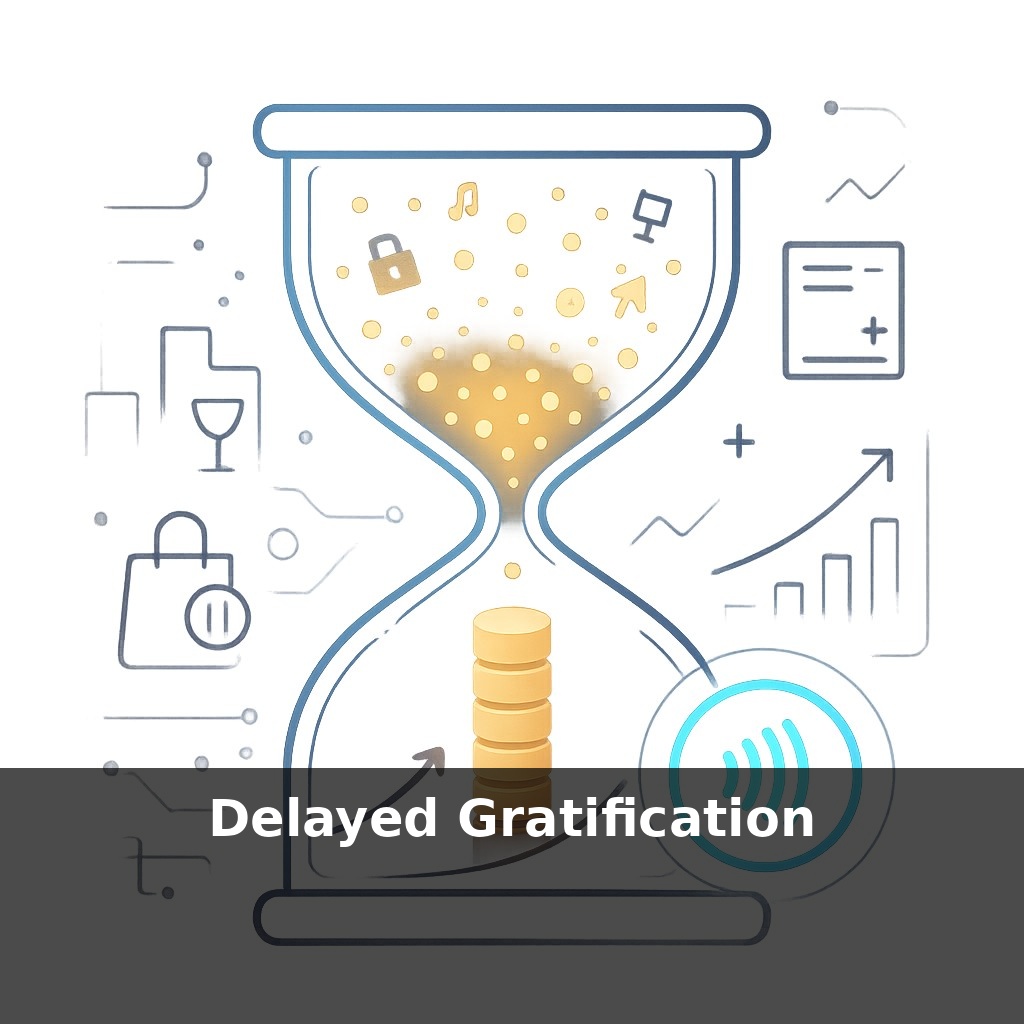
Warren Buffett made roughly 90% of his fortune after turning 50. Here’s the twist: the real power wasn’t a secret investment, it was his patience. So today, follow three moments: a tap-to-buy online, a night out, and a small raise—and how each can quietly rewrite your future.
Most people don’t go broke because of one huge mistake; they get quietly drained by a hundred tiny “I deserve this” moments that never feel dangerous in isolation. A food-delivery order here, an upgraded subscription there, a ride-share instead of a short walk—each choice feels like a drop in a bucket. But technology has turned those drops into a constant drip: one-click payments, auto-renewals, instant credit approvals. The system is designed to remove every bit of friction between your urge and your spending. That matters, because the easier it is to say yes now, the harder it becomes to say yes to your future. Delayed gratification today isn’t about denial; it’s about taking back control of decisions that have been silently automated for you—and redirecting them toward outcomes you actually care about.
Technology quietly shifts the default setting of your life: spend now, deal with consequences later. Notifications flash limited-time offers, “Buy Now, Pay Later” pops up like a shortcut, and streaming platforms showcase lifestyles that make your current one feel outdated. Underneath, two systems are arguing in your brain—one chasing quick hits of dopamine, the other trying to protect your long-term plans. Wealthy people design their environment so the second system wins more often. They don’t just rely on willpower; they rig the game so that doing the smart thing becomes the easiest, most automatic move.
Here’s the core difference in how rich people use technology: most people let apps decide when they feel “rich enough” to spend; the wealthy decide that number in advance, then force their apps to obey.
Behavioral economists call this “pre-commitment”: you lock in a smart choice *before* temptation shows up. That’s what Thaler and Benartzi did with “Save More Tomorrow.” Workers didn’t have to heroically resist every impulse; they quietly agreed that “next raise = higher savings rate.” No drama. No willpower. Contributions more than tripled in 40 months.
Wealth builders take that same logic and wire it into their digital lives:
- They schedule automatic investing for the day *after* each paycheck, so by the time ad-driven urges appear, the money they’d most regret spending is already gone. - They route windfalls—bonuses, tax refunds, RSUs—into separate “future” accounts by default, so lifestyle creep has to fight uphill to grab them. - They use tools that cap daily or weekly discretionary spending, not to punish themselves, but to turn hundreds of tiny decisions into a single, upfront choice.
Notice what this does to your brain. Instead of arguing with yourself 30 times a week (“Should I buy this?”), you make one higher-quality decision: “What percent of my income belongs to my future?” Then you let systems execute that decision automatically. The prefrontal cortex does its job once; the software repeats it indefinitely.
Consider Ronald Read, the janitor who died with an $8 million portfolio. His “technology” was primitive—paper statements, dividend checks—but the principle was identical: decide once to keep buying and not selling, then refuse to renegotiate every time markets or moods shifted.
In a world where apps are optimized to separate you from your money, wealth builders flip the script: they use the same speed and convenience to separate their *future money* from their present impulses—before the impulse even appears.
Think about three people getting a $200 surprise today.
Person A upgrades their phone, scrolls a bit happier, and is back to normal by next week. Person B throws a spontaneous dinner, posts the photos, and the memory fades under the next set of notifications. Person C quietly sends the $200 into an index fund they’ll barely look at.
Fast-forward 20 years at a modest return: that one “boring” decision is now worth several dinners, several phones—without lifting another finger. Not exciting in the moment, but it quietly tilts the entire arc of their net worth.
Here’s where tech becomes leverage instead of temptation. Some founders set strict rules: every time their company’s valuation jumps, a fixed slice of the gain routes straight into ultra-conservative assets. No debate. Some employees redirect vesting stock into diversified funds on autopilot, so they never feel “suddenly rich” enough to burn it.
In music terms, it’s like setting a click track: one early, disciplined rhythm that keeps every later performance from drifting off tempo.
Longer lives and smarter tools could split savers into two different futures. One group lets frictionless spending quietly stretch a 30‑year retirement into a 20‑year budget. The other treats each app like a training ground: tiny delays (24‑hour holds, cooling‑off timers, auto‑escalating contributions) become mental “reps” that strengthen future‑oriented choices. Like gradually adding weight at the gym, those subtle upgrades compound until your default digital life starts building cushions instead of cliffs.
Tiny choices are like tabs in your browser: one or two feel fine; fifty slow everything down. Each tap-to-upgrade or “treat yourself” adds mental load as well as cost. Curiously, people who cut a few recurring splurges report feeling lighter, not deprived—more spare cash, fewer decisions. The real gain isn’t just money; it’s reclaimed attention.
Before next week, ask yourself: When I’m tempted to choose the quick hit (scrolling, snacking, buying, or skipping my deep work), what *exact long-term win* do I say I care about that I’m quietly trading away in that moment? In the next 3–5 days, where is one recurring situation (evening TV, phone in bed, mid-afternoon slump) where I’m most likely to abandon my future self, and what very specific “friction” could I add there—like moving the app off my home screen or putting the snack on a high shelf—so the impulse has to slow down? Tonight, when I do something hard but aligned with my future (saving instead of spending, practicing instead of scrolling, going to bed on time instead of “one more episode”), how can I deliberately notice and celebrate the quieter, less flashy satisfaction that comes from honoring my long-term self?