Your brain can launch a full‑body survival response before you even know what you’re looking at. A shadow on the sidewalk, a buzz in your pocket, a stranger’s tone—within a blink, your heart, thoughts, and decisions have already been quietly steered. How is that even possible?
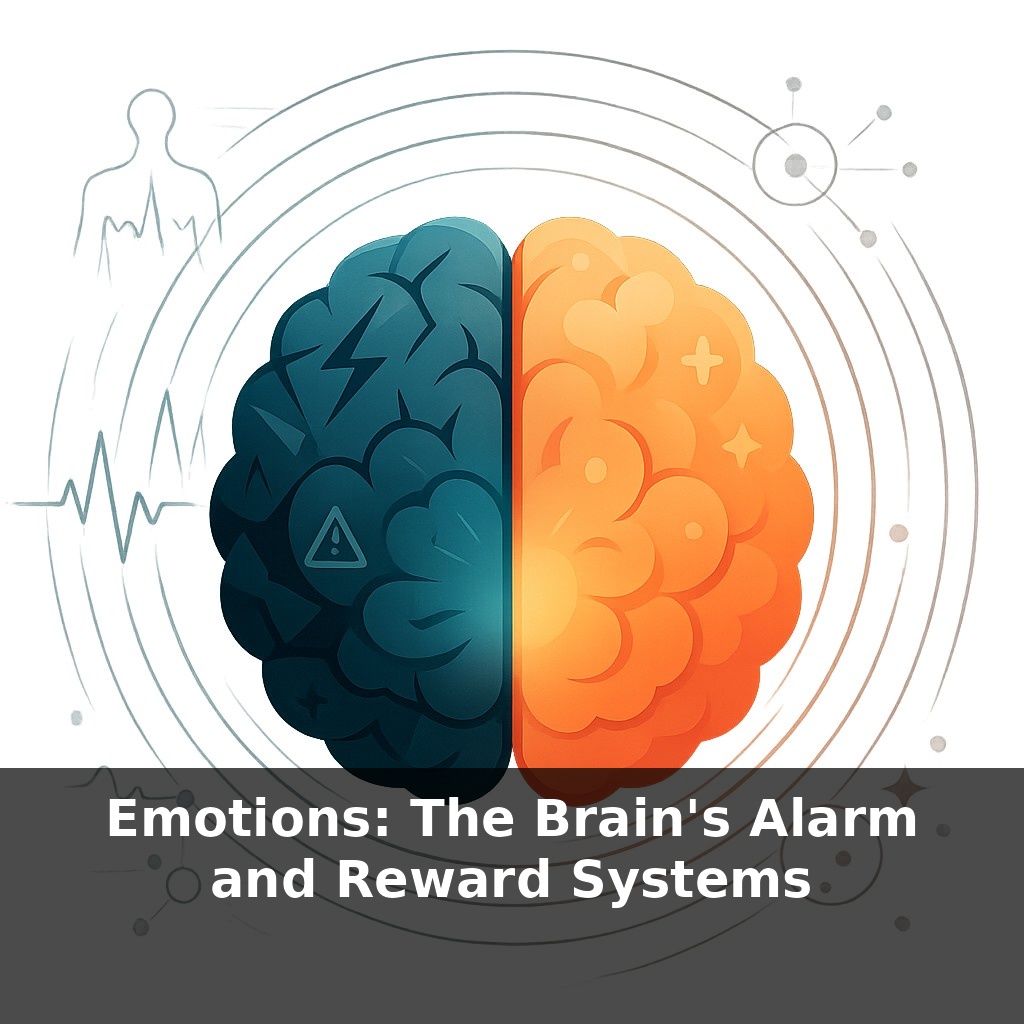
That split‑second steering isn’t random—it’s your brain’s built‑in alarm and reward systems running silent calculations. One scans for “could this hurt me?” while the other asks “could this help me?” and they’re constantly bidding for control of your attention, your body, and your next move. A sharp email from your boss, the scent of coffee, a notification from someone you like—each is instantly sorted into threat, opportunity, or noise. You don’t wait to think it through; your brain quietly tags it and shifts your energy: tension in your shoulders, a burst of motivation, a sudden urge to check your phone “just in case.” Over time, these micro‑reactions shape big patterns: what you avoid, what you chase, and even who you think you are. In this episode, we’ll unpack how those two systems talk, compete, and how you can start to influence their conversation.
Most of this plays out far below the level of “how do I feel about this?” Instead of asking your opinion, your brain is running crude but fast checks: “Does this look like something that hurt me before?” “Did something like this ever lead to a win?” That means your past experiences quietly bias today’s reactions. A teacher’s raised eyebrow can feel like danger if criticism used to precede humiliation; a calendar ping can feel weirdly good if it often led to praise. Over years, these pairings turn into habits of feeling—automatic moods that show up before you’ve had a chance to choose them.
When that alarm system lights up, the first thing it does is grab your body’s controls. The amygdala fires a rapid alert to your brainstem and autonomic nervous system: breathing shifts, blood vessels tighten or relax, digestion pauses, muscles prime. You feel this as a “gut feeling,” but what’s really changing is blood flow, hormone release, and nerve signals preparing you either to lean in or back away.
Crucially, this early wave doesn’t stay in the emotional centres. It reaches forward into the prefrontal cortex—the part that holds your goals, rules, and long‑term plans. That’s where raw “this matters” signals get compared against “who do I want to be right now?” and “what’s actually useful here?” The same jolt of anger that might drive you to slam a door in one context can, in another, be channelled into a firm but calm boundary, depending on how strongly your prefrontal regions can modulate that surge.
The reward side runs a parallel track. When the mesolimbic dopamine pathway senses something could lead to a payoff—status, connection, relief, novelty—it doesn’t just generate pleasure. It tags actions as “do that again” or “don’t bother.” If you check your phone under mild boredom and sometimes find a fun message, dopamine neurons encode that gap between “I expected nothing” and “this was actually good.” Next time boredom hits, the urge to reach for the phone arrives faster, and feels more compelling.
Over many repetitions, these alarm and reward signals carve grooves in how you respond. A critical meeting can become linked with threat, so even neutral calendar invites start to raise your heart rate. Conversely, collapsing on the couch with streaming after stress can be stamped as a tiny “win,” making it the default route whenever you feel depleted.
Heart‑rate variability (HRV) quietly tracks how flexibly you can move between these states. Higher HRV usually means your body can accelerate under pressure and then downshift again, and that your prefrontal cortex has more leverage over emotional impulses. Lower HRV tends to go with feeling stuck “on edge” or “shut down,” where alarm or numbness dominate and reward feels blunted.
Over time, chronic high alarm doesn’t just feel bad—it reshapes tissue. Animal studies show prolonged stress can beef up amygdala sensitivity while wearing down hippocampal circuits important for context and memory, which may explain why, under long stress, people feel jumpier yet more mentally foggy.
A deadline email hits your inbox, and your chest tightens before you’ve read the subject line. Two minutes later, a colleague cracks a joke and you feel a small lift. Those tiny swings aren’t random mood shifts—they’re your alarm and reward systems taking rapid turns at the wheel. One common pattern: after a tense interaction, people often feel a sudden craving—not for “pleasure” in the abstract, but for something that has reliably produced a tiny uptick before: scrolling, sweets, online shopping, one more episode. Your brain isn’t chasing joy; it’s chasing “less bad than a moment ago.” Over months, this can wire an almost invisible chain: social stress → digital escape → short relief. Break the chain once—say, by taking a brisk 5‑minute walk instead—and you’ll notice how wrong it feels. That discomfort isn’t failure; it’s your old prediction model protesting, “This isn’t how we fix this feeling.” Recognizing that protest as a sign of rewiring, not a sign to give up, is a key leverage point.
A fast‑moving implication: as we map these circuits more precisely, “mental fitness” may look less like willpower and more like training specific neural pathways, the way athletes condition muscle groups. Schools and workplaces could someday offer stress “gyms,” where people use biofeedback, tailored breathing drills, and VR scenarios to practice shifting state on demand, then watch their own patterns change in real time—more like tuning an instrument than fixing something broken.
You can’t switch these systems off, but you can change what they expect. Each small choice—pausing before replying, taking three slower breaths, celebrating a tiny win—feeds new data back into the network. Over weeks, the “default settings” shift: alarms ring a bit softer, rewards come from quieter sources, and your reactions start to feel more like decisions than fate.
Start with this tiny habit: When you notice a strong emotion spike (like irritation, anxiety, or excitement), silently say to yourself, “Alarm or reward?” and pick one. Then, take exactly one slow inhale through your nose and one long exhale through your mouth while labeling it in your head, e.g., “This is my alarm system firing” or “This is my reward system lighting up.” If you’re alone, lightly tap two fingers on your chest once as a physical “I noticed that” marker, then go back to whatever you were doing.