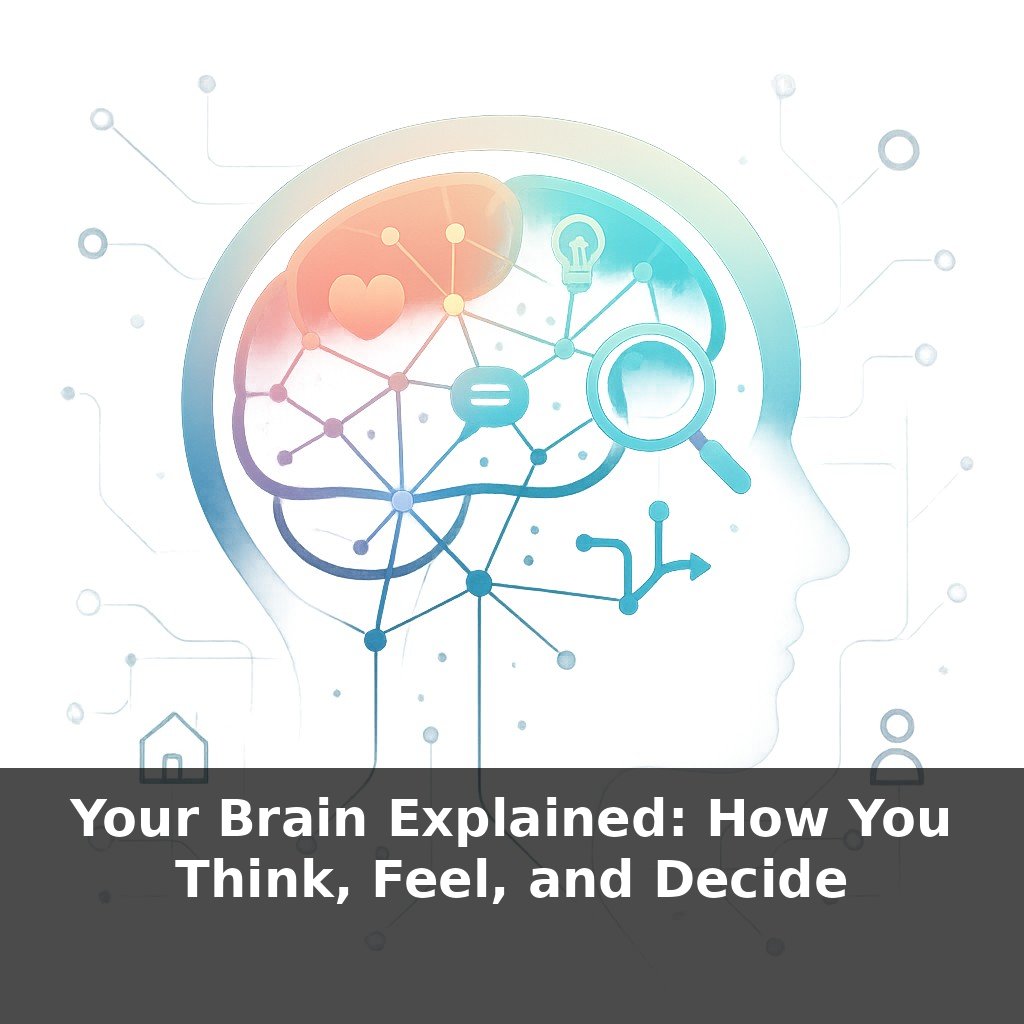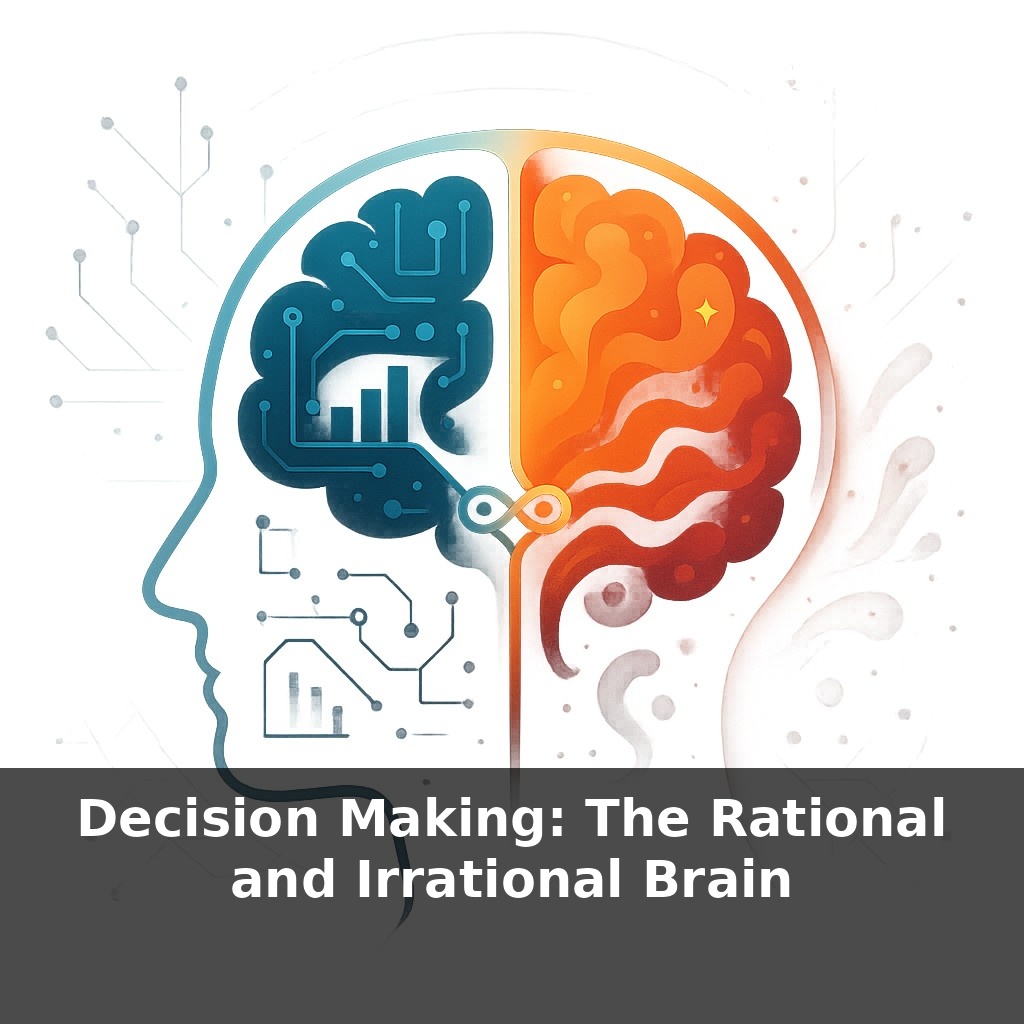
Right now, you’re deciding whether to keep listening—without really choosing to. In the next few minutes, your brain will quietly make hundreds more calls like that. Some will be wise, some will be weird. The twist is: both your “rational” and “emotional” brain think they’re in charge.
That quiet tug-of-war inside your head matters most when the stakes jump: taking a job, ending a relationship, moving cities, investing money. In those moments, your brain doesn’t just “decide”; it negotiates. Past experiences, half-remembered warnings, and gut feelings all show up like guests at a crowded dinner table, each arguing for a different dish. Some voices push for safety, others for growth, and a few just want instant relief.
Modern life makes this even messier. Algorithms pre-sort your choices—from what you watch to what you buy—so you rarely face a blank menu. That sounds helpful, but it also means your internal negotiation is constantly reacting to options someone else already curated.
In this episode, we’ll zoom in on what happens when those inner voices clash, why bias reliably creeps in, and how to tweak the process so your biggest decisions are less random and more aligned with what you actually value.
Some of that inner noise isn’t random at all—it’s your brain running shortcuts. When you’re scrolling a menu with 40 options or weighing three job offers, your mind starts quietly trimming the list using habits, fears, and patterns it picked up long before this moment. Marketing teams and recommendation engines know this, and they design choice environments that gently lean on those shortcuts: default settings, limited-time offers, “bestseller” labels. The result is that a lot of what feels like free choice is actually guided selection—part you, part the digital world nudging from the sidelines.
For most daily choices, that automatic negotiation works well enough. You don’t need a committee meeting to decide between toast and cereal. But the system that handles breakfast is the same one that tries to price a startup offer, read a partner’s tone, or weigh a medical risk. That’s where its built‑in quirks start to matter.
One of the biggest is how the brain treats losses. In classic experiments by Daniel Kahneman and Amos Tversky, people consistently rejected bets that were mathematically fair because the pain of possibly losing $100 felt about twice as strong as the pleasure of possibly gaining $100. That “2× loss” weighting shows up everywhere: hanging onto bad investments, staying too long in unhappy jobs, or refusing to pivot when a project is clearly sinking. Your mind isn’t just checking the numbers; it’s asking, “How bad will it feel if this goes wrong?” and quietly amplifying that channel.
Another quirk is how much your decisions lean on bodily signals you barely notice. In the Iowa Gambling Task, participants draw from card decks that differ in long‑term payoff. Healthy brains start to favor the good decks after only a few dozen draws—often before people can explain why. Their palms sweat more before picking from the bad decks; the body flags danger first, and the mind later invents a story. Patients with damage to the ventromedial prefrontal cortex don’t get those early warning signals. They can recite the rules, but keep choosing badly. Without the right emotional “pings,” their reasoning drifts.
Now layer technology on top of that. When a platform like Amazon surfaces “frequently bought together” items or a handful of “top picks,” it’s not just being helpful. It’s collapsing a near‑infinite menu into a tiny, salient set. That reduced mental effort feels good, so your brain leans toward accepting the suggestion, especially when you’re tired or distracted. McKinsey has reported that these kinds of recommendation engines can account for roughly a third of sales—evidence that small interface nudges reliably steer real money.
None of this makes you irrational in some hopeless way. It means your decisions are co‑authored: by your past experiences, your body’s fast signals, and the structures of the apps, forms, and conversations around you. The skill to build is not “turn off emotion” or “resist every nudge,” but learning when to trust those quick pulls—and when to slow the moment down long enough for a different part of your brain to weigh in.
You can watch this play out in places you wouldn’t expect. A hospital triage nurse, for example, might feel a subtle urgency about one patient long before test results arrive. Years of experience have tuned their snap impressions; they’ll often be right, but they also know to double‑check when that urgency clashes with the data. In hiring, a manager may feel “drawn” to a candidate in the first 90 seconds, then spend the rest of the interview unconsciously justifying that pull. Without structured questions or scorecards, the fast impression quietly wins. Online, a subscription flow that auto‑checks “bill annually” or hides the “no, thanks” option shifts huge numbers of people with a single click. In complex choices—like choosing a treatment plan or a mortgage—people who perform best tend to alternate modes: they let first reactions surface, then deliberately seek at least one strong reason they might be wrong before committing. That simple pause recruits extra circuitry you’d otherwise leave idle.
Some of tomorrow’s most powerful “productivity tools” may quietly sit between your urges and your actions. A watch that vibrates when your stress spikes before a trade; glasses that tint subtly when you’re doom‑scrolling past your bedtime; a car that suggests a 30‑second pause when it detects risky maneuvers. Like a weather app for your impulses, these systems could forecast decision “storms”—raising new questions about consent, data rights, and who sets the default forecast.
Your challenge this week: notice three “forks in the road” each day—a tense email, a money choice, a health decision. Before acting, add one tiny speed bump: a deep breath, a ten‑second count, or a quick note of what you hope to protect or gain. You’re not chasing perfect choices, just learning the flavor of decisions you trust later.