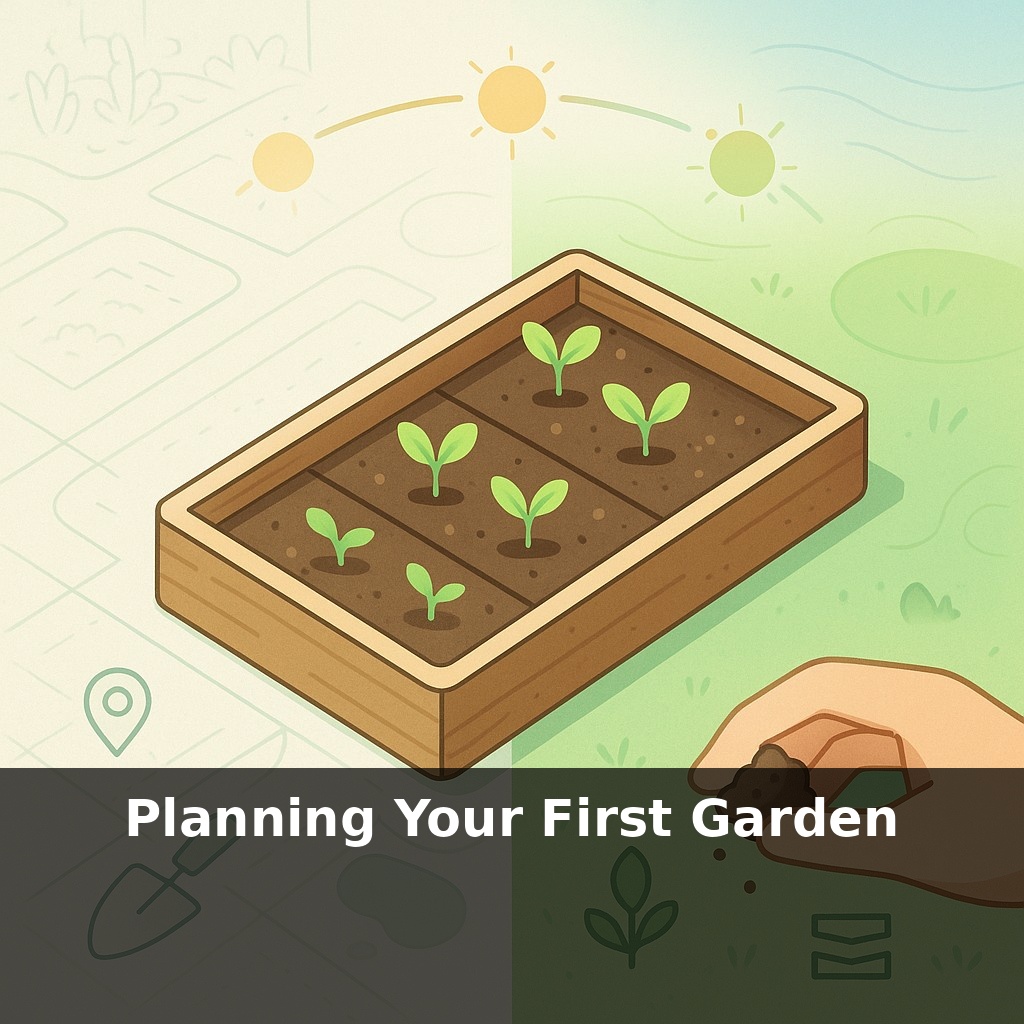
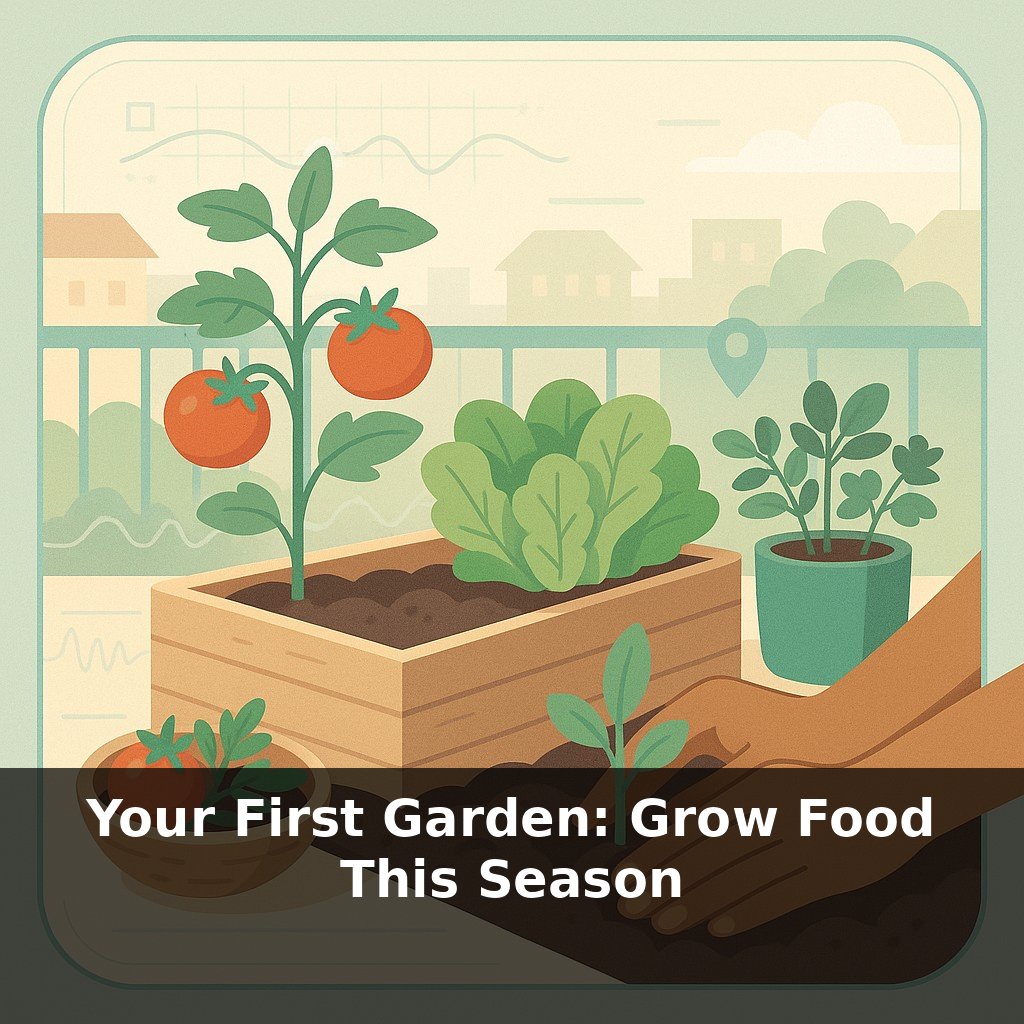
Nearly half of first-time gardens quietly fail in their very first season—not because people lack “green thumbs,” but because the planning happened after the planting. Today we step in before the shovel hits the soil, and rethink what a “starter garden” actually needs to survive.
Seventy percent of what will succeed in your first garden is already decided outside your front door: how the sun moves, where water sits after rain, how your soil smells and crumbles in your hand. The rest is what you choose to do with that reality. In this episode, we zoom in on those fixed conditions—not as limitations, but as levers you can actually use.
Instead of starting with plant catalogs, we’ll start with observation: counting true hours of sun, noticing wind tunnels between buildings, spotting where frost lingers longest. We’ll connect those details to practical moves—like why raised beds might buy you a two‑week head start, or how a single downspout could quietly irrigate half your plot.
Think of this as scouting the “field” before the game: the better you read it, the fewer surprises you’ll meet once roots are in the ground.
Plants don’t care what you *intend* to grow; they respond to what’s actually happening in your space—temperature swings, stray reflections off a window, the warm pocket next to a stone wall. This is where basic science quietly joins your planning. Photosynthesis sets a minimum “light budget” each plant needs. Soil ecology decides whether roots find a bustling underground city or a near‑desert. And tiny micro‑climates—those odd spots that frost last or dry fastest—can turn a borderline plant into a reliable producer if you match it wisely. We’ll use these as tools, not trivia, to stack survival odds heavily in your favor.
Eighty to ninety percent survival isn’t magic; it comes from stacking a lot of small, smart choices in the same direction. Now that you’ve started reading your space, the next move is deciding *what* actually belongs there this year.
Start with three filters: climate zone, plant purpose, and effort level.
First, confirm your USDA hardiness zone with the updated 2023 map, not an old chart on a seed packet. Then tighten that broad label with what you’ve noticed: windy balcony versus sheltered courtyard, urban heat versus open field. That combination—the official zone plus your observations—draws the real boundary of what’s realistic.
Next, choose a main purpose for this first garden: - Food (salads, herbs, a few “treat” crops like tomatoes) - Beauty (flowers for color and pollinators) - Low‑maintenance structure (shrubs, native perennials)
You can mix them, but naming a primary goal keeps the plan from turning into a chaotic wish list.
Then match effort level. Annual vegetables can be generous but demand regular watering, feeding, and harvesting. Perennial herbs and native flowers are slower to start but often settle into a steady rhythm with far fewer interventions. If your schedule is tight, leaning on perennials plus a small “intensive” annual patch is usually more satisfying than overreaching with a big vegetable grid.
Now translate light into plant lists. Instead of “full sun vs shade,” think in zones on your site: - High‑sun strips are prime for fruiting crops and Mediterranean herbs. - Dappled or afternoon‑shade areas are perfect for leafy greens, mint, chives, and many flowers. - Briefly lit corners can still host mosses, ferns, or foliage‑focused plants in containers.
Soil type adds another layer of curation. Sandy, fast‑draining spots suit thyme, lavender, and carrots in deep beds. Heavier, moisture‑holding areas can favor brassicas, many berries, and water‑tolerant natives. Instead of forcing every patch to be identical, assign crops to the conditions they secretly prefer.
Think of this like setting a sports lineup: you’re not asking every player to do every job; you’re putting each one where their strengths match the “field” you’ve just learned to read.
Finally, sketch rough clusters instead of precise rows: sun‑hungry plants together, thirsty ones close to the hose, perennials where you won’t need to disturb the soil every year. This loose map will become the backbone of your layout—and the reason most of what you plant has a real chance to thrive.
A balcony gardener in Phoenix and a backyard gardener in Vermont might both want tomatoes, but their “winning moves” will look completely different. One may lean on heat‑tolerant cherry varieties in large containers with light‑colored pots to keep roots cooler; the other might choose short‑season bush types tucked against a south‑facing wall to grab every extra warm day. The science is the same, but the playbook shifts.
Use your notes like a coach’s clipboard. If you logged strong afternoon wind, that’s a cue to trial low, sturdy plants or use a mesh windbreak so stems don’t snap on the season’s windiest days. Noticed a corner that stays surprisingly warm at night? That might be the only place a borderline rosemary shrub overwinters.
This is where tiny experiments are worth more than grand plans. Plant the same herb in two spots with slightly different light or wind; see which one thrives with less fuss. Over a couple of seasons, your space starts “telling” you what belongs where—your job is to keep listening.
Up to 80–90 % of well‑planned plantings survive; push that higher by treating your garden as a small experiment lab. As climates wobble, you might trial heat‑tolerant lettuce one year and shade a bed with a simple trellis the next, adjusting like a musician tuning between songs. Neighborhood patterns will shift too: more seed swaps, shared compost hubs, even block‑level rain‑harvesting that quietly turns alleys and balconies into connected strips of productive green.
Your challenge this week: design one tiny “future test plot” in your plan. Choose a single square meter (or one large container) and dedicate it to climate‑adaptive or experimental plants—maybe a drought‑tough herb, an unusual tomato, or a native flower mix meant for your region. Label it, track how often it needs water or attention compared with the rest of your garden, and note any surprises. Next season, expand only the experiments that earned their space.
Over seasons, that rough sketch on paper becomes a living map of what your space prefers. A pot that sulked in one corner may explode with growth a meter away, like a shy musician who thrives on a smaller stage. Follow those clues. As you swap, shift, and edit, your “first garden” quietly upgrades into a custom ecosystem that’s learning alongside you.
Before next week, ask yourself: 1) “Looking at the actual sunlight patterns in my yard/balcony over a full day, which exact 4x4 (or smaller) spot makes the most sense for my first bed, and does that change what veggies or herbs from the episode’s ‘beginner-friendly list’ I should start with?” 2) “If I commit to just 3 starter crops (for example: cherry tomatoes, lettuce, and basil), what specific problems do I realistically have—heat, shade, poor soil, forgetfulness—and how will I work *with* those instead of fighting them (e.g., using containers, choosing heat-tolerant varieties, or putting herbs near the kitchen door)?” 3) “When I picture myself actually walking outside to water and check the plants, what time of day, what tool in my hand, and what simple routine (like a 5‑minute morning check) feels doable every day, and what needs to change in my schedule or layout to make that routine almost automatic?”