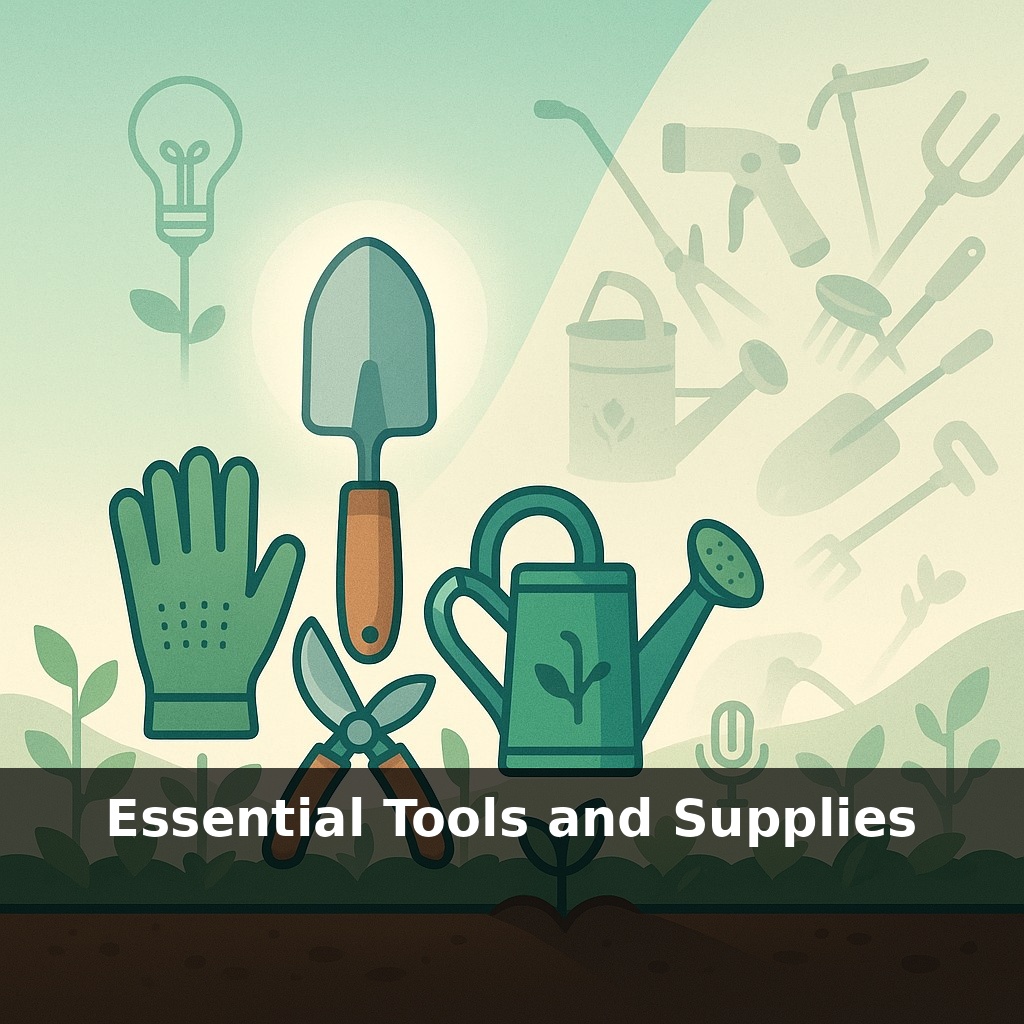
Your entire first garden can be built with roughly a dozen well‑chosen tools—yet most beginners buy a trunk full of gadgets they use once. Imagine standing in a garden aisle—on one side, a simple, reliable trowel; on the other, a flashy gadget promising to do it all. The dilemma of choice mirrors how every gardener’s journey begins: with intentions of simplicity that are often overshadowed by allure.
That choice in the aisle is really a choice about how you want to feel when you’re actually out in the garden. Do you want to move through tasks smoothly, like turning the pages of a book you can’t put down, or keep stopping to wrestle with handles that wobble and blades that bend?
In this episode, we’re zooming out from individual items and looking at your tool kit as a whole, the same way a painter thinks about a palette: a small, deliberate set of colors that can mix into almost anything. A lean, reliable kit doesn’t just save money; it quietly protects your back, your time, and your plants’ health.
We’ll look at which tools genuinely earn their space, what makes one last for decades instead of seasons, and simple habits that keep them working like new—so every minute in your garden feels easier and more effective.
So in this section, we’ll zoom in on what “enough” actually looks like when you’re standing in a store or scrolling online. Instead of hunting for the mythical perfect gadget, we’ll map out a small, specific roster of tools and supplies that quietly cover almost everything you’ll do in a first garden: breaking ground, planting, watering, feeding the soil, and cleaning up. We’ll also fold in one easily overlooked piece of tech—basic soil testing—so your choices aren’t guesses but responses to what your ground is telling you, like reading a weather report before planning a long hike.
Start with tasks, not tools. Picture your first month outside: loosening a new bed, slipping seedlings into place, yanking weeds, carrying compost, watering dry patches, trimming back something that’s taking over. Now map each of those actions to the minimum object that lets your body move efficiently: something to dig, something to slice, something to rake or smooth, something to carry, something to deliver water where you want it.
A practical way to choose is to walk through the life of a planting:
You break the surface and open the ground. That’s your heavier, foot-powered implement and a partner with wider teeth to pry and loosen. Together they handle new beds, compacted corners, and end-of-season cleanup.
You refine the surface. A lighter, wide-headed tool lets you skim through the top layer, uprooting tiny weeds before they matter and drawing soil up around stems. A broader tool with flexible teeth gathers leaves and clippings without tearing living roots.
You plant and move. Something short-handled and strong lets you carve small holes, tease apart roots, and scoop soil precisely. For bigger volumes—mulch, compost, a load of seedlings—a carrier that fits your space (narrow paths vs open yard) quietly becomes the engine of the whole system.
You water. Matching your setup to your scale is key: a gentle, targeted option for a balcony or raised beds; a broader, adjustable one if you’re crossing a yard. The goal is control: slow, soaking moisture around roots, not a flood that compacts and runs off.
You adjust and remove. A clean, sharp cutting tool deals with dead stems, crossing branches, and that tomato that outgrew its support overnight. This is also your precision instrument for taking cuttings or trimming away disease.
You protect yourself and the soil. Hands that don’t slip, blister, or fear thorns move faster and more confidently. A small stash of materials that feed and cushion the ground lets every planting recover from disturbance and hold water longer.
Finally, you listen to feedback. Instead of guessing what to add, you use a simple test to see what’s missing, then let compost and surface cover do most of the correction over time. The “technology” here isn’t flashy; it’s in the information loop between what you add, what you see growing, and what the numbers suggest should change.
One by one, you’re matching motions to minimum, well-chosen objects—like choreographing a short, repeatable routine that quietly carries you through the season.
Think about how a runner packs for a race. They don’t bring every shoe they own; they choose the pair that fits the route. Your tools are similar: they change with the “course” of your garden.
For a balcony grower, the core list might compress into a hand-scale set plus a collapsible container for hauling potting mix, and a measuring scoop that lives right in the bag. A small brush becomes oddly powerful here—it flicks dry mix from threads and zippers, keeps drainage holes open, and clears spilled seed so it doesn’t sprout where you walk.
In a shared community plot, the same ideas stretch differently: color‑tape your handles so they come home, add a simple lockable box to protect edges from weather and theft, and keep a labeled spray bottle for disinfecting blades between neighbors’ beds.
On a windy, dry site, one extra “tool” might simply be a stack of old cotton sheets or burlap: emergency shade and windbreak for transplants when forecasts jump.
Most households now spend more on lawn and garden than on books or movies, yet the real shift ahead isn’t more stuff—it’s smarter stuff. Expect tools that quietly log how and where you use them, then nudge you: “You prune most on Saturdays; time to disinfect?” Moisture‑sensing nozzles may refuse to waste water on already‑damp beds. Manufacturers will likely score tools not just on strength, but repairability, so a broken handle becomes a quick swap, not a trip to the landfill. Your shed starts to feel less like storage, more like a small, evolving lab.
Over time, you’ll notice which handles your hands reach for without thinking; that’s your real syllabus. Let curiosity lead: try one unfamiliar tool each season, borrow before you buy, and keep a tiny notebook in the shed for discoveries. As your notes grow, your kit will read like a travel journal of places you’ve dug, watered, and slowly learned to understand.
Before next week, ask yourself: Where in my current setup am I constantly “making do” with the wrong tool (like using kitchen scissors instead of a proper utility knife), and what’s one specific upgrade I can order or pick up today to fix that? Which 3 tools or supplies from the episode (for example, a self-healing cutting mat, painter’s tape, or a cordless drill) would instantly make my most annoying recurring task easier, and what’s my plan to get them into my space this week? Looking at my workspace right now, what rarely used gadgets or duplicates could I donate or box up so the essentials from the episode can actually be visible, reachable, and ready to use?