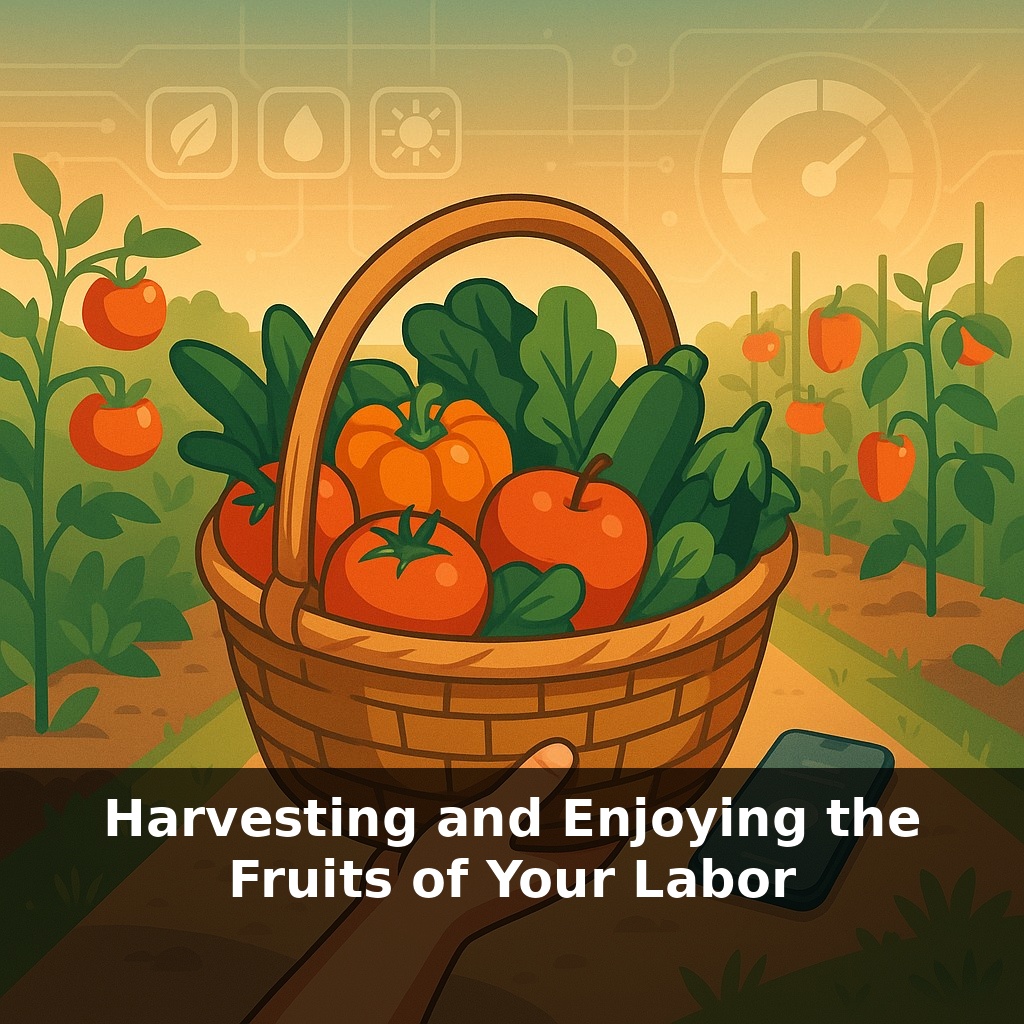
About a third of the world’s food never feeds anyone—not because it wasn’t grown well, but because it wasn’t harvested or stored quite right. You walk into your garden, basket in hand, and face a quiet puzzle: is this the moment… or will one more day ruin weeks of work?
Here’s where gardening quietly shifts from “growing plants” to “growing meals.” Up to now, you’ve focused on getting seeds to sprout, plants to survive, and pests to stay mostly under control. Now the question flips: how do you invite all that effort into your kitchen at its absolute best?
This is where tiny details suddenly matter. The same tomato variety can taste flat or phenomenal depending on which morning you pick it. A winter squash can last three months or three weeks based on how you clip the stem and where you set it down afterward. You’re not just preventing waste; you’re shaping texture, sweetness, and even how your future self will eat in February.
Think of this stage as editing a first draft. The garden gave you raw material; your choices now decide what’s kept, what’s polished, and what becomes a long-lasting “greatest hits” in your pantry.
Now you’re stepping into a different role: part field scientist, part home cook. Instead of staring at plants and wondering “ready or not?”, you’ll start spotting biological signals the way a baker reads dough or a musician hears when a note is slightly off. Color shifts, subtle changes in firmness, even the feel of a drying stem become your dashboard lights. At the same time, your kitchen, fridge, and a cool corner of your house turn into “landing zones” where each crop gets the conditions it prefers, so that all the flavor and nutrition you grew don’t leak away in the last 24 hours before dinner.
Think of this stage as learning each crop’s “exit strategy.” Some want to leave the plant while still slightly underdone; others need every last minute outside before they shine in the kitchen.
Start with crops that keep developing after you pick them—tomatoes, melons that slip from the vine, many fruits. With these, your job is more like spotting the first clear sign the process has truly begun. Tomatoes, for instance, cross a biological threshold at first blush. From that moment, they carry the recipe for full flavor inside; they just need time and decent conditions to finish. That means you can step in earlier to dodge cracking, hornworms, or birds, then let them complete their arc on a counter instead of a chewed-up stem.
Other crops are “what you see is what you get.” Leafy greens, peas, and most root vegetables won’t sweeten or tenderize further off the plant. Here, the exact day and even the time of day become tools. Cool, early-morning harvest gives you crisper leaves and pods already loaded with water, which translates to better texture and longer usefulness in your fridge. With roots, you can plan a sequence: pull a few baby carrots for fresh snacks, then let the rest size up just to the point where cores are still fine-textured.
Then there are the long-haul players: onions, garlic, winter squash. Their finish line is a little ceremony called curing. You’re not just drying them; you’re letting outer layers toughen into armor. The signals are subtle—topple of onion greens, a corky neck that no longer feels juicy, a squash rind that resists your thumbnail. Once those cues show up, you move them somewhere warm, airy, and shaded so that protective skins can harden without sunburn or mold.
At the same time, you’ll start matching crops to post-garden “homes.” A spare shelf in a bedroom, a paper bag in a closet, the crisper drawer you usually ignore—each can become a custom zone. Your future pantry isn’t just jars and bins; it’s a small, shifting ecosystem where every harvest gets a place to finish, rest, or wait for its turn on the cutting board.
Think of this phase as building your own “greatest hits” menu for the year. Start noting which plants give you their best version under which conditions, the way a coffee fan learns which roast sings in a French press versus an espresso machine. Maybe the same variety of pepper is unbeatable fresh in July salsa, but becomes smoky and deep when you roast and freeze strips for winter pizzas.
You might treat one bed like a test kitchen. Take three small pickings of the same crop a few days apart and cook them side by side—quick sauté, slow roast, raw. You’re not just tasting; you’re mapping where each harvest shines. A handful of basil could become frozen pesto cubes, herb salt, or last‑minute garnish, each capturing a slightly different mood of the plant.
Over time, patterns emerge: this cucumber is best as a fridge pickle, that bean is born for the stew pot. Your garden stops being a random pile of produce and starts acting more like a well‑rehearsed band, where you know exactly which “instrument” to feature in each song.
Soon your garden will intersect with tools your grandparents never had. Cheap sensors could track plant stress the way fitness bands track your pulse, nudging you toward better timing without stealing the joy of intuition. Apps might learn your tastes, suggesting when to pick for “salad‑sweet” versus “sauce‑rich.” Think of it as a collaboration: your senses set the direction, the tech quietly tunes the details, like a sound engineer polishing a live performance in real time.
Over time, you’ll start spotting “seasons within a season”: a week when herbs are perfect for pesto, a cool stretch that begs for roasting trays of roots. Follow that rhythm and your garden becomes less like a pantry and more like a playlist you’re curating—mixing quick snacks, slow projects, and future comforts only you could assemble.
Before next week, ask yourself: “Where in my life have I already ‘planted seeds’—projects I started, relationships I’ve invested in, skills I’ve practiced—that I haven’t actually paused to enjoy or celebrate yet?” As you move through your day, notice one place where you’re still “toiling in the field” (over-preparing, perfecting, or planning) instead of actually tasting the fruit, and ask: “What would it look like to deliberately enjoy this today—sharing the result, using the skill, or savoring the milestone as-is?” Finally, when you feel the pull to immediately jump to the next goal, gently ask: “If I treated this season like harvest instead of hustle, what small, specific way could I rest, share, or celebrate what’s already grown before starting something new?”