Right now, almost everyone gets their news through a screen—yet most of us scroll faster than we think. You’re on the bus, at the gym, in bed, and a headline flashes past: “Experts warn…” Do you pause to ask, “Which experts? Says who?” Today, we press on that tiny moment of doubt.
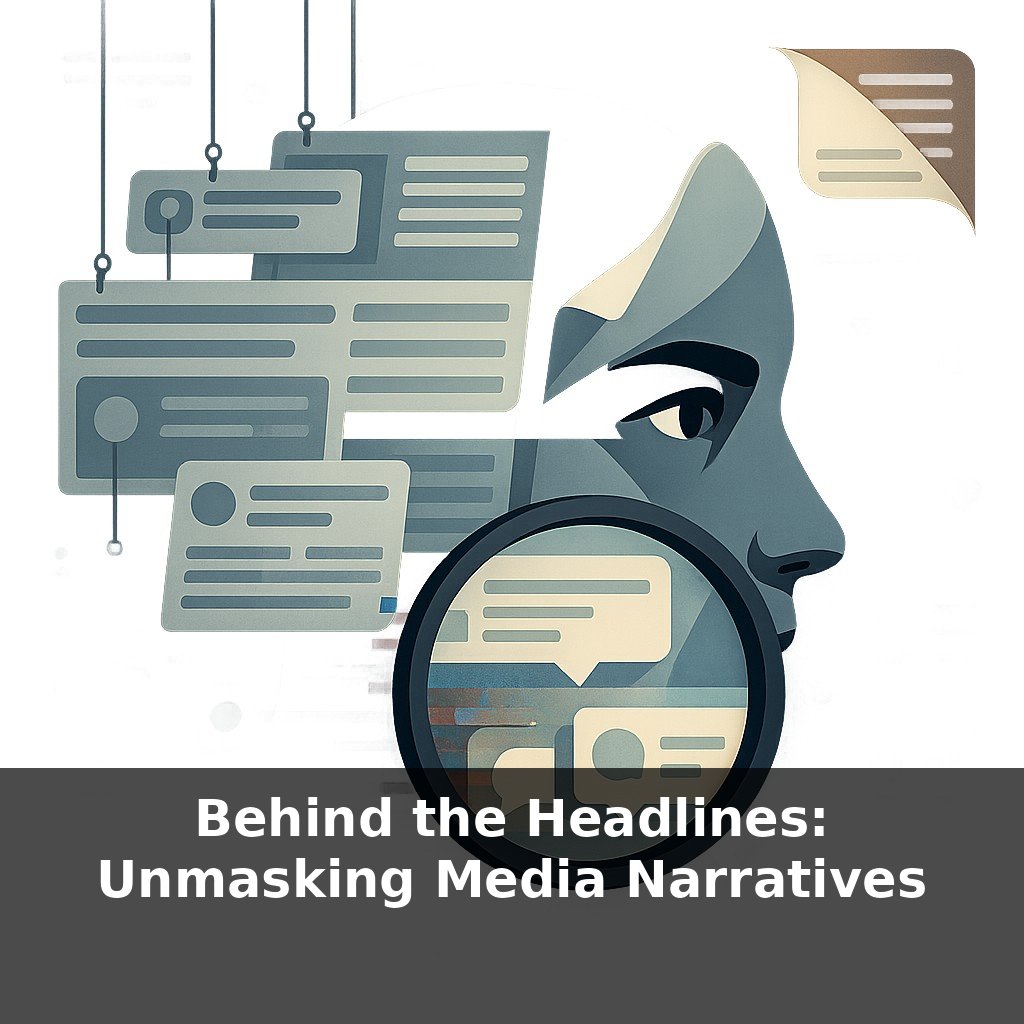
Ninety‑four percent of U.S. adults now get news online, but the feed we see isn’t a neutral window on the world—it’s a customized mirror polished by algorithms, advertisers, and our own clicks. You’re not just deciding what to read; hidden systems are quietly deciding what to show you. That’s where media literacy in the digital age lives: not only in how carefully you read a headline, but in how well you can trace the invisible hands that placed it in front of you.
This goes far beyond spotting a sensational story. It’s about asking: Who paid for this? Why am *I* seeing it now? What data about me helped shape this post, this ad, this “recommended for you”? In this episode, we’ll move from that brief hesitation during the scroll to a more deliberate stance: treating every piece of online content as a clue in a much larger system we’re all swimming in.
Most of us were never actually taught how this new environment works; we just slipped into it as apps updated and platforms evolved. Schools are only starting to catch up—Finland, for example, now weaves media‑skills practice into everything from history to math. Meanwhile, a Stanford study showed that even “digital natives” struggle to spot something as basic as an ad disguised as news. The gap isn’t intelligence; it’s training. Being online all day doesn’t grant x‑ray vision into what’s credible. That’s a separate habit set, one we can still deliberately build as adults.
Here’s the quiet twist: the problem isn’t just obviously false stories—it’s how easily half‑true, emotionally charged, and carefully framed content slides past our defenses. A headline can be technically accurate and still deeply misleading depending on what it leaves out, which photo it pairs with, or which single data point it spotlights.
A practical way to see this is to separate *what is being said* from *how it’s being sold*. The “what” is claim and evidence: numbers, quotes, documents, on‑the‑record sources. The “how” is emotion, visuals, and framing: dramatic music in a video, an outraged caption, a cropped image that hides the calm context just outside the frame. Strong media literacy treats those as two different questions: “Is this true?” and “How is this trying to make me feel or act?”
That second question matters because emotions outrun fact‑checks. Studies of misinformation on social platforms show that posts triggering anger or fear spread faster than sober corrections, even when fact‑checks appear right underneath. This is why relying only on external fact‑checkers, or waiting for labels, is too passive; by the time a warning appears, the story may already be lodged in our memory as “something I heard.”
So the skill shifts from only debunking isolated posts to noticing *patterns* of persuasion. Does this account constantly use humiliation or sarcasm toward one group? Does a channel always cast one party as heroic and the other as corrupt, no matter the topic? Even when individual claims check out, repeating the same emotional template can slowly harden our views without us realizing it.
There’s also the layer of our own participation. Every time we share, remix, or comment, we’re not just passing along information; we’re helping platforms learn what kinds of messages get attention. In that sense, we’re co‑authors of the environment that will later shape us. Media literacy, then, isn’t only defensive; it’s about choosing what kind of ecosystem we help build with each click and post.
In practice, this means developing small, repeatable habits: pausing before amplifying a story that flatters “our side,” checking whether a viral screenshot has a fuller context elsewhere, noticing when a headline’s certainty rests on very thin sourcing. Over time, the goal is less to become a walking lie detector and more to become the kind of reader and creator who’s hard to emotionally hijack—and harder still to recruit as an unthinking amplifier.
Open a short video that’s blowing up in your feed: a stitched clip, bold captions, dramatic zoom, thousands of furious comments. Instead of asking only, “Is this true?”, try tracing the choices behind it. Why *this* five‑second clip from a ten‑minute speech? Why freeze the speaker mid‑blink instead of during a calm moment? Why cut off the question that came before?
Here’s where a travel‑style metaphor helps: treat each post like arriving in a new city. First, check the “border signs”: Who runs this account? What else do they “import”—only outrage, or a mix of tones and topics? Next, wander off the main tourist street by clicking through to the original source, longer interview, or full dataset. Finally, talk to “locals” with different views—look for at least one credible source that interprets the same event differently, and note what each leaves out. Over time, you’ll start seeing recurring propaganda “neighborhoods” and recognizing when you’re being led down the same narrow alley again.
As AI systems quietly learn to mimic individual voices, your feed may soon contain “you‑shaped” arguments that feel uncannily persuasive. Watermarks and provenance tools like C2PA might flag some of this, but plenty will slip through informal chats, niche forums, and autogenerated videos. Democracies are already testing “information hygiene” drills in elections and crises, rehearsing how fast citizens can spot coordinated framing before it calcifies into polarized “common sense.”
Treat this less as homework and more as learning a new city’s backstreets: you won’t master it in a day, but each careful detour makes you harder to mislead. Your challenge this week: once a day, follow one viral claim back to its earliest traceable source. Notice what shrinks, grows, or vanishes along the way—and how your own view shifts.