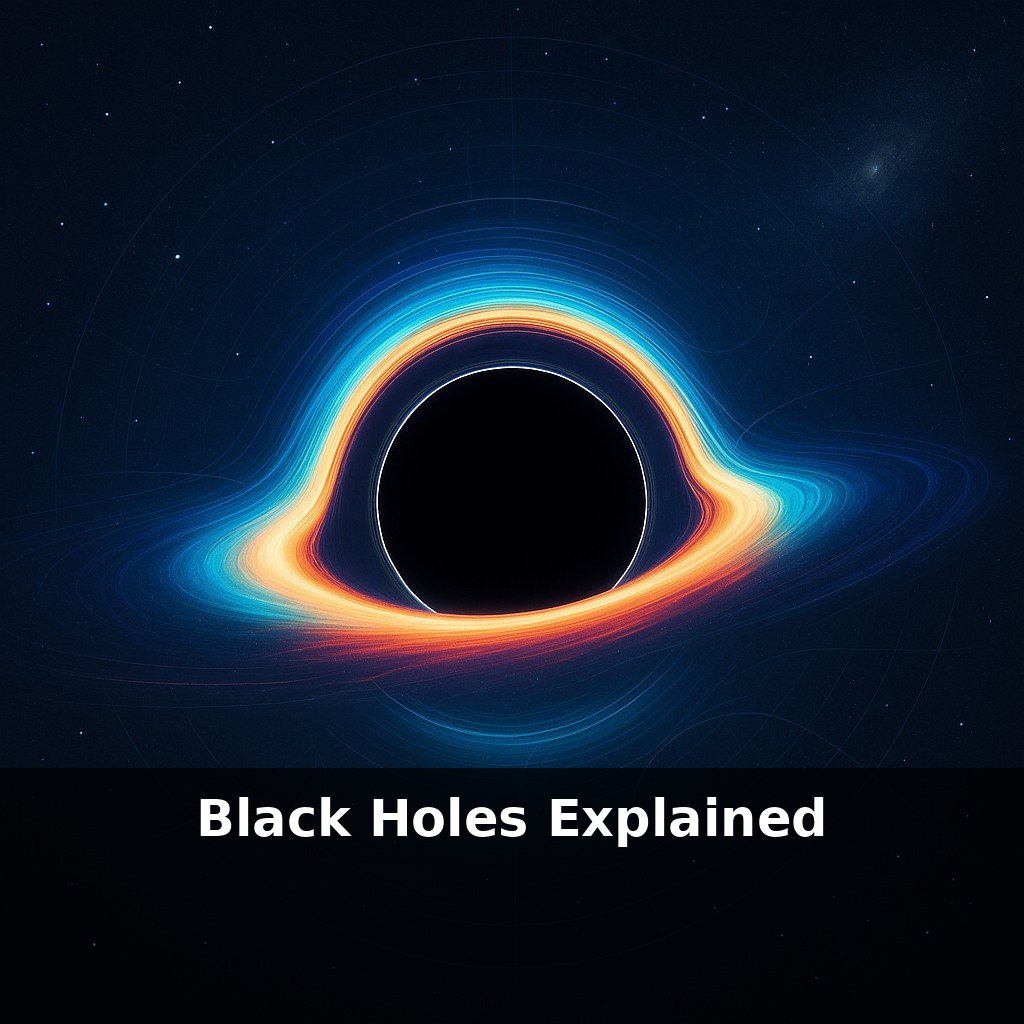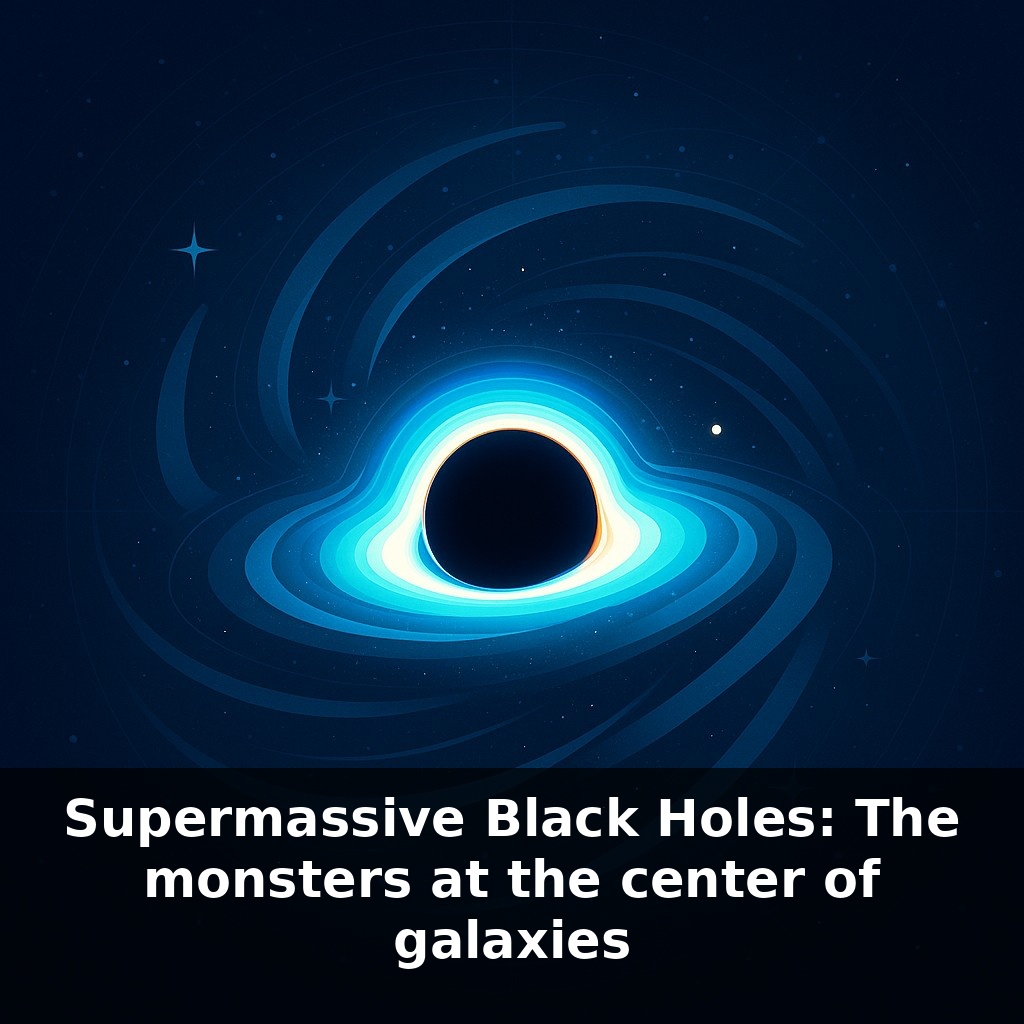
At the heart of our galaxy sits a silent heavyweight, millions of times more massive than our Sun—yet it’s smaller than the space our planets orbit. Tonight, we drop into that hidden core and ask: how can something we can’t see decide what an entire galaxy looks like?
A supermassive black hole is not just a passive weight in a galaxy’s center; it behaves more like a hidden conductor, quietly setting the tempo for everything around it. As gas and dust drift inward, they don’t simply vanish. Under the right conditions, they ignite into some of the brightest engines in the universe: active galactic nuclei and quasars. These outbursts can launch jets that punch out of the galaxy, heating or sweeping away gas that would otherwise form new stars. Strangely, this violence can *preserve* a galaxy, preventing it from burning through its fuel too fast. Astronomers even find a tight link between the central black hole’s heft and the surrounding bulge’s stellar motions, as if the core and its stars negotiated a shared growth plan over billions of years. In this episode, we’ll follow that negotiation and see how these monsters help sculpt the galaxies we see.
Yet these central monsters don’t always roar. For most of cosmic time, they seem quiet, flickering between feast and famine. When fresh gas funnels inward—perhaps after a galaxy merger—they can flare into brief quasar phases, then fade again, like a city that only lights all its skyscrapers during rare festivals. Evidence hides in unexpected places: faint X-ray glows, subtle radio flickers, or stars whipped into off-kilter orbits. By tracking these clues across many systems, astronomers can reconstruct when, and how violently, each galaxy’s core last woke up.
If you zoom out from any one system and line up thousands of galaxies side by side, a pattern jumps out: the heavier the central monster, the more tightly stars hustle around it. That tight link—the M–sigma relation—isn’t just a curious graph; it’s a fossil record of a long negotiation between the core and its surroundings. The numbers say that the central object typically claims only about 0.1% of the bulge’s mass. But somehow, that tiny fraction “knows” about the whole, as if growth at the center has been capped by a shared rule.
How might that rule be enforced? One path is pure gravity: when galaxies collide and merge, their central objects sink together, forming binaries that eventually coalesce. Each merger reshapes stellar orbits, shoving some stars away while deepening the central potential. Another path is feedback from brief active episodes. When the core lights up, radiation and particles push back on the same gas that would otherwise fall in and feed it. Enough outbursts over time, and the surrounding gas gets heated or removed, halting both star formation and further growth at the core.
This feedback isn’t one-size-fits-all. In giant ellipticals, the central engine can inflate vast bubbles in the surrounding hot atmosphere, visible in X-ray light as cavities where gas has been lifted or stirred. In more modest systems like the Milky Way, the signature is subtler: enormous gamma-ray “Fermi bubbles” rising above and below the plane hint at a past, more intense phase. In some galaxies, narrow cones of excited gas reveal where radiation once carved a path through dusty clouds.
Observations of distant galaxies add a time dimension. Young systems in the early universe often host wildly overfed cores shining as quasars, surrounded by messy, clumpy star-forming regions. Billions of years later, many of their likely descendants are calmer, with exhausted gas reservoirs and dormant centers. Comparing these eras suggests a life cycle: chaotic youth with rapid growth, self-limiting blowouts, then a slow fade into relative quiet, punctuated when fresh material arrives.
To probe this evolution in detail, astronomers combine tools: radio arrays tracing cold inflows and outflows, infrared telescopes peering through dust, X-ray observatories catching the hottest gas, and precise stellar surveys mapping how orbits respond. Piece by piece, they’re turning that neat M–sigma line from a mysterious correlation into a story of coevolution, written across billions of years and millions of light-years.
Astronomers test this coevolution story by treating the universe like a long-running natural experiment. Some galaxies look “caught in the act”: dusty systems where central X-ray flickers coexist with huge, cold gas reservoirs and chaotic starbirth. Others resemble retirees—smooth, reddish populations with only a faint radio glow hinting at a quietly simmering core.
A single object can also cycle through roles. The same center that once blazed as a quasar might, eons later, reveal itself only through a star ripped apart on a too-close pass, briefly lighting up the region. These so‑called tidal disruption events act like stress tests, exposing how tightly matter is bound near the center.
Here’s one helpful way to picture the variety: in some systems, the core behaves like a temperamental music producer, blasting “notes” of energy that can remix the gas “soundscape” far from the center; in others, it’s more of a background metronome, gently keeping time while the galaxy’s stellar “band” slowly ages out of its most active phase.
Upcoming tools will treat these giants less like mysteries and more like lab instruments. LISA will “listen” for deep cosmic bass notes from merging pairs, timing each ripple like a seismologist mapping Earth’s interior. Sharper simulations will test whether subtle mismatches with Einstein’s predictions hint at new ingredients—exotic fields, unfamiliar particles, even clues about dark matter hiding in how early monsters grew so fast.
We’re only starting to map how these giants tie into bigger puzzles: why some regions of the cosmos teem with galaxies while others are sparse, how early structures assembled so quickly, even how heavy elements were stirred into space. Your challenge this week: follow one new result about a galactic center, and trace how it might ripple through cosmic history.