Machines on your factory floor quietly trading data, spotting flaws before humans can see them, and teaching each other to work faster—this isn’t sci‑fi. It’s happening in plants across the world right now, and it’s quietly rewriting what “a good job” looks like.
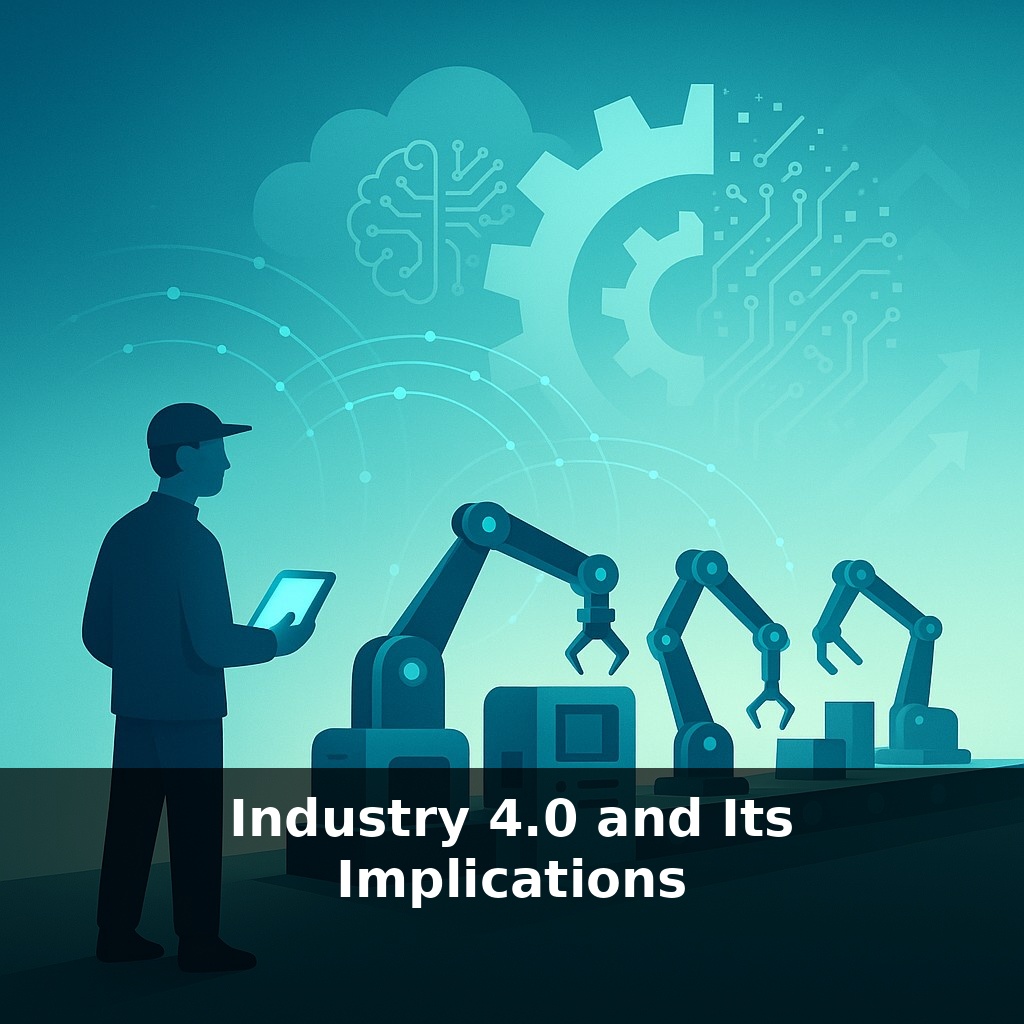
That quiet shift on the factory floor is part of something bigger: Industry 4.0, a global rewiring of how we design, make, and maintain almost everything. Sensors, AI, and cloud platforms now give manufacturers something they’ve never really had before: continuous, high‑resolution visibility into every step of production—like switching from a blurry map to live GPS with traffic, weather, and roadworks all layered on top.
This isn’t just about fancier machines; it’s about new rules for value and new definitions of “skilled.” When 70% of manufacturers are already piloting IoT on the shop floor and “lighthouse” plants are posting 30% productivity jumps, the real story for your career is this: roles are quietly tilting toward people who can read data, talk to both engineers and algorithms, and help companies decide *what to optimize for*—cost, speed, sustainability, resilience, or all four at once.
Suddenly, every step of making something can be tested like a science experiment: tweak the process, see the impact instantly, lock in what works. That changes who holds power at work. It’s less about who can lift more or memorize the most steps, and more about who can ask better questions of the data and translate messy reality into clear decisions. In many companies, the “line worker” is becoming the “process hacker,” the person who spots a tiny change that saves millions—or prevents a breakdown that would have silently wrecked a quarter’s results.
Here’s the twist most career advice misses: when factories become “smart,” the real constraint stops being technology and starts being people’s ability to redesign how work flows.
In a traditional plant, jobs were carved into rigid boxes—operator, technician, supervisor, planner. In connected plants, those edges blur. The person standing closest to the process often has the best intuition about what’s “normal,” while the system surfaces patterns no one could see before. The real value comes from fusing those two perspectives.
That’s why new hybrid roles are popping up on the shop floor:
- **Digital production specialist** – someone who can jump between the line and the dashboard, tweaking machine settings and data rules in the same shift. - **Maintenance technologist** – not just fixing breakdowns, but using condition data to decide *when not to touch* a machine because the risk of introducing a new fault is higher than letting it run. - **Industrial data translator** – the person who can hear a plant manager say, “We’re missing orders on Fridays,” then turn that into a concrete analytics question and a practical change in scheduling or setup.
In Lighthouse factories, these roles don’t live in an ivory tower IT team. They sit close to operations, iterating quickly, treating every improvement like a small software release: test, deploy, monitor, adjust.
For careers, that means three shifts:
1. **From “following procedures” to “designing better procedures.”** Checklists still matter, but the people who write and refine them gain influence. 2. **From “one machine” to “end‑to‑end flow.”** Knowing *your* station is baseline; understanding upstream and downstream impact is leverage. 3. **From “experience as years served” to “experience as experiments run.”** A five‑year veteran who has run 50 data‑informed trials can outrun a 20‑year veteran who hasn’t touched the new tools.
The paradox: the more digital the factory becomes, the more it rewards old‑school traits—curiosity, pattern‑spotting, and the courage to say, “Let’s try a different way of doing this,” backed by evidence rather than hierarchy.
On the ground, these shifts look less like robots taking over and more like job descriptions quietly stretching at the edges. A line operator starts recording tiny setup tweaks in a shared app, then gets asked to co‑design a new digital checklist. A maintenance tech notices that breakdowns spike after rushed changeovers and ends up leading a short “post‑changeover review” ritual that becomes standard practice. A planner who’s good with spreadsheets is suddenly pulled into cross‑functional meetings because they’re the only one who can turn raw logs into a story leaders understand.
Think of it like a hiking trail network being upgraded from hand‑drawn signs to live trail markers: the people who walk those paths daily are the ones best placed to suggest where to add shortcuts, rest points, or warning signs. In many leading plants, those “locals” are being invited into improvement sprints, digital pilots, and problem‑solving cells—long before their business card changes title.
Careers in this world bend rather than break. Instead of one fixed ladder, you’ll see side paths: an operator joining a cross‑site “recipe guild” to compare settings with peers abroad, or a planner rotating into a sustainability squad tuning scrap and energy use. Titles lag behind reality. The people who quietly learn to navigate between process, code, and policy become the ones others orbit around when big investment or shutdown decisions are on the table.
Careers built around this shift won’t feel like a single promotion ladder so much as a series of branching quests. Instead of asking “How do I avoid being replaced?” a sharper question emerges: “Where can I plug curiosity, tech comfort, and process insight into these new systems?” The people who keep asking that don’t just keep up—they quietly steer what comes next.
To go deeper, here are 3 next steps: 1) Block 45 minutes to complete the free “Introduction to Industry 4.0” learning path on Coursera or Siemens’ Industry 4.0 online academy, focusing specifically on modules about IoT sensors and predictive maintenance. 2) Download a free trial of Siemens MindSphere or PTC ThingWorx and connect it (even in simulation mode) to a simple data source like a CSV of machine data, then walk through their official “getting started” tutorial to build a basic dashboard. 3) Order or download “Industrie 4.0: The Industrial Internet of Things” by Alasdair Gilchrist and, using its chapter on cyber-physical systems, map your own factory/department onto the reference architecture in a simple one-page diagram using a tool like Miro or Lucidchart.