Right now, a stranger you’ve never met could be the most important person in your next career move. In one moment, they’re just a name in your feed; in the next, they’re the reason your résumé skips the pile and lands directly on a hiring manager’s desk.
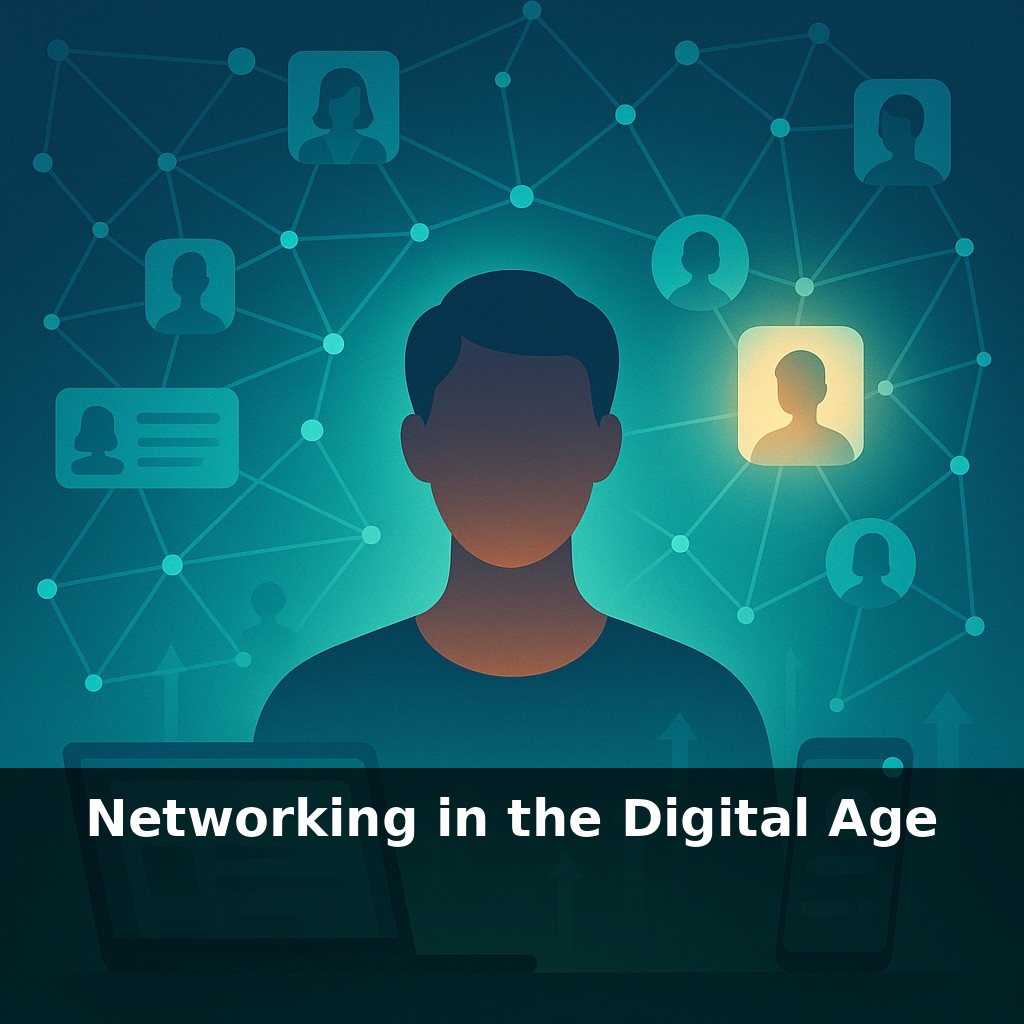
LinkedIn alone now hosts hundreds of millions of these “strangers,” quietly sorted and surfaced by algorithms that decide whose profile, comment, or DM appears in front of you. Networking is no longer a calendar event; it’s a constant background process, running every time you post, reply, or even update a headline. The twist: most people still use digital platforms like digital business-card holders instead of as living, breathing ecosystems. Your likes, posts, and follows become subtle signals—breadcrumbs that tell others what you care about and tell algorithms where to send you next. Ignore this, and your opportunities stay locked behind people you’ll never meet. Learn to shape it, and your online presence begins to work like a smart compass, quietly orienting you toward people, ideas, and roles you didn’t even know to look for.
Most people still approach all this like they’re “on” only when they’re actively job hunting, and “off” the rest of the time. But in the digital age, you’re broadcasting even when you think you’re silent: the posts you react to, the comments you leave at 11 p.m., the niche Slack you join at work—all of it quietly trains recommendation engines on who to place you near. That’s why weak ties now matter so much: the colleague-of-a-colleague who sees your thoughtful reply in a niche forum may be the one who later pulls you into a project, a referral, or an industry you hadn’t considered.
Here’s the uncomfortable twist the data keeps shouting at us: most people still treat LinkedIn and other platforms like upgraded phone books, while the people quietly winning are treating them like laboratories.
They run small experiments with their profiles, posts, and interactions, then watch what changes: who starts showing up, what kinds of messages land in their inbox, which topics consistently draw the right people into conversation.
Take your profile. It’s less a static CV and more a hypothesis about who you want to be visible to. A generic headline like “Marketing Specialist” is a weak hypothesis; something like “B2B marketer turning complex products into simple stories | SaaS & analytics” is much sharper. It gives other humans—and platform ranking systems—something to latch onto. That’s why tiny tweaks can have outsized impact: a clear headline, a focused “About” section, and a professional photo don’t just look nicer; they raise your chances of being surfaced to strangers who are searching for exactly what you do.
Then there’s how you show up in public spaces. Commenting thoughtfully on a VP’s post weekly often beats sending them a cold DM. You’re building familiarity in low-pressure, public ways. Over time, you stop being “random connection request” and start being “that person who always adds something useful in the comments.” That subtle shift is often the difference between a message being ignored and a real conversation starting.
Content is where many overcomplicate things. You don’t need viral threads; you need consistent, relevant traces of what you know and how you think. Short breakdowns of a challenge you solved, a quick teardown of a product launch in your industry, a mini “before/after” from a project—these act like beacons. People who care about the same things find you, and suddenly those “weak ties” aren’t accidental; they’re clustered around the problems you want to work on.
Think of a designer who regularly posts redesign critiques, or an engineer sharing concise diagrams of tricky concepts. Over months, they stop chasing opportunities. Opportunities begin to route their way because the internet finally has something concrete to associate them with.
Watch how this plays out in real life. A mid-level data analyst starts quietly posting short breakdowns of messy dashboards they’ve cleaned up, tagging the tools they used and asking one specific question each time. A director at another company notices a post while scrolling on the train, clicks through, and saves it. Two weeks later, facing a similar problem, that director remembers the post—not because it went viral, but because it was concrete and practical—and reaches out to ask, “How did you structure that workflow?”
This is how online visibility often turns into opportunity: not through grand gestures, but through a trail of small, useful artifacts people can stumble across when they need them. One thoughtful comment inside a niche Slack on Monday can set up a DM on Thursday, which turns into a quick call the following week. You’re not chasing people; you’re making it easy for the right people to find you exactly when you’re relevant.
A quiet shift is coming: as AI tools auto-generate outreach and comments, “good enough” messages will blur into background noise. What cuts through won’t be longer posts, but sharper specificity—stories only you can tell, patterns only you’ve noticed. Think less about volume, more about *recognizability*: would someone in your field quote your take in a meeting tomorrow? Your challenge this week: post one concrete observation from your work that a stranger could immediately reuse.
In the next few years, the “default” path into roles will keep shifting from applications to introductions—often triggered by a post, comment, or tiny project you shared months earlier. Treat each small contribution like a brushstroke in a larger mural: individually modest, but together forming a picture clear enough that the right people know exactly where you fit.
Try this experiment: For the next 5 days, choose one person you admire on LinkedIn (a past guest’s strategy from the episode) and leave a thoughtful comment that adds one concrete insight, resource, or example to their post—no “Great post!” allowed. Then, send them a short follow-up DM that: (1) references that specific post, (2) shares one relevant thing you’re working on, and (3) asks a single, easy-to-answer question (like, “How did you land your first client in X?”). Track how many replies, profile views, and new connections you get by the end of the 5 days, and notice which type of comment + question combo gets the most engagement.