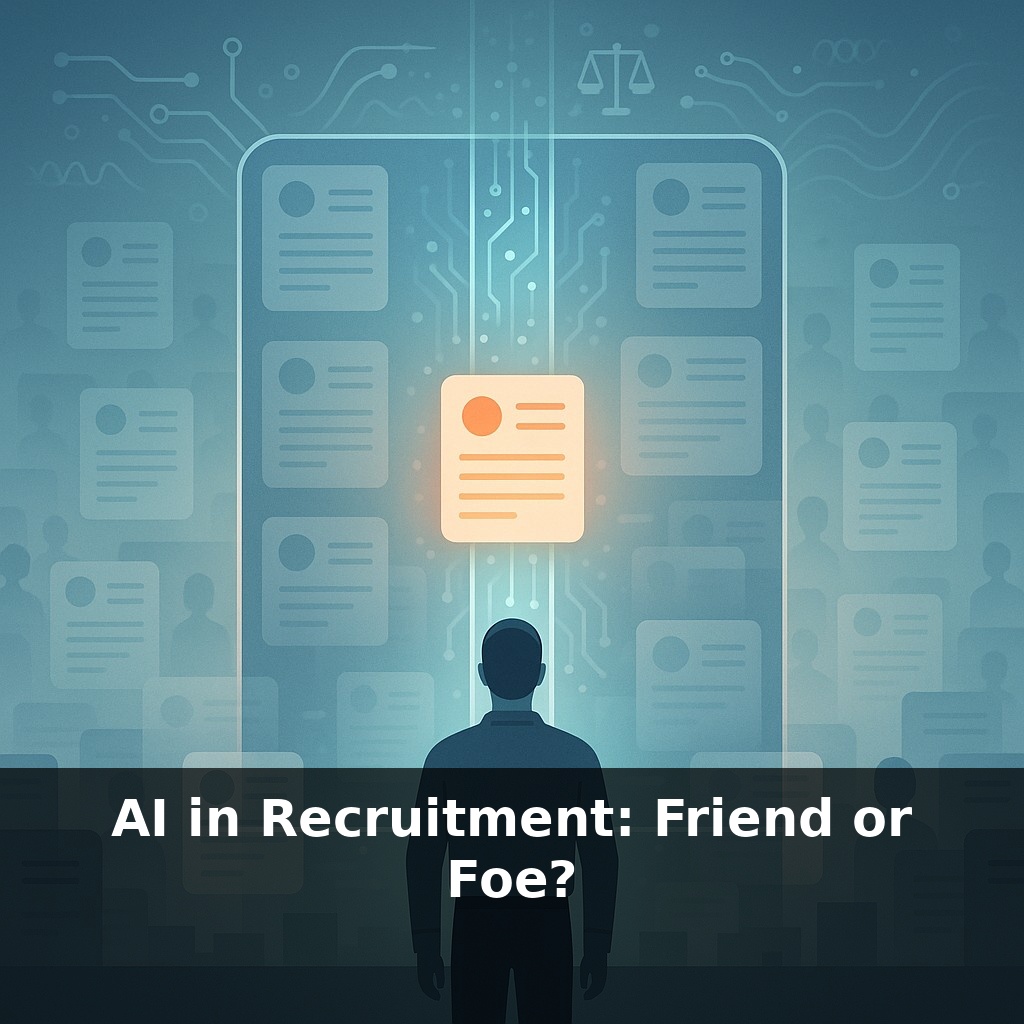
Right now, AI tools quietly decide which applications live or die—long before a recruiter reads your name. In one recent study, about three out of four resumes were filtered out automatically. So here’s the twist: is AI your fastest route to an interview, or your unseen gatekeeper?
Here’s the twist: the same systems that quietly filter applications are also reshaping what a “strong candidate” even looks like. Instead of only scanning for degrees, big-name companies are feeding these tools data on performance, retention, and promotion to predict who is likely to thrive long term. In some firms, your GitHub commits, participation in online challenges, or even how you answer situational questions in a chatbot can boost your visibility more than a polished CV ever could. For job seekers, that means the old playbook—perfect resume, generic cover letter, mass applications—is increasingly mismatched to how decisions are made. It’s less like handing in a single document and more like leaving a trail of “signals” that algorithms can pick up across platforms and touchpoints.
Behind the scenes, companies are also using AI to reshuffle where they hunt for talent. Instead of relying mainly on career fairs or referrals, some tools scan coding platforms, niche forums, or skill-focused bootcamps to surface people who might never apply directly. Others analyze which backgrounds correlate with long-term success in a specific team, then nudge recruiters toward non-traditional profiles. For candidates, this means your online projects, learning habits, and collaboration style can quietly influence whether you’re discovered—or stay invisible.
For candidates, the tricky part is that most of this happens out of sight. You rarely know which systems touched your application, what they prioritized, or why something was rejected. But you can infer the “rules of the game” by watching patterns. For example, when a company highlights skills-based hiring, internal mobility, or structured interviews, it’s often a clue that they’re feeding those same elements into their AI-driven processes. That doesn’t mean gaming the system with keyword stuffing; newer models flag repetition or irrelevant buzzwords. It means aligning what you show with how organizations increasingly make sense of talent: concrete evidence of skills, learning, and impact.
This is where bias and fairness become more than abstract ethics. If historical data says past top performers mostly came from a narrow set of schools or locations, uncorrected systems may simply reproduce that pattern. The Amazon case—where resumes mentioning “women’s” were downgraded—exposed how quietly this can happen. In response, regulators are starting to push back. New York City’s law requiring annual bias audits is an early signal of where things are heading: more transparency, documented testing, and the right to know when automated tools are used. Over time, similar rules are likely to spread to other regions and industries.
For you, this shifting landscape has two sides. On one hand, well-designed systems can spot unconventional pathways: a bootcamp graduate with a strong project portfolio, a career switcher with relevant volunteer work, or someone from an overlooked region whose performance data shines. On the other hand, opaque filters can bury strong applications before a human ever sees them, especially if your experience doesn’t resemble the “typical” profile in their training data.
Think of it like a dense forest after rain: AI can clear some paths and reveal new ones, but it can also leave hidden thickets where promising candidates get stuck unless the trails are maintained and checked. The real question isn’t whether AI is friend or foe—it’s whose incentives, data, and guardrails shape how it’s used, and how you adapt your career story to that reality.
For example, a small design agency might ask candidates to complete a short, timed brief in a browser. An AI system scores how clearly you follow constraints, how original your layout is compared with past successful hires, and how consistently you label files. Another firm could analyze chat-based roleplays with simulated customers—not just your final answer, but how you de‑escalate tension, when you ask clarifying questions, and whether your tone matches their brand voice. These traces become part of your hiring “footprint,” just as much as job titles.
On the flip side, some companies are quietly testing AI to spot *gaps* in their own processes: where great people drop out, which assessments over‑reject later top performers, or which job ads attract homogenous applicant pools. Occasionally, candidates are even invited to give structured feedback after rejection, feeding systems that flag patterns like confusing instructions or unrealistic skill lists. Over time, that loop can push organizations toward fairer, more candidate‑friendly designs.
Some organizations will start treating their hiring systems more like evolving ecosystems than fixed machines, pruning what doesn’t work and seeding new data from non‑traditional careers, side projects, even community work. Candidates may gain levers to challenge decisions—submitting context, updated portfolios, or structured appeals—shifting hiring from a single yes/no moment to an ongoing negotiation that follows you across roles, industries, and even borders.
So rather than fearing or worshipping these systems, learn to collaborate with them. Treat each role you apply for like a tailored playlist: select the tracks—projects, stories, outcomes—that best fit that employer’s vibe. As audits, regulations, and candidate feedback mature, the most resilient careers will belong to people who can read both people and patterns.
To go deeper, here are 3 next steps: (1) Test-drive AI screening yourself by uploading a recent job description into tools like HireEZ or HireVue and comparing their shortlisted “ideal candidates” to your last real hire, noting where the AI helps or harms fairness. (2) Strengthen your ethical guardrails by reading the “AI in Recruitment” chapters in *Tech-Led Culture* by Isaac Sacolick and cross-checking your current process against the AI Now Institute’s “Litigating Algorithms” reports to spot risks like proxy discrimination or opaque scoring. (3) Build your own transparent workflow by setting up a simple stack—e.g., Recruitee or Greenhouse + ChatGPT (for drafting structured interview questions) + Pymetrics or Applied (for debiased assessments)—and document, in a one-page “AI Use Policy,” exactly which steps remain 100% human decision-making.