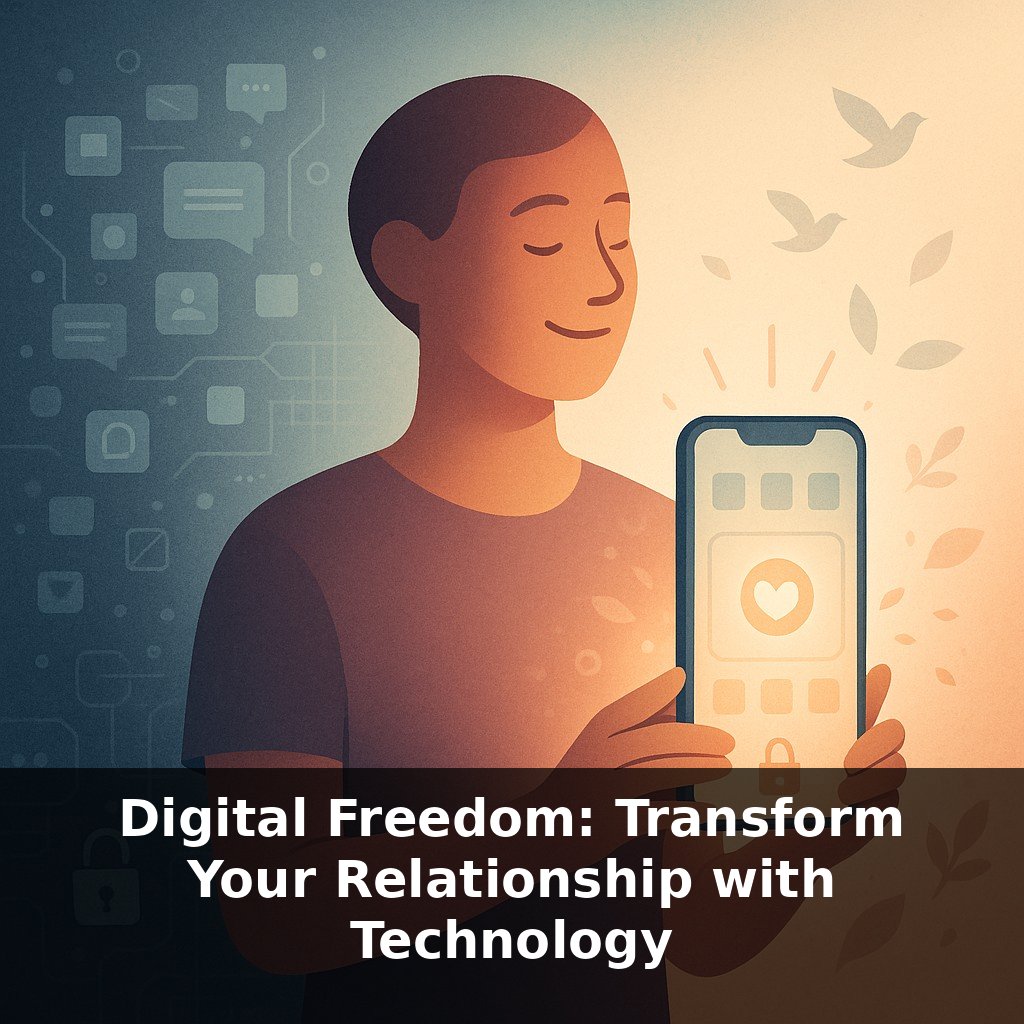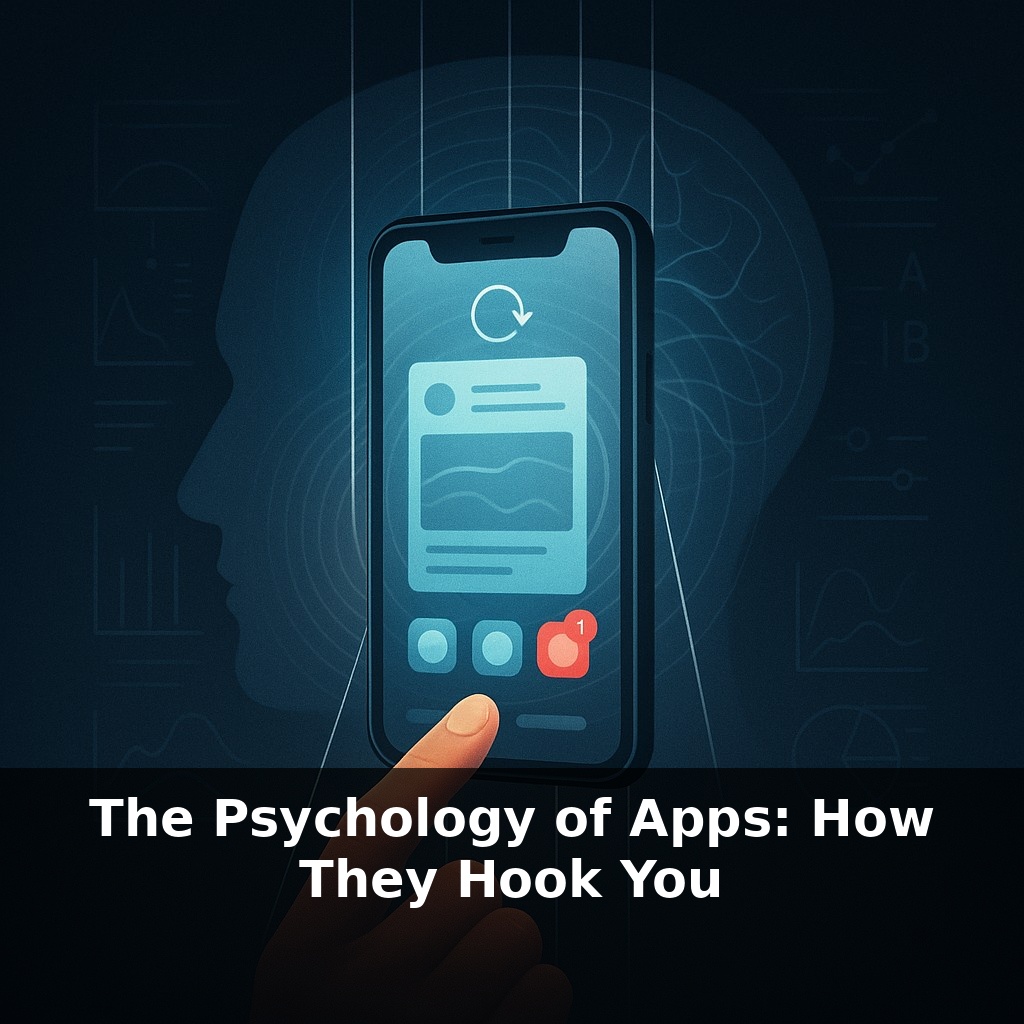
Right now, your phone is probably tracking how many times you’ve touched it today—and for many people, that’s about fifty or more. You think you’re choosing to open each app. But in this episode, we’ll ask a sharper question: how many of those taps were actually chosen for you?
You’re not just tapping icons; you’re stepping into carefully engineered environments. Behind every “pull to refresh,” every streak counter, every red badge, there’s a team running experiments on what keeps you there a little longer. Not in a cartoon-villain way, but in a “let’s move that button two pixels and test it on a million people” way. Those tiny tweaks add up. Some apps quietly note that you lingered half a second longer on a video with big captions, or that you’re more likely to open a notification at 10:37 p.m. than at 6:12 p.m.—and then they adjust. Think of it like a chef constantly tasting and re-seasoning a dish while you’re eating it, making each bite slightly harder to stop. In this episode, we’ll unpack the specific psychological ingredients they keep dialing up—and how to spot them in real time.
Developers aren’t just testing colors and layouts; they’re reaching into well-studied psychology. Many modern apps are built around the same reward patterns that keep people at casino machines: most actions give you something small—one new like, a short video, a tiny progress bar tick—and occasionally you hit a “jackpot” moment that feels unusually satisfying. That pattern of mostly-small, sometimes-big rewards trains your brain to keep checking, just in case. Add social approval, streaks, and “almost there” progress cues, and your phone becomes harder to put down than most books or conversations.
If you zoom in on a single “I’ll just check quickly” moment, there’s usually a simple loop running underneath: a trigger, an action, a reward, and then a tiny memory your brain stores for next time. App designers obsess over each step.
Triggers first. Some are external: a streak icon heating up, a notification that a friend “mentioned you,” a near-empty progress ring. Others are internal: a flash of boredom in a queue, a hint of social anxiety after a long day, a micro-stress while working. Product teams don’t control your feelings, but they study when certain feelings tend to appear—and schedule prompts to coincide with them. That’s why “We miss you” emails or reminders so often arrive at predictable times of day or week.
Then comes the action: the smallest possible thing you need to do. Open the app. Tap the story. Pull down to see “what’s new.” Friction is the enemy here. If logging in takes too long, or posting feels complex, the loop breaks. So apps make it effortless: biometric login, one-tap reactions, auto-playing content. You don’t consciously “decide” to watch the next video; it starts while you’re still deciding.
Rewards aren’t just points or hearts. They’re carefully shaped experiences. Companies A/B test everything from comment order to sound effects. Do you feel slightly left out if you don’t respond to a streak? Does a “You’re in the top 1% of listeners” banner give you a subtle status buzz? That’s not an accident. Social proof, scarcity (“only 2 spots left”), and loss aversion (“your streak will end”) are classic biases, turned into features.
And then there’s the investment phase, where you put something of yourself into the system: photos, contacts, preferences, playlists, years of messages. The more you pour in, the harder it feels to walk away. It’s like gradually moving your whole kitchen into someone else’s house—one pot at a time—until cooking anywhere else feels inconvenient.
Crucially, all of this is tuned by data. That red badge versus gray? That animation speed? Those are hypotheses tested on millions of people. You’re not just using the product; you’re helping refine the loop that will greet the next user—and your future self.
Scroll through TikTok and notice how often “just one more” is paired with *almost* finishing something: a countdown timer that resets, a progress bar that jumps back after a new challenge, a “Part 2 in my profile” cut right before the reveal. That “almost there” feeling isn’t random; apps track where people tend to drop off, then shift the cliff edge a bit further out.
Snapchat doesn’t simply show you messages; it overlays numbers, flames, and calendars—turning casual chatting into a scoreboard of continuity. Lose a streak, and it feels less like “we didn’t text” and more like “we broke something.”
Games like Candy Crush quietly adjust difficulty. Get stuck too long and you’re nudged with a “lucky” board, sale, or booster. Cruise through levels and they tighten the screws so you don’t run out of reasons to care.
The analogy: it’s like a chef quietly raising the spice level each visit—never enough to shock you, just enough that plain food starts tasting oddly dull.
Regulation will likely move slower than the next wave of hooks. As laws chase yesterday’s tricks, developers are already eyeing subtler levers: heart-rate–aware nudges when you’re stressed, AR prompts pinned to your physical surroundings, AI-crafted feeds tuned to your exact moods. Think less “app” and more “atmosphere” that adjusts around you. In that world, psychological literacy becomes less a tech hobby and more like basic hygiene—something you practice daily, not just read about once.
Noticing these patterns doesn’t mean you have to quit your apps; it means you can start negotiating with them. You can treat each feature like salt in a recipe—sometimes you want more, sometimes you dial it back. In future episodes, we’ll zoom in on concrete moves: changing defaults, reshaping home screens, and reclaiming small pockets of undistracted time.
Before next week, ask yourself: “Which 2–3 apps reliably make me lose track of time, and what *exact moment* (a notification, a red badge, an infinite scroll) usually pulls me back in?” “If those apps vanished for 48 hours, what would I realistically do with the 30–60 minutes they free up, and which of those activities actually leaves me feeling calmer or more energized afterward?” “The next time I feel that familiar itch to tap an app out of boredom or anxiety, what’s one tiny ‘pattern interrupt’ I can try first—like putting my phone in another room for 10 minutes, switching the screen to grayscale, or turning off just the ‘streak’ and ‘like’ notifications—and how does that change how hooked I feel?”