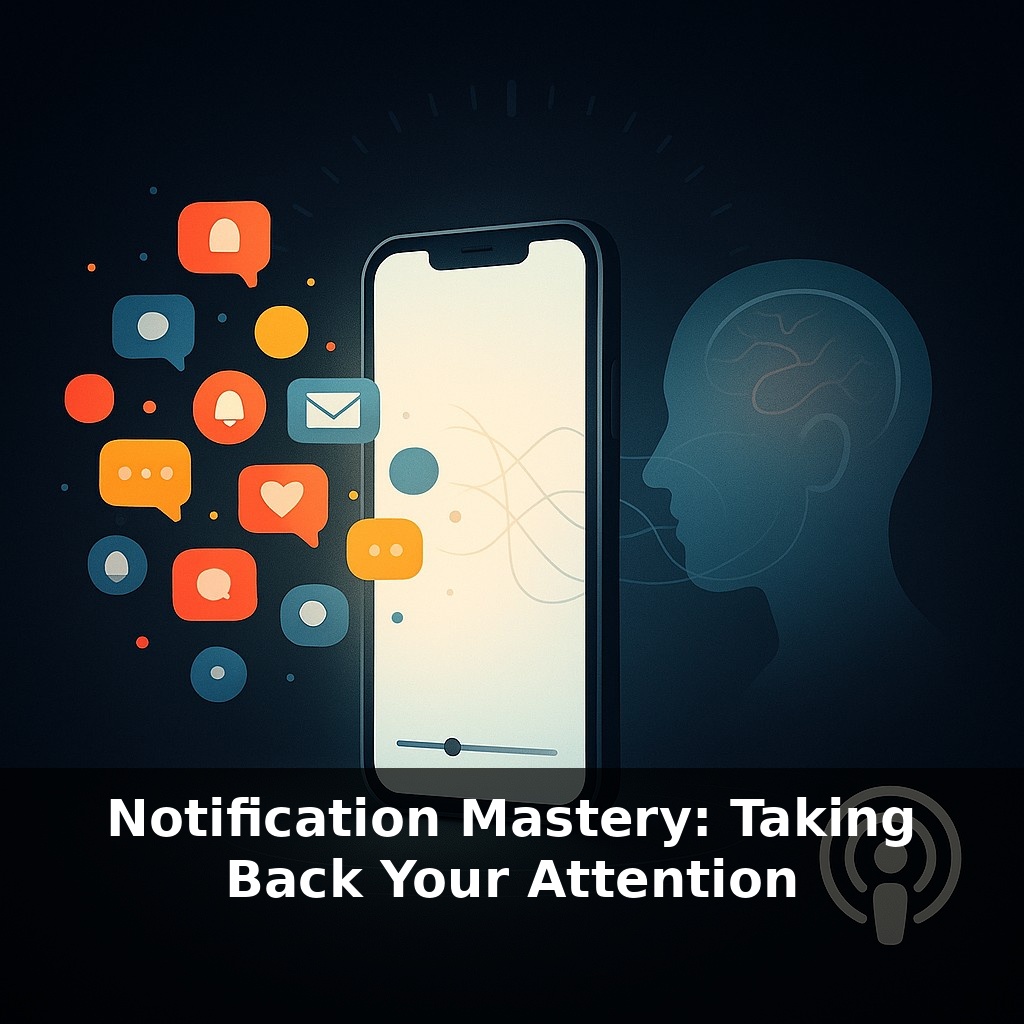
Right now, your phone is quietly planning to interrupt you—about forty times today. In one moment, you’re deep in thought; the next, a tiny buzz yanks your mind somewhere else. If every alert felt essential at the time… why, by tonight, do most of them feel forgettable?
Forty alerts a day sounds annoying; 58 pickups is something else entirely. That means you’re reaching for your phone more often than most people sit down for a meal, a meeting, or even a full conversation. Many of those check-ins are so short they barely register—like opening the fridge, staring inside, then closing it without eating. One glance becomes three, then ten, until your day is peppered with tiny detours you never planned.
The real issue isn’t just the interruptions you notice; it’s the automatic habits they train. Your brain starts to anticipate them, like hearing your name in a crowded room even when no one called you. Over time, you don’t just respond to alerts—you seek them out. That’s the shift we’re going to reverse: from being pulled by default, to choosing, deliberately, when your attention is available and when it’s not.
Those quick checks add up: researchers estimate it takes over 23 minutes to fully get back into deep work after a single interruption. Multiply that by dozens of tiny buzzes and glances, and whole afternoons quietly dissolve. Yet most of what breaks through isn’t urgent: studies show only a small fraction of notifications are truly time‑sensitive to the person receiving them. The rest arrive on the sender’s schedule, not yours. This is where design choices matter. The way apps ship their default settings is like a restaurant oversalting every dish—you’re consuming more than you’d ever add yourself.
Here’s the twist: the goal isn’t to have *no* notifications. It’s to create a system where the right ones arrive at the right time, and everything else waits its turn. When you treat every ping as equally important, you hand over your schedule to whoever shouts the loudest. When you rank and route them, you become the editor of your own attention.
Start by sorting alerts into three tiers: life‑critical, time‑sensitive, and everything else. Life‑critical is tiny: family, emergencies, maybe a work contact who truly must reach you fast. Time‑sensitive is smaller than most people think: your calendar, a delivery at the door, a security alert from your bank. Everything else—social likes, promotions, “you might enjoy this” nudges—belongs in a quiet backlog you check on your terms.
Modern phones already have the scaffolding for this. Focus modes, notification summaries, per‑app controls, VIP lists, status messages that say “notifications silenced”—these aren’t niche features, they’re power tools. Used together, they let you do something radical: be unreachable to almost everyone, almost all the time, while still being instantly reachable to the few who actually matter.
Think of it the way a good hospital runs its alarms: not every beep blasts through the ward. Only certain signals make it to the attending physician, and even those escalate in stages. Silence isn’t negligence; it’s design.
This is also where behavior and settings meet. If you batch alerts into scheduled digests but still tap every banner the moment it appears, nothing changes. If you move messaging apps off your home screen but leave their badges screaming double‑digits, you’ve only done half the job. True control means aligning three layers: what’s allowed to reach you, when it’s allowed, and how you respond when it does.
Done well, your phone becomes less like a hyperactive coworker and more like a calm assistant: it holds most things for later, taps you on the shoulder only when necessary, and lets you stay with the task in front of you long enough to actually finish it.
Think about the last time you tried to cook multiple dishes at once. If every pan hissed, boiled over, and demanded stirring at the same moment, you’d end up half‑finishing everything and burning at least one thing. When you stagger the timing—marinade first, vegetables later, sauce at the end—you still make the same meal, but with far less chaos and much better results.
Translating that to your digital life means assigning different “heat levels” to inputs. For example, you might let calendar invites and doorbell cameras bubble on high (visible and immediate), while group chats simmer on low in a dedicated folder you open twice a day. News apps can move to “oven only”: they never pop up, but you check them in one pre‑set block.
Some people even create “focus recipes”: one setup for creative work, another for family evenings, a third for travel days. Each recipe has its own allowed channels, screen layout, and check‑in rhythm—so your device matches the mode *you* choose, instead of dragging every mode into every moment.
Those tiny choices you’re making now—who can reach you, when, and through which channel—are a rehearsal for a future where *everything* in your environment can talk. As AR layers data over your vision and smart homes whisper for attention, you’ll need standards, not just settings. Think of it like setting table rules before a big family dinner: who speaks when, about what, and how long they hold the floor. Mastering that now means your future tech fits your life, instead of flooding it.
Your challenge this week: run a “quiet hours lab test” on yourself. Choose one 90‑minute block each day and mute every channel except calls from your must‑reach list. Notice what surfaces—restlessness, clarity, boredom, momentum. Treat those reactions as data. They reveal where you’re genuinely needed… and where you were only on call out of habit.