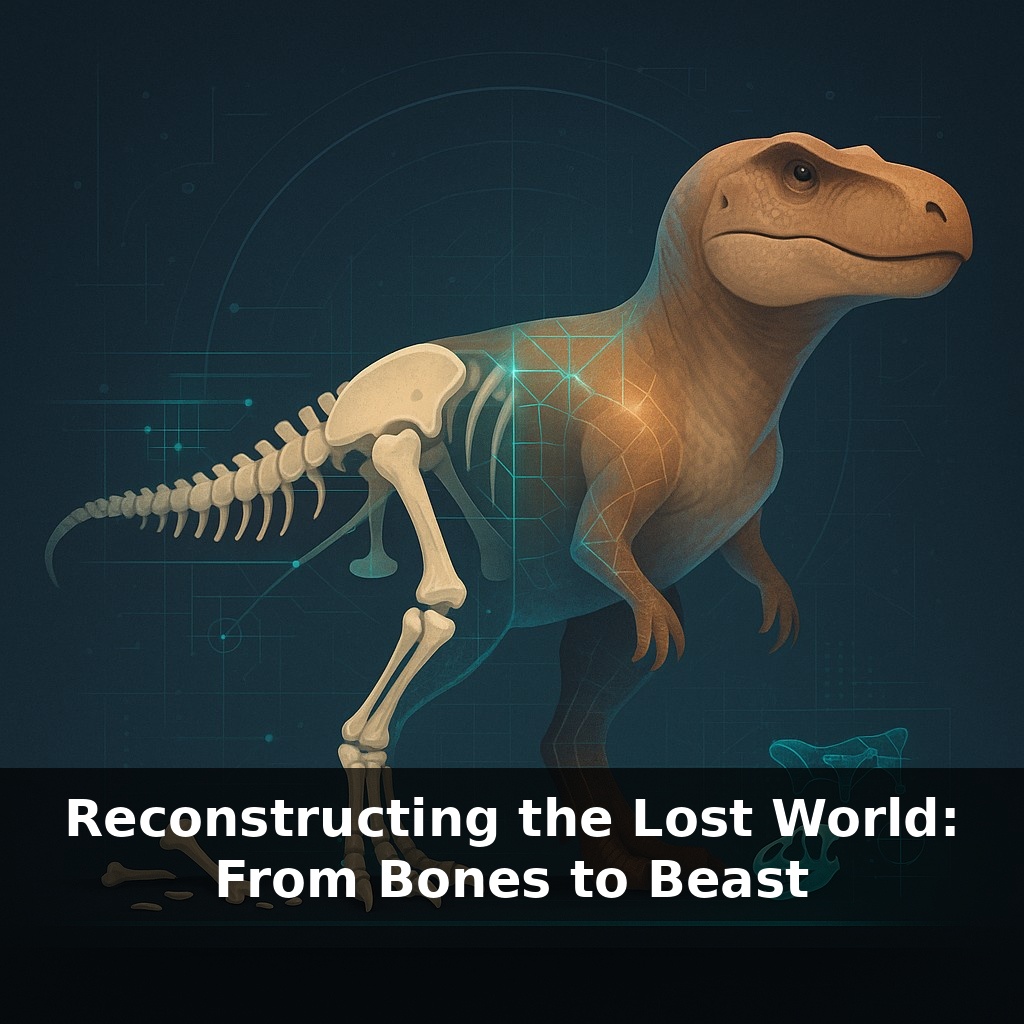
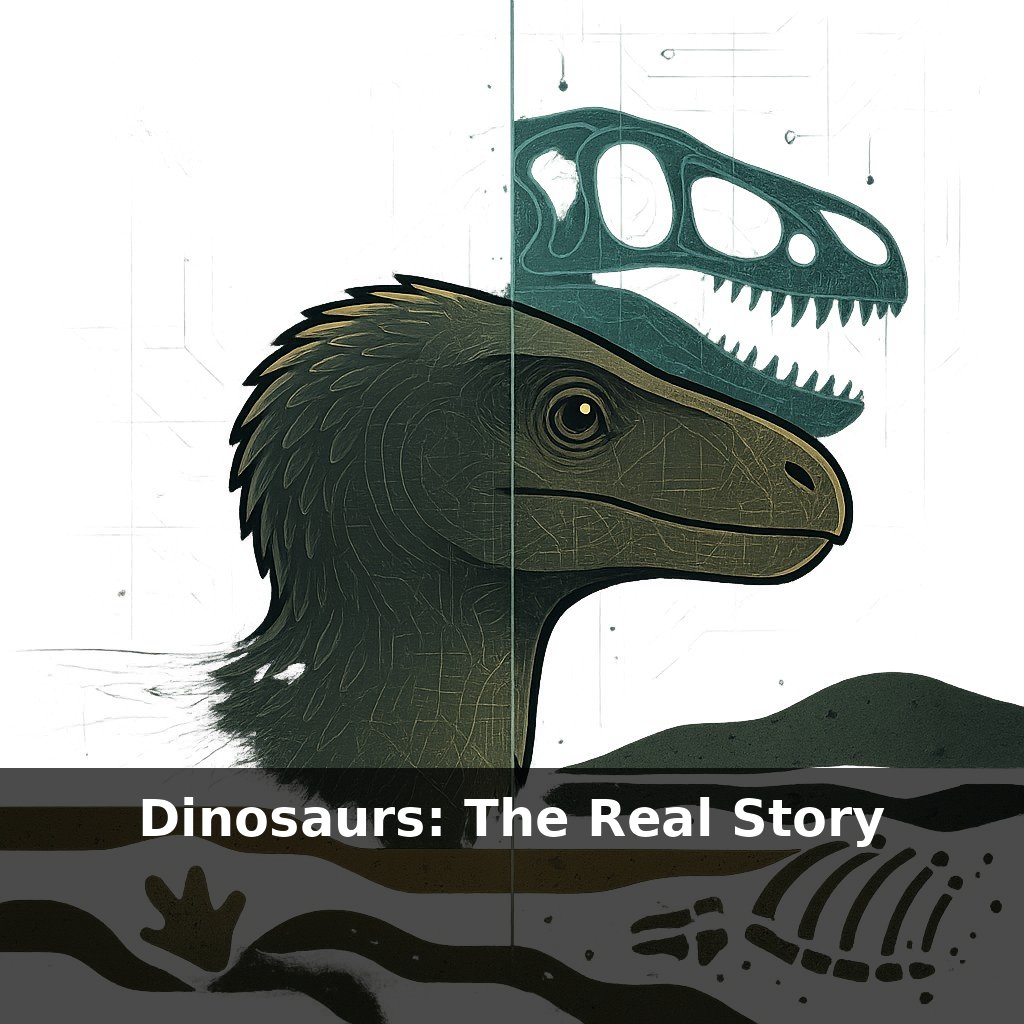
Fewer than one in ten known dinosaurs come from anything close to a complete skeleton. Yet museums show us full, roaring beasts. In this episode, we’ll step into the lab, where scattered bones, laser scans, and biomechanics quietly rewrite the dinosaurs we thought we knew.
Only about one in ten named dinosaurs is known from anything close to a full skeleton, yet we walk through galleries filled with seamless, towering bodies. In earlier episodes, we peeked behind the curtain—at bones, scans, and tests that keep a tail from dragging or a neck from snapping under imaginary weight. This time, we zoom in on the moment a fossil stops being a static object and starts becoming a living animal in our minds. CT data becomes a digital skull that can “chew.” Laser-based imaging traces the ghost of a muscle edge. Melanosomes, once just tiny specks, turn into clues about feather color and pattern. Muscle maps wrap onto 3‑D bones, then virtual skin stretches across them, revealing where wrinkles, scars, or fat pads might go. Step by step, we’ll see how scientists decide what’s data, what’s inference, and what’s honest, clearly labeled guesswork.
Most named dinosaurs are still sketchy outlines rather than fully inked portraits, so researchers lean hard on every extra clue they can find. Fossil skin impressions fix the size of individual scales like pixels on a screen. Laser‑stimulated fluorescence traces soft‑tissue fringes that normal lighting erases. Microscopic wear on tooth edges hints at bite direction and chewing style. Digital models test how heavy tails or necks can be before joints fail. And as new finds—like preserved shoulder muscles or feathered tails—surface, old reconstructions are audited and, if needed, quietly retired.
A good reconstruction starts with deciding what’s non‑negotiable. Hard constraints come from the fossils themselves: joint surfaces that only bend so far; muscle scars that say “something big anchored here”; healed injuries that show how an animal coped with damage. Paleontologists chart these on digital bones, then add in extra clues from close relatives. Crocodile hips, bird shoulders, and ostrich legs become reference libraries for how living tissue actually hangs on a skeleton.
From there, the team builds outward in layers. First comes the invisible “envelope” of plausible motion: how far the neck can sweep without dislocating, how wide a stride the hips allow, how much the tail can counterbalance without tipping the center of mass. Researchers run virtual poses through physics engines, trimming away stances that would tear ligaments or topple the animal. If a mounted skeleton looks dramatic but fails those tests, the drama loses.
Next comes bulk. Too much meat and your predator can’t accelerate; too little and there’s nowhere to anchor the muscles its bones demand. Groups like the Royal Veterinary College use volumetric modeling—wrapping simple shapes around limb segments, torso, and tail—to bracket minimum and maximum body mass. Modern animals are the calibration: if a dinosaur’s leg muscles end up weaker, relative to body weight, than a chicken’s, something in the model is off.
Surface details are where data and artistry wrestle most. Skin impressions can lock in scale size and orientation for a patch of flank or tail, but the rest of the body often remains blank. Filament impressions or quill knobs on bone may insist on feathers in specific zones. Melanosome work, like the Archaeopteryx study, can nail down colors for a few regions; beyond that, patterns stay hypothetical. Many teams now publish multiple variants—a muted version, a bolder one—explicitly labeled as alternatives rather than “the” truth.
Throughout, the reconstruction is treated less like a finished painting and more like an editable blueprint. New scans can be swapped in without rebuilding the whole animal. 3‑D printed bones can be test‑fit in different poses, then re‑scanned to update digital joints. Laser‑stimulated fluorescence may suddenly reveal a crest outline or tail frill, forcing the model to grow new anatomy overnight. Small tweaks—a slightly deeper chest, a stiffer tail, a heavier thigh—cascade upward into new estimates of speed, posture, even behavior.
Reconstruction labs often look less like dusty bone rooms and more like hybrid art studios and engineering shops. One researcher might be marking up thigh bone scans with force arrows while, a few desks away, an illustrator tests how light falls across a fleshed‑out Velociraptor head on a color‑calibrated screen. That mix matters. When a digital model suggests a sauropod’s neck would sag under its own weight, artists must dial back those heroic, swan‑like curves. When a new feather‑bearing specimen from China shows unexpected tail streamers, concept sheets for documentaries and museum halls get quietly revised. Think of it as a film production where the script keeps changing: animators, sound designers, and stunt coordinators must all adjust so the story stays internally consistent. Even museum mounts are now treated as drafts. “Sue” the T. rex has had her arms, ribs, and tail re‑posed over time as studies sharpen her balance point and gait, reminding visitors that every roaring centerpiece is really a snapshot of our best current guess.
Soon, reconstructing dinosaurs may feel less like guesswork and more like editing a living document. Neutron beams could tease out buried cartilage or keratin, reshaping joints overnight. AI might flag “missing” tendons or air sacs by spotting patterns across thousands of specimens, like a radiologist catching a faint shadow. In museums, AR could let you scrub a slider from skeleton to fully clothed, feathered predator, updating as fast as a phone app, so public and lab stay almost in sync.
In the end, every dinosaur you meet in a gallery or documentary is a draft, not a verdict. Future finds—like skin traces in unexpected places or pigment hints in new species—will nudge the dial again. Your mental image of a T. rex or Archaeopteryx is less a frozen portrait, more a playlist, updated each time science drops a new track.
Before next week, ask yourself: - When I picture a “lost world” from scattered clues in my own life—old photos, half-finished projects, forgotten curiosities—what story do I instinctively build, and what crucial “bones” might I be leaving out? - If I treated one interest of mine like a paleontologist treats a fossil site—carefully comparing sources, challenging my first reconstruction, and looking for missing evidence—how would that change a belief I currently hold with too much confidence? - Today, if I had to make a “museum exhibit” of one idea I deeply care about, what concrete pieces (data, experiences, contradictions) would I put on display, and what would I realize I still need to go back into the field and dig for?