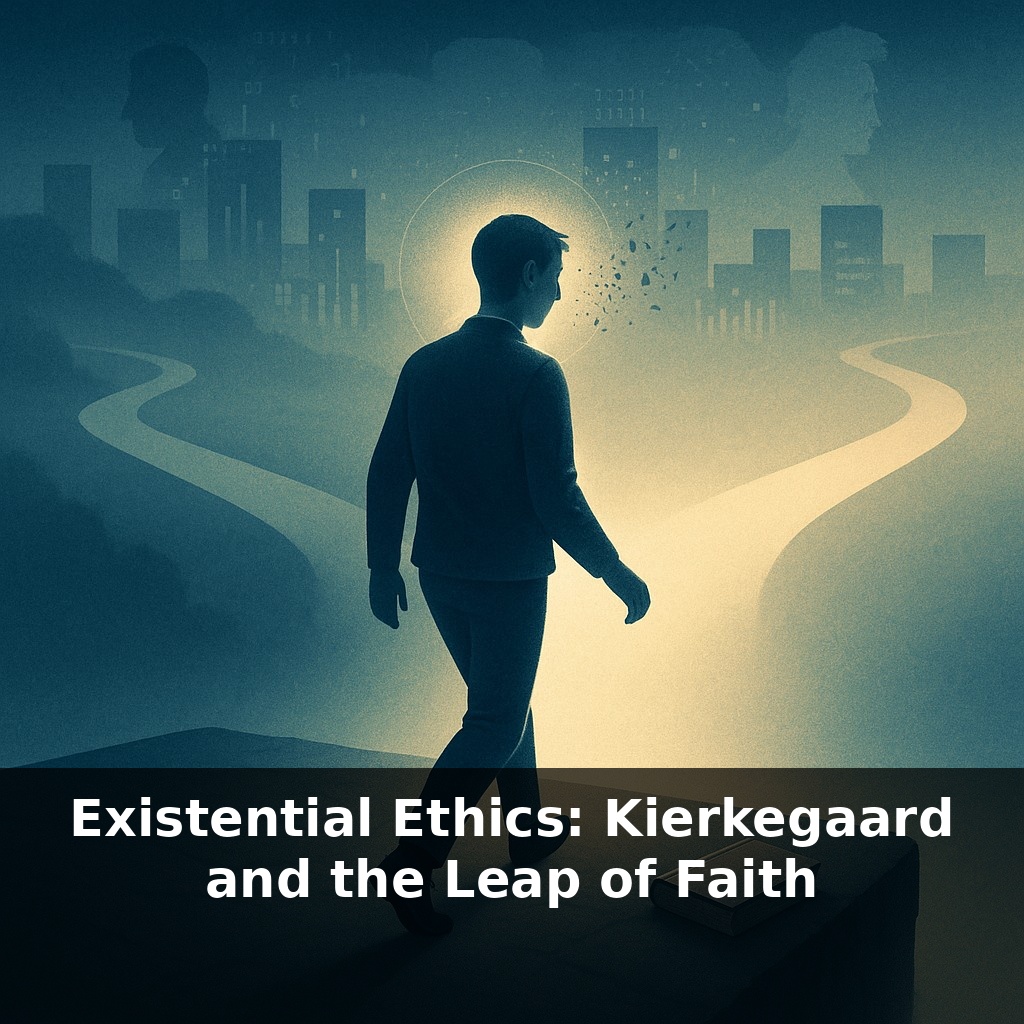
“In an age that worships data, Søren Kierkegaard claimed your most important decisions can’t be justified by evidence. You’re standing at a crossroads, both paths unclear, no guarantee either way—yet you must choose. That unsettling moment is exactly where today’s story begins.”
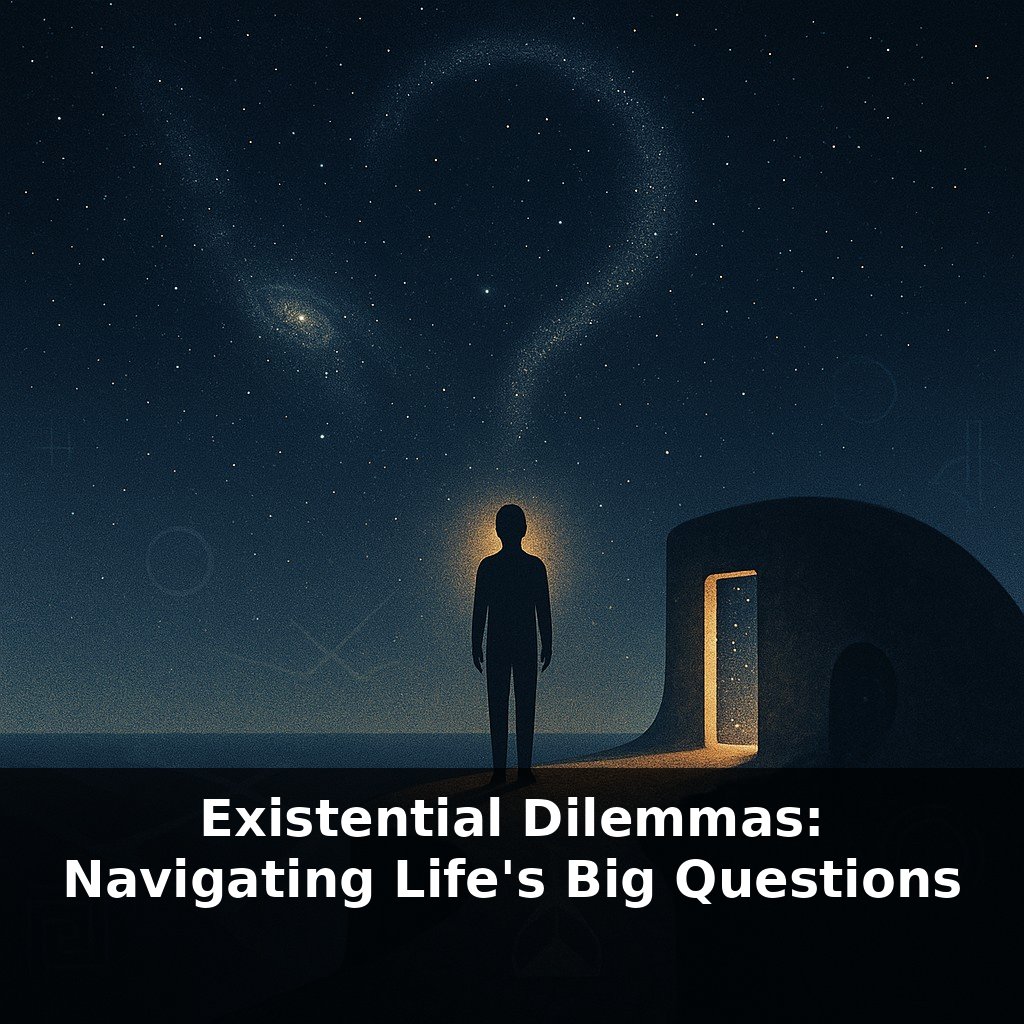
Kierkegaard thought most of us don’t actually live; we “sleepwalk” inside borrowed answers. We inherit moral slogans, political loyalties, even spiritual identities the way we inherit last year’s software update—installed by default, rarely questioned. His provocation was brutal: if you haven’t personally struggled for your convictions, they aren’t really yours, and they won’t hold when life stops cooperating with your plans. That’s why he wrote under different pseudonyms: not to hide, but to stage a philosophical drama in which conflicting voices collide, forcing the reader to choose a standpoint. Existential ethics, in his hands, isn’t about following a map; it’s more like learning to navigate by stars that only become visible once you step away from the city’s comforting glow.
Kierkegaard sharpened this unrest into a direct assault on “the system”—both Hegel’s grand rational blueprint and the cozy certainties of the Danish State Church. He thought both let people outsource their responsibility: morality as something guaranteed by institutions or logic, instead of lived from the inside out. That’s why *Fear and Trembling*, mostly ignored in his lifetime, dissects one unsettling story: Abraham raising the knife over Isaac. Here, ethics isn’t a tidy rulebook; it’s more like debugging a live system with no option to roll back, knowing you alone must own the patch you deploy.
Kierkegaard thinks Abraham forces us to confront something we’d rather ignore: genuine moral life can’t be fully captured by universal rules. “Don’t kill your child” is as universal as it gets—yet *Fear and Trembling* lingers precisely on the moment when Abraham seems to act against that law, without becoming a monster. Kierkegaard calls him a “knight of faith”: someone who moves through ordinary life yet carries a hidden, inward commitment that no ethical theory can fully translate.
This doesn’t give anyone permission to claim, “My private feeling overrides morality.” Kierkegaard sets the bar brutally high. Abraham isn’t following a vague impulse or a convenient excuse; he faces anguish, silence, and the real possibility that he’s terribly wrong. The point isn’t that suspending the ethical is normal; it’s that authentic faith, when it appears, can’t be reduced to social approval or logical deduction.
Here the “leap” enters. For Kierkegaard, you never get a final proof that your deepest commitment is correct—only a responsibility you can’t hand off. The leap is precisely the moment you stop waiting for one more guarantee and accept that continuing to postpone is itself a choice. You move from admiring a value from the outside to staking your life on it from the inside.
Notice the structure of this movement: first, you collide with a limit—reason, custom, or probability runs out. Next, you confront despair or anxiety: the realization that no system can live *for* you. Finally, you either retreat into safe conformity or step forward, owning a decision that could still fail. In technology terms, it’s less like downloading a stable release and more like pushing to production with feature flags you, personally, will monitor.
Existential ethics grows out of that pattern. Moral life becomes an ongoing project of renewing your commitments in the face of doubt, not a one-time signing of a code of conduct. You may share practices and principles with others, but the weight of “I stand here” can’t be collectivized. That’s why Kierkegaard is suspicious of crowds: they make it easier to act without ever facing yourself.
Your challenge this week: Pick one area where you currently hide in “we”—“we at this company,” “we in this family,” “we in this movement.” Each day, in a concrete decision in that area, silently replace “we think” with “I choose,” and act accordingly. At week’s end, review where that shift felt clarifying, and where it exposed fears you usually keep off-screen.
Kierkegaard would say your “real” ethics show up in unglamorous places. Think of the quiet moment you decide whether to report a small mistake at work that no one has noticed. There’s no cheering crowd, no moral slogan to hide behind—just you, the possible fallout, and the version of yourself you’re willing to live with tomorrow. That’s closer to his arena than any classroom debate.
Take someone leaving a prestigious job because the company’s practices grate against their conscience. The spreadsheet says “stay”—salary, status, security—but the inward dissonance won’t shut up. The leap, here, isn’t irrational chaos; it’s accepting that no policy manual can answer, “Can I, personally, keep endorsing this?”
Or consider a long-term relationship that is “fine on paper” yet feels hollow. Friends advise patience, therapists offer frameworks, but none can sign the decision for you. At some point, staying or leaving becomes less about prediction and more about which future self you’re willing to answer to.
As AI, biotech, and climate engineering move from labs into daily life, Kierkegaard’s “leap” shifts from rare crisis to routine skill. You might be a product manager choosing whether to ship a recommendation feature you know will hook teens longer, or a doctor weighing off-label gene therapies. Policy and precedent lag; committees can’t absorb the risk for you. Treat each choice less like following a script and more like signing a contract with your future self—and the world that must live with it.
Kierkegaard hints that the “leap” isn’t a one-time stunt; it’s closer to learning an instrument, where each practice session slightly retunes your ear. Over time, those small, private yeses and nos compose a kind of ethical accent—recognizable, imperfect, uniquely yours. The task isn’t to become certain, but to become honest about the risks you’re willing to carry.
Try this experiment: For one day, pick a real, low-stakes “leap of faith” in your life—something where you genuinely can’t have certainty, like initiating a hard conversation, applying for something you don’t feel ready for, or telling someone the truth you usually soften. Before you act, pause for 2 minutes and silently notice the anxiety and hesitation Kierkegaard calls “dread,” without distracting yourself or arguing it away. Then deliberately choose as if you were Abraham in the story—acting from inward commitment, not from guarantees of a good outcome—and follow through on the action. That evening, replay the moment in your mind and notice what actually shifted in you: was the fear bigger or smaller than expected, and did you feel more or less like “yourself” after making that leap?