In a recent survey, only one in ten people truly were self-aware, contradictory to the common belief most hold about themselves. During a tense meeting, your jaw stiffens, your voice sharpens, and you remain unaware. Recognizing your triggers in real-time is where the true challenge lies.
Most people try to “fix” their reactions directly—be calmer, be nicer, be more confident. That’s like trying to change a movie by yelling at the screen. The real leverage is in noticing the script that runs right before you react: the tiny, fast assumptions your brain makes about what’s happening and what it means about you.
At work, those micro‑scripts sound like: - “If I don’t speak now, I’ll look weak.” - “They’re questioning my competence.” - “I’m about to get blamed.”
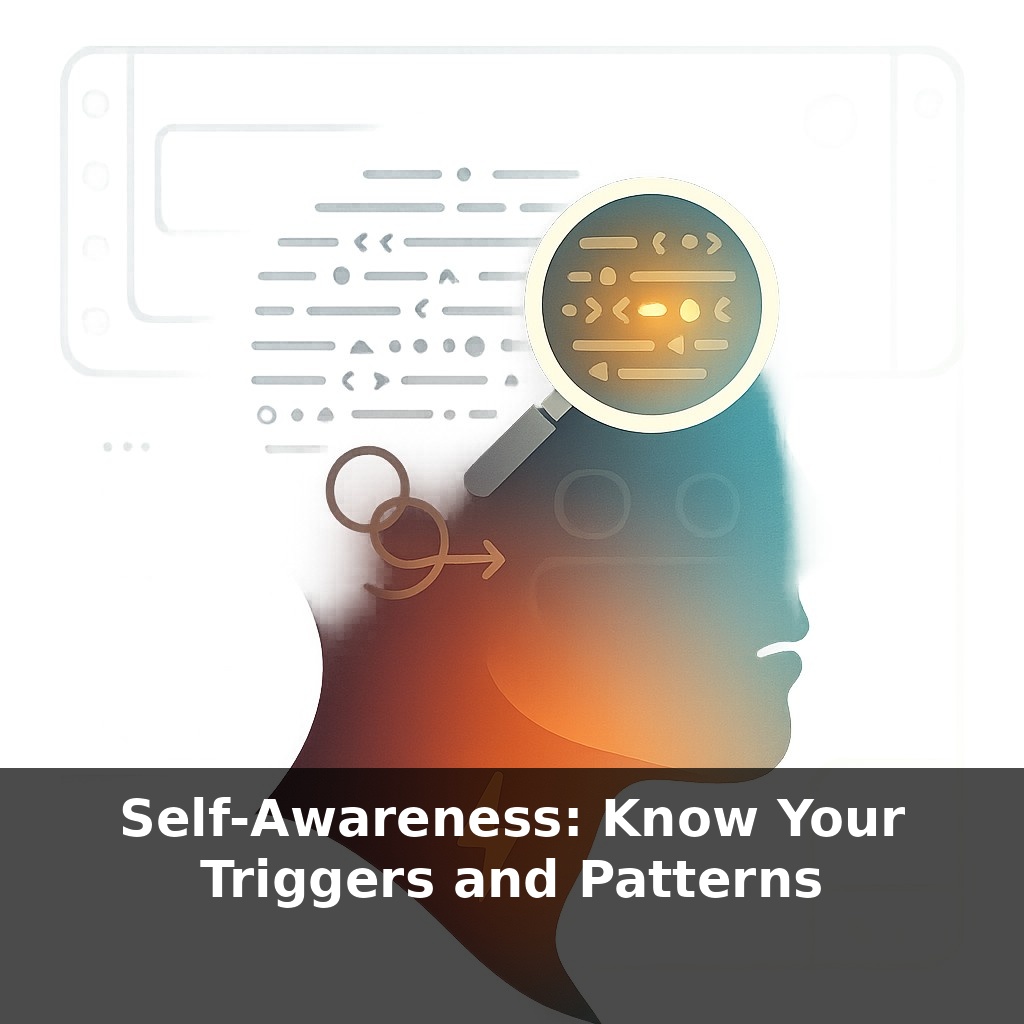
The pattern isn’t just the emotion; it’s the predictable chain: situation → meaning you assign → emotion → behavior → consequence. Over time, this chain quietly shapes your reputation. Are you “the defensive one”? “The rescuer”? “The ghost who shuts down under pressure”? Self-awareness at work is less about judging those patterns and more about finally putting names to them—so you can choose when to keep them, and when to rewrite the script.
Some triggers are obvious—like open criticism or an aggressive email. Others hide in plain sight: a high‑status client joining the call, a vague message from your boss at 4:55 p.m., a colleague getting praise for work similar to yours. The tricky part is that your brain tags these as “normal” and moves on, even while your body quietly shifts—shoulders tense, breath shortens, focus narrows. Over time, those subtle shifts harden into habits: interrupting, over‑explaining, going silent, overworking. You’re not just reacting to the moment; you’re replaying an old pattern on a new stage.
Most people try to spot patterns only at the level of “I get angry” or “I shut down.” That’s too coarse to be useful. What actually helps at work is getting curious about the *granularity* of your inner world: not just “I was upset,” but “I felt cornered, then embarrassed, then stubborn.” The mPFC and ACC light up more when you can label experiences in finer detail. You’re literally giving your brain a richer dashboard.
Two dimensions matter here:
1. **Precision of emotion** 2. **Specificity of trigger**
On the emotion side, research on “emotional granularity” shows that people who can distinguish between, say, irritation, disappointment, and shame cope better under stress and perform better on complex tasks. Why? Because “I’m furious” only suggests one set of responses (attack or flee), while “I’m embarrassed I missed that detail” opens very different options (own it, ask for help, adjust your process).
On the trigger side, vague labels like “I hate conflict” hide useful data. Conflict *about what*? With *whom*? Under *which conditions*? Notice the contrast:
- Vague: “I hate getting feedback.” - Specific: “When feedback comes in a group setting, from someone I want to impress, and I didn’t see it coming, I feel exposed and my mind races to excuses.”
The second version doesn’t just describe a problem; it points to levers you can pull: ask for 1:1 debriefs, request expectations ahead of time, rehearse how you’ll respond when surprised.
Patterns also live across *time* and *roles*. You might react one way with your boss, another with peers, another with direct reports. The content looks different—status meeting, code review, client call—but the inner pattern is the same: maybe you over‑accommodate when someone sounds certain, or you nitpick when you feel sidelined. Track *where* the pattern shows up, not just *what* it looks like.
Finally, self-awareness doesn’t mean instantly changing the behavior. Early on, the win is shrinking the lag between trigger and recognition. At first you notice an hour later, then ten minutes, then mid‑conversation, then mid‑sentence. Each shortening of that gap gives you one extra degree of freedom: to pause, soften your tone, ask a question, or even say, “I’m reacting strongly; let me think for a moment.” Over time, that tiny wedge of awareness becomes a real choice point, not just damage control after the fact.
You might notice your patterns most clearly at the edges of your day. You log into a meeting slightly late and, before anyone comments, you’re already overcompensating—talking faster, volunteering for extra work, throwing in details no one asked for. Or a teammate casually says, “Let’s revisit your proposal,” and your camera‑ready smile appears while your notes page fills with defensive justifications instead of updates.
Think of a product manager who always jumps in when discussions stall. On the surface, they’re “proactive.” Looking closer, the pattern might be: any silence longer than three seconds feels like danger, so they rush to fill it. Or a senior engineer who “just asks tough questions” in reviews, but only when a junior colleague presents; uncertainty in others reliably pulls for their inner critic.
Self‑awareness deepens when you notice these recurring *if‑then* links: “If X happens, then I almost always do Y.” Not to judge them, but to ask, “Does this still serve the role I want to play here?”
Many careers quietly stall not from lack of talent, but from blind spots no one names out loud. As tools get smarter, they’ll start surfacing patterns you miss—like a calendar app showing you’re terse in messages before late‑afternoon reviews, or a dashboard flagging that certain projects always leave you drained. Think of it like a weather report for your inner climate: not judging the storm, just signaling when to reschedule a “difficult conversation” instead of walking into a thunderhead.
The surprise is how small the first step can be. Catching one recurring reaction is like finding a loose thread on a sweater; tug gently and a whole pattern starts to reveal itself. You’re not trying to be flawless—you’re running better experiments. Over time, those tiny “caught it” moments become the quiet engine behind wiser, steadier career moves.
Try this experiment: For the next 24 hours, every time you feel that familiar “I’m not enough” trigger (like when your partner sounds distant, your boss is short with you, or a friend doesn’t text back), pause and quietly say out loud, “This is my old ‘I’m not enough’ story showing up.” Then, instead of reacting (snapping, over-explaining, or shutting down), ask the other person one curious question like, “Hey, I’m noticing I’m getting in my head—what did you actually mean by that?” At the end of the day, notice which situations calmed down or felt different simply because you named the trigger and got curious instead of going into your usual pattern.