 2min preview
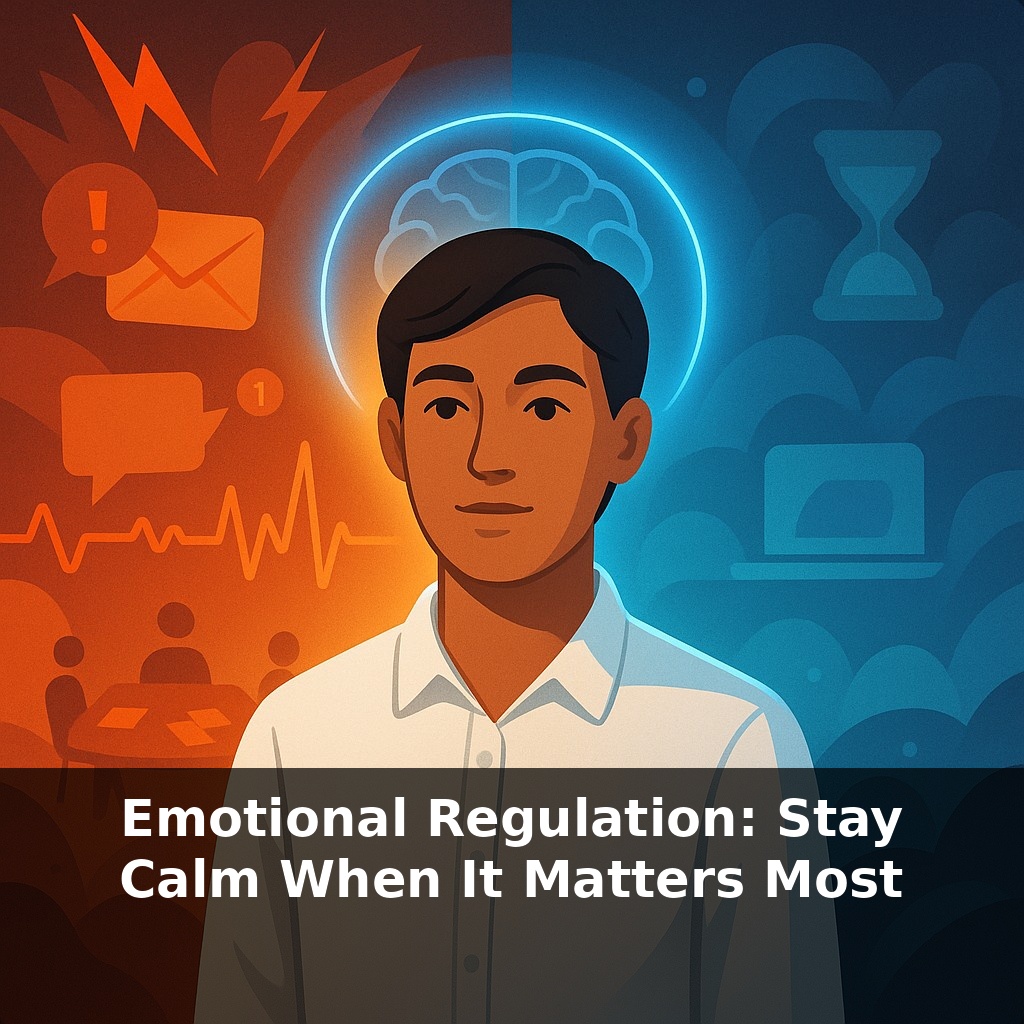
Emotional Regulation: Stay Calm When It Matters Most
📝 Transcript
In a crisis, your brain can make you dumber exactly when you need to be sharpest. A tense email, a public mistake, a blindsiding question in a meeting—your IQ hasn’t changed, but your access to it has. Why do some people stay clear while others emotionally spin out?
A heated meeting, a missed deadline, a blunt comment from your boss—these moments don’t just trigger “feelings,” they kick off a measurable chain reaction in your body. Hormones spike, breathing shifts, muscles tighten. Left on autopilot, that chain reaction quietly hijacks how you prioritize, listen, and decide. Emotional regulation is not about becoming unbothered or pretending you’re fine; it’s about learning to notice this internal shift early enough to influence it. Modern neuroscience shows that when you can accurately name what you’re feeling—frustrated, cornered, ashamed—you give your brain a foothold to recalibrate. In high-pressure workplaces, this isn’t a “nice-to-have soft skill”; it’s a performance edge. The leaders who consistently make sound calls under stress aren’t devoid of emotion. They’ve just trained their attention to catch the surge before it steers the wheel for them.
In most offices, emotional regulation is treated like personality—either you’re “good under pressure” or you’re not. But the data says it behaves more like a trainable skill than a fixed trait. On brain scans, people who routinely practice simple regulation strategies show different activation patterns before they even face a stressful task. That means your default setting can actually shift. And the impact isn’t limited to blow‑up moments; it shows up in how you write a terse Slack reply, how long you ruminate after tough feedback, and whether your team feels safe bringing you bad news.
Subscribe to read the full transcript and listen to this episode
Subscribe to unlockSubscribe for $1.99/month to unlock the full episode.
From this course
Emotional Intelligence at Work
7 episodesUnlock all episodes
Full access to 7 episodes and everything on OwlUp.
Subscribe — $1.99/monthLess than a coffee ☕ · Cancel anytime