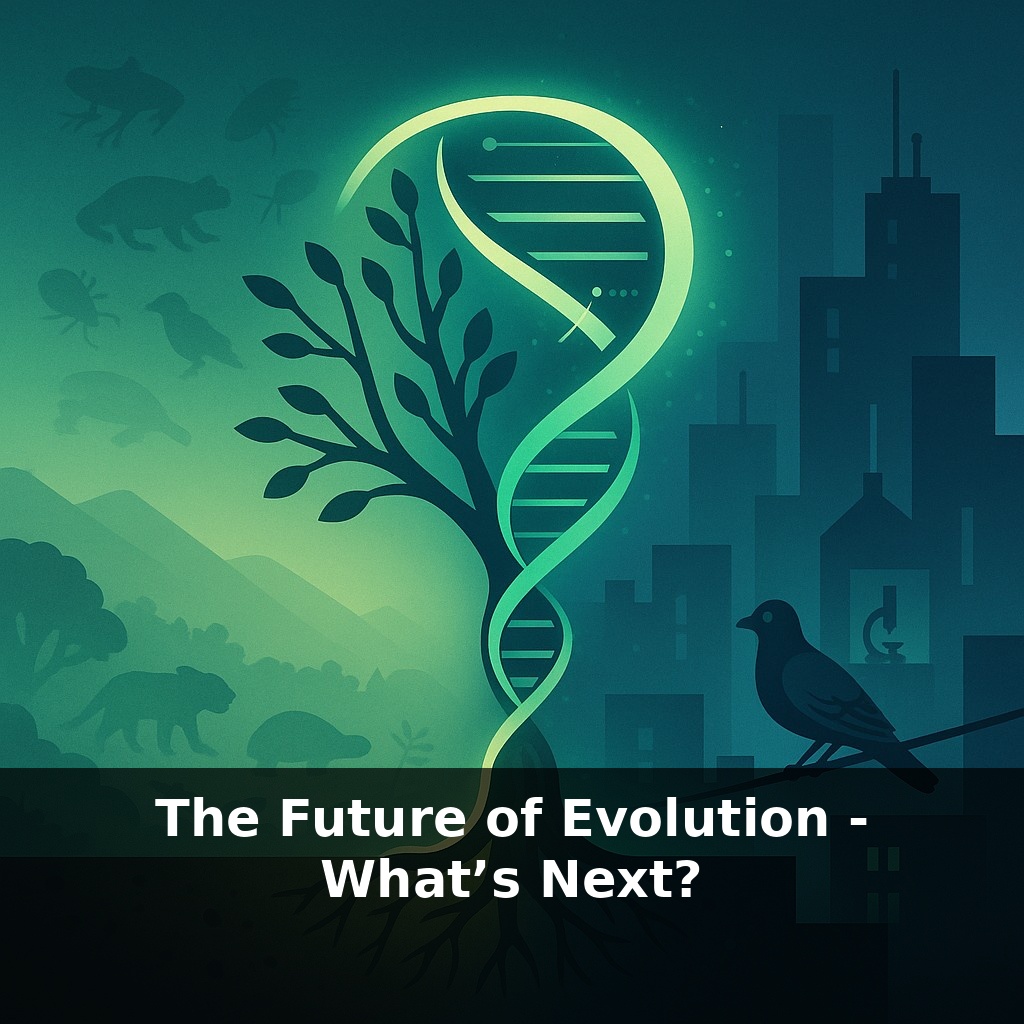
Right now, scientists estimate that roughly a million species are on track to vanish within our lifetimes—at the same time, we’re learning how to rewrite DNA on a lab bench for less than a typical grocery run. So the real question isn’t “Will life change?” It’s “Who’s actually in charge of evolution?”
Here’s the twist: even as some branches of the tree of life are being chainsawed away, others are sprouting new, unexpected shoots—often in places we barely notice. City pigeons with darker feathers that better handle pollution. Lizards in Puerto Rico evolving grippier toes in just a few decades to sprint across glass and metal. Bacteria in hospitals running an arms race against our latest antibiotics.
These aren’t slow, background changes; they’re more like rapid patches rolling out across different “devices” in the biosphere. And we’re not just watching from the sidelines. With tools like CRISPR on the lab bench and concrete, plastic, and greenhouse gases reshaping the playing field, we’re quietly setting the rules for what counts as a “winning” design.
So as we look ahead, the key isn’t whether evolution continues—it’s what kinds of futures we’re silently engineering.
In the next few centuries, evolution won’t march in a straight line; it will sprawl in different directions at once. Cities will favor animals that tolerate noise, light and trash, while remote ecosystems filter for heat resistance, drought survival or coping with acidic seas. On top of that, new “players” are entering the scene: lab-grown microbes built to eat plastic, gene‑drive mosquitoes designed to crash malaria populations, even self‑replicating code in digital worlds. Each of these can spill over—intentionally or not—into the rest of life’s experiments, reshaping what can thrive next.
Zoom in on three frontiers where the next waves of change are already taking shape.
First, the bodies of organisms themselves are becoming more “hackable.” We’re moving from passively watching traits spread to deliberately designing them—sometimes in ways natural selection has rarely explored. Think heat‑tolerant crops that survive scorching summers, or coral strains pre‑screened in labs for acidic oceans and then planted back onto dying reefs. Each release is a tiny bet on which genes should get more chances in tomorrow’s gene pool. The risk: once out, these bets keep playing through ecosystems we don’t fully understand.
Second, the borders between species—and even between “biological” and “non‑biological”—are blurring. Synthetic biologists already stitch together genes from bacteria, plants and animals to build microbes that digest oil spills or manufacture drugs inside steel tanks. Meanwhile, experiments with brain–computer interfaces and implanted devices hint at long‑term feedback loops: as we alter ourselves, we also alter which human bodies and behaviors fit most easily into future societies. That, in turn, shifts which traits give people an edge—physical, cognitive, even emotional.
Third, there’s evolution in places we rarely think of as “alive.” Algorithms that tweak themselves to get better at tasks, bots that replicate and mutate in virtual worlds, and machine‑generated code competing for attention and resources online all follow selection‑like rules. The analogy isn’t perfect, but the dynamics rhyme: variation, competition, and persistence. Now imagine these digital systems increasingly steering real‑world decisions—what we eat, where we build, which medicines we develop. Indirectly, they help decide which genes, ecosystems and species get supported or starved.
Across all three frontiers, one pattern stands out: feedback. Human choices reshape environments. Those environments reshape what survives. What survives reshapes our future choices—sometimes locking us into paths that are hard to reverse. The “next” stage of evolution may be less about a new kind of organism, and more about how tightly these feedback loops knot biology, technology and culture together.
Think of evolution like a software update system: environments “push” new requirements, and species that can patch their code fastest—whether via chance mutations, gene swapping or deliberate edits—keep running while others stall. But those “requirements” are now set by things as mundane as your trash schedule and commute. City foxes raid bins on predictable pickup nights and learn traffic patterns; over time, bolder, street‑savvy animals leave more descendants. Industrial noise can drown out birdsong, nudging populations toward calls in frequencies that cut through the hum. Even our tastes feed back: ornamental plants bred for looks can cross with wild relatives, seeding traits like odd flowering times into nearby fields. Meanwhile, hospital disinfection routines favor microbes that cling to steel and plastic, and aquaculture pens reward fish that tolerate crowding. In each case, tiny, local habits quietly redraw the future map of who’s common, who’s rare and who never appears at all.
Some of the strangest consequences may show up in culture, not genomes. As climates shift, languages could gain new words for once‑rare seasons or vanished foods. Conservation might look less like freezing species in museums and more like tending living “archives” of adaptable lineages, continuously edited like open‑source code. And as digital agents start choosing crops, drugs and even dates for us, our preferences may quietly coevolve with theirs, drifting in directions no one quite intended.
So the “next” chapter isn’t just which creatures fill forests or skylines, but how our daily habits keep editing that cast list. Like rearranging furniture, small moves—diet trends, transport choices, even search clicks—quietly reshape which traits thrive. We’re no longer just observing the story of life; we’re co‑authoring sequels we haven’t yet learned to read.
Here’s your challenge this week: For the next 3 days, deliberately “co‑evolve” with your environment by running one mini‑experiment per day on how you use technology. Day 1, switch one routine task (like route-planning, exercise tracking, or language practice) to an AI- or data-driven tool and track how your behavior changes. Day 2, redesign one part of your physical environment (desk, kitchen, or commute setup) to favor a trait that future evolution might select for—like collaboration, focus, or energy efficiency—and stick with it all day. Day 3, run a “future human” simulation: live 12 waking hours as if cognitive energy is your scarcest resource—batch decisions, eliminate unnecessary choices, and log what breaks first in your current lifestyle.