Right now, as you’re listening, your brain is quietly tracking dozens of unfinished tasks—and research suggests people who move those tasks outside their head finish far more of them. So why do so many smart professionals still trust memory over a simple, visible system?
Gartner thinks that within a few years, most productivity apps will quietly “think in GTD” behind the scenes—tagging, sorting, and surfacing tasks for you. But the real leverage isn’t in the software; it’s in how *you* decide to organise what goes in there.
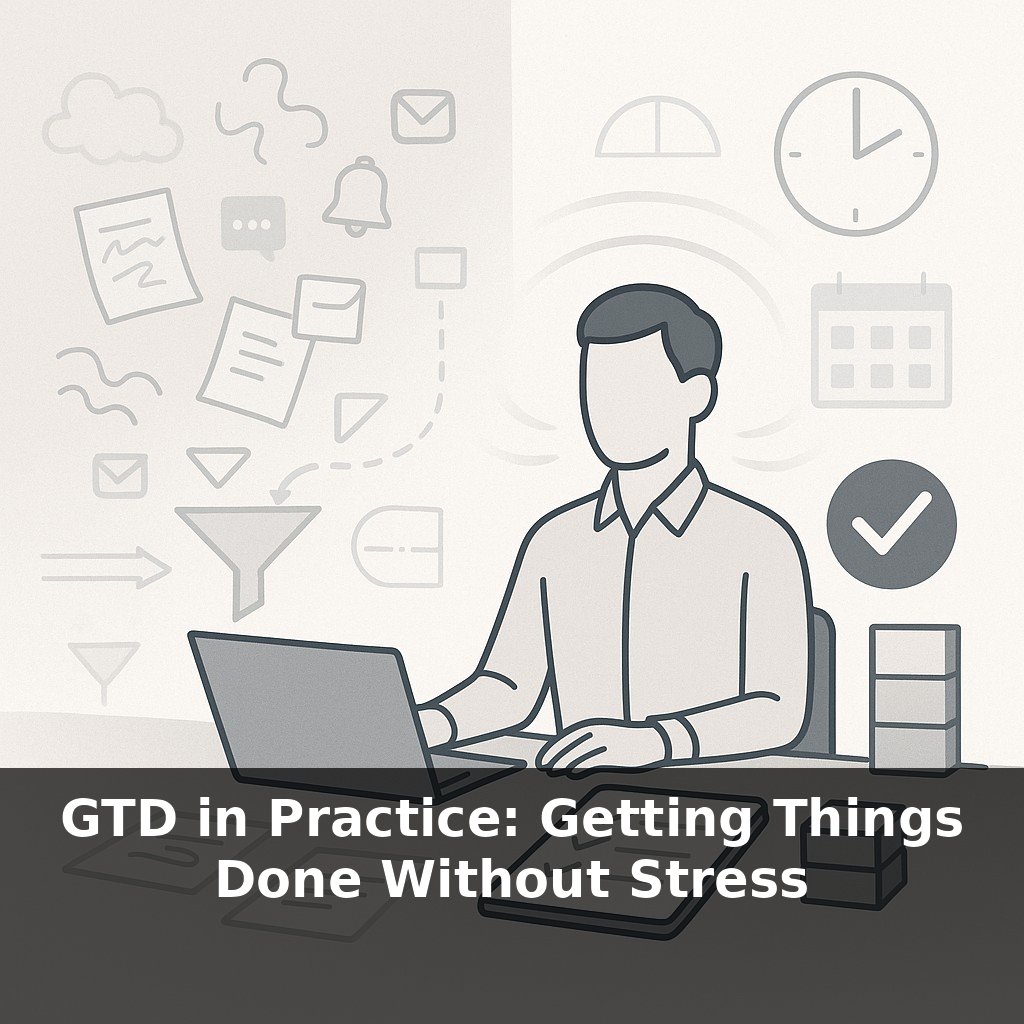
In this episode, we shift from *capturing* to *structuring*: turning that raw pile of stuff into a small set of stable, trustworthy lists. Research suggests that when people fully externalise and categorise their work, completion rates jump and context‑switching drops. That’s not because they became more disciplined overnight—it’s because their environment started doing some of the heavy lifting.
Instead of staring at one giant, demoralising list, you’ll learn how to separate projects from actions, surface only what’s relevant “right now,” and stop letting other people’s urgency dictate your next move.
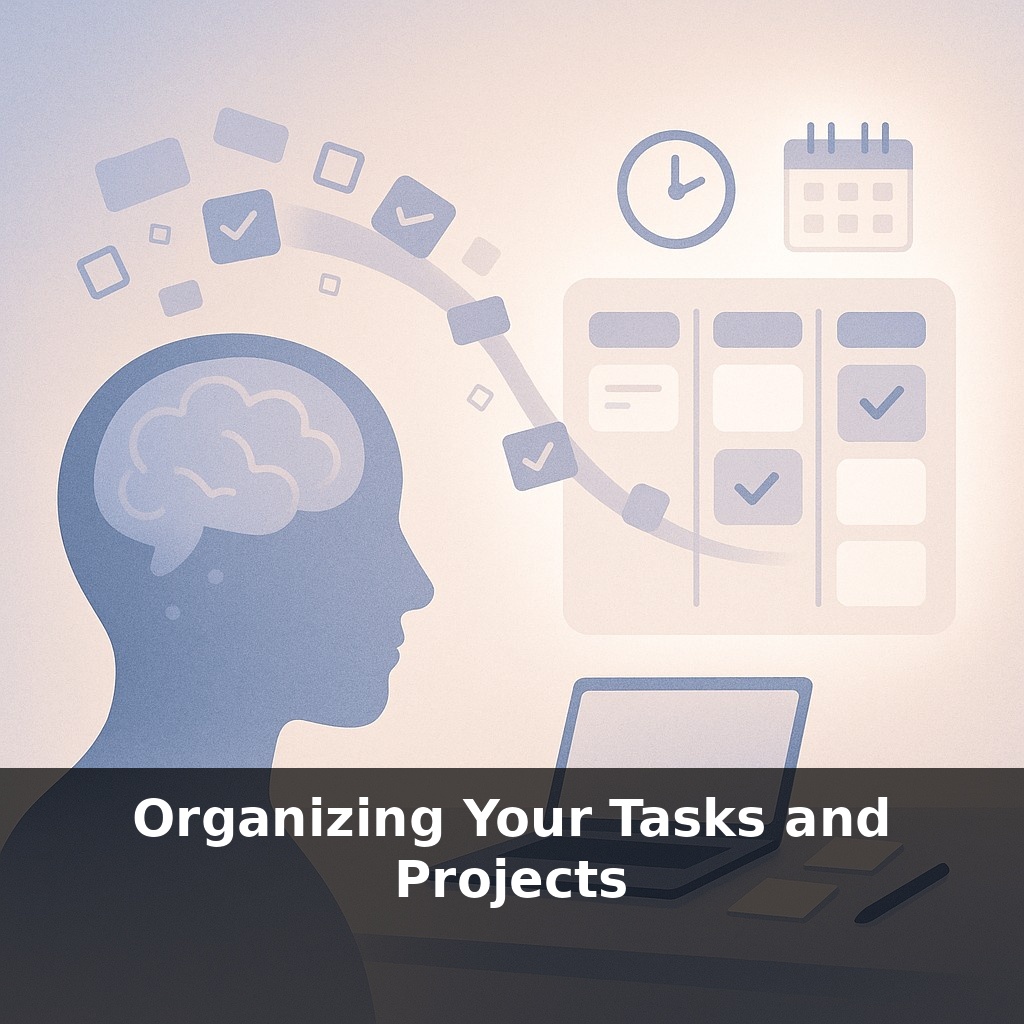
Now that your raw notes and scattered reminders exist somewhere outside your head, the next move is subtle but powerful: deciding *where* each thing belongs so it stops competing for your attention all at once. This is where a few carefully chosen lists start acting less like storage and more like filters. Think of how finance teams separate budgets, actuals, and forecasts—same numbers, different questions. In the same way, distinct lists let you ask sharper questions: “What moves this project forward today?” or “What can safely wait?” You’re not just tidying; you’re shaping how work shows up for you.
A lot of “organisation guilt” comes from focusing on the wrong question: *Where should I write this down?* The better question is: *What kind of thing is this, and when will I need to see it again?* That shift moves you from decorating lists to designing a workflow.
In practice, most of your work falls into a handful of categories that answer different questions:
- **Projects** → “What multi‑step outcomes am I on the hook for?” - **Next Actions** → “What’s the very next visible step I could take?” - **Waiting‑For** → “What am I blocked on because someone else owes me something?” - **Calendar** → “What must happen on *this* day or *this* time, or it breaks?” - **Someday/Maybe** → “What ideas do I *not* want to lose, but I’m not doing now?” - **Reference** → “What information might I need to look up, but never ‘do’?”
Notice that each list is really a different *question* you’ll ask your system. You’re not trying to predict the future; you’re deciding how you’ll find this thing later without thinking hard.
This is where many professionals quietly overload the calendar. The moment you park “draft Q3 pitch” at 2 p.m. Thursday—even though nothing explodes if you don’t do it—you turn a flexible commitment into fake urgency. When the hour arrives and you predictably move it, your calendar becomes a wish list instead of a contract. A clean calendar is brutally simple: only time‑specific actions and events.
Similarly, collapsing everything into one master list sounds efficient but becomes psychologically expensive. A quick scan mixes “renew passport,” “prep board deck,” and “buy printer ink” into the same mental soup. You either feel overwhelmed or you cherry‑pick the easy items. Separating projects from small actions lets you see trade‑offs clearly: *Am I moving key outcomes, or just staying busy?*
Think of a well‑run software team: the roadmap holds major releases (projects), tickets track concrete steps (actions), and a board column shows items blocked on others (waiting‑for). The power isn’t in any single board; it’s in knowing exactly which view to pull up when you’re deciding what to do next.
Think about the moments you *don’t* trust your setup. You’re in a 15‑minute gap between meetings, you open your tool, and instead of clarity you get that vague “I’m probably forgetting something important” unease. That feeling is usually a sign that certain kinds of commitments never got their own “home.”
For example, many people never explicitly track **“Waiting‑For”** items. Result: they spend meeting time reconstructing who owes them which deliverable. A simple list labeled “Waiting‑For” turns follow‑up into a quick scan instead of a detective job.
Or consider **Someday/Maybe**. When you skip it, every interesting idea feels like a now‑or‑never decision. Parking “Explore data science certificate,” “Redesign team onboarding,” or “Pitch internal podcast” there lets you capture ambition without silently overcommitting.
One analogy: good organisation works like version control in software—branches (projects) stay separate, commits (actions) stay small, and you always know what changed, where, and why.
As tools get smarter, they’ll quietly rearrange your work around you. An AI assistant might notice that you write better before 11 a.m. and start surfacing deep‑focus items then, shuffling lighter work to your slump hours. Notifications could adapt too: fewer pings when your wearables detect flow, more prompts when your attention drifts. Like a good editor, the tech disappears into the background while your priorities stay sharp and deliberate.
Your challenge this week: once a day, look at your existing tools (email, calendar, task app, CRM, notes, even Slack) and ask one focused question:
“If this tool had an AI assistant built in, what would I *want* it to sort or highlight for me automatically?”
Each day, capture just one answer. By the end of the week, you’ll have a concrete wishlist of automations that would genuinely reduce your friction—ready for current features, plugins, or future AI copilots to handle.
Over time, you’ll notice patterns: some lists feel crowded, others oddly empty. Treat that as a signal, not a failure. Like tuning an instrument, small tweaks—renaming a list, splitting one that’s bloated, retiring one that’s stale—change how your work “sounds.” The goal isn’t a perfect system; it’s one that stays just alive enough to keep telling you the truth.
Try this experiment: For the next three days, put every single task into just three lists: “Today’s 3 Must-Do’s,” “This Week’s Projects,” and “Parking Lot (Not This Week).” Each morning, move no more than three items from “This Week’s Projects” into “Today’s 3 Must-Do’s,” and don’t touch anything in the Parking Lot, no matter how tempting. Use a timer and give each “Must-Do” one focused, 25-minute sprint, then jot a quick note after each sprint: “Did I actually move a project forward, or just shuffle tasks?” At the end of day three, review your notes and decide: do you feel more clarity and momentum with fewer lists, or do you need one more category (like “Waiting On”) to feel in control?