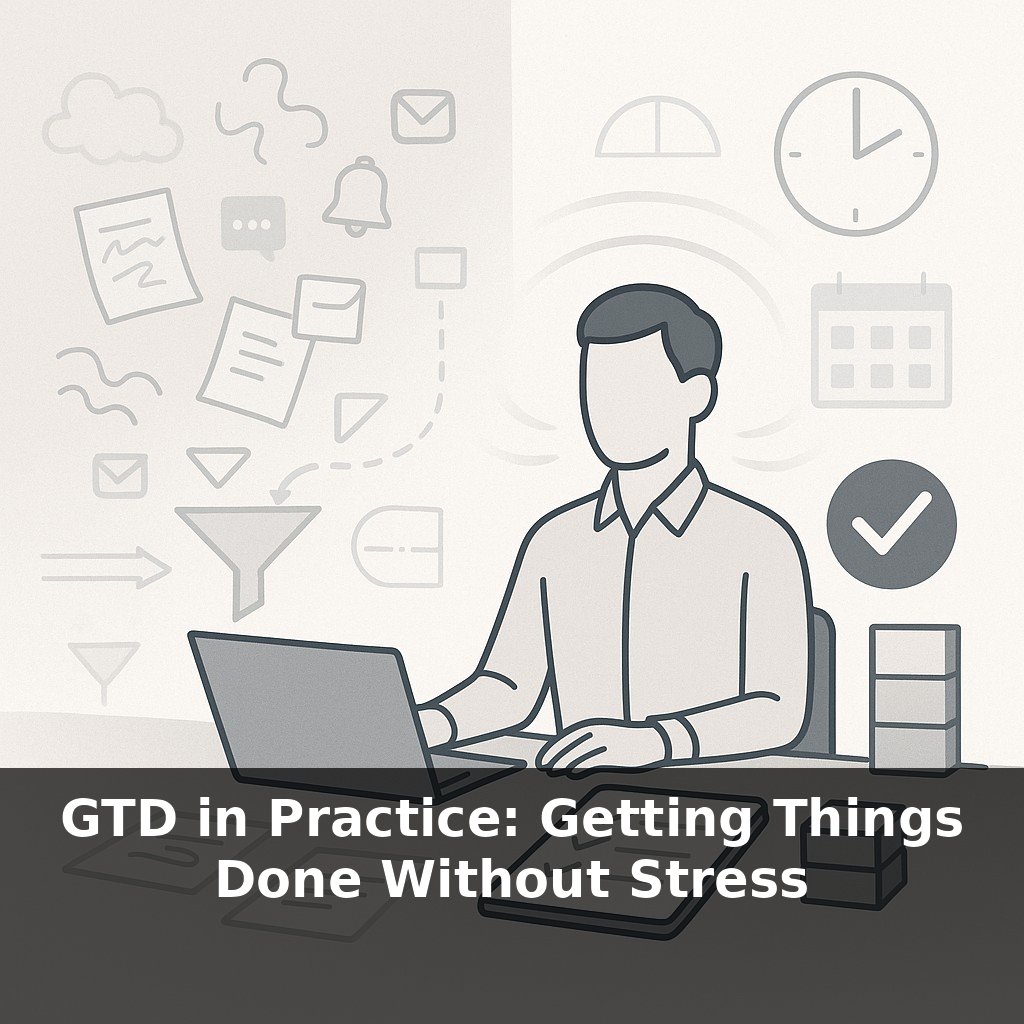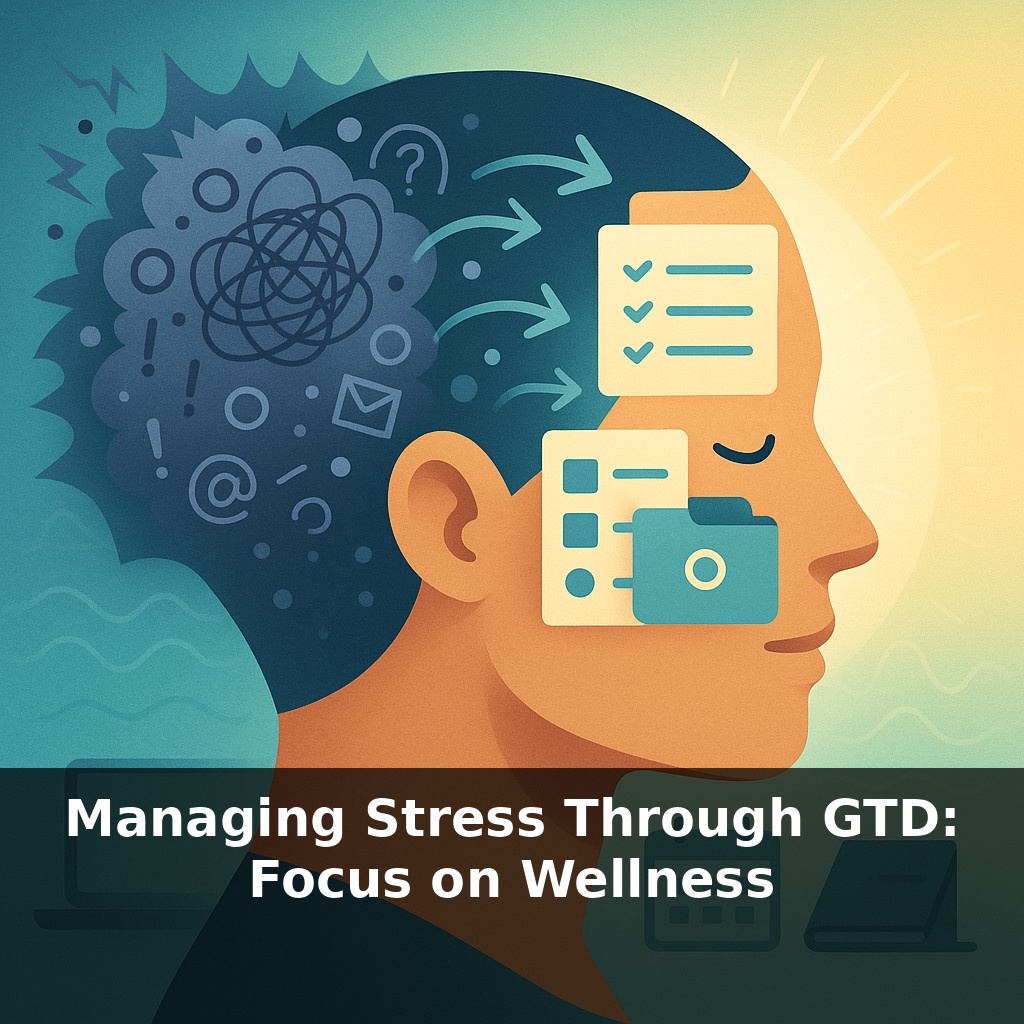
Right now, your brain is probably tracking more open loops than you realize—and that silent to‑do list is changing your body chemistry. A simple shift in how you “park” those worries can lower stress and help you sleep, without working fewer hours or quitting your job.
Neuroscientists estimate your working memory tops out at about 3–5 items. Yet most careers quietly demand that you track dozens: deadlines, politics, strategy, family logistics—all stacked on the same tiny mental shelf. No wonder even “normal” workdays can feel strangely exhausting.
In this episode, we’ll connect GTD not just to productivity, but to your nervous system and long‑term career sustainability. GTD isn’t about cramming more into your day; it’s about changing *where* your commitments live so your brain can stop bracing for impact. Think of a well-run kitchen: ingredients labeled, stations clear, the chef calm even in a dinner rush. That’s the kind of internal environment we’re aiming for—especially when your role gets more complex, not less, as your career advances.
Stress at work often hides in “gray areas”: half-made decisions, unclear expectations, fuzzy priorities. Those don’t show up on your calendar, but your brain treats them like urgent notifications that never stop pinging. This is where GTD quietly overlaps with wellness. You’re not just listing tasks; you’re debugging the invisible glitches in how commitments enter, move through, and exit your life. As your responsibilities grow, that skill becomes protective—more like building a resilient financial portfolio than simply “working harder” to keep up with demand.
Let’s zoom in on *why* the GTD workflow is so protective for your wellbeing, especially in an ambitious career.
Stress spikes when your brain can’t see a clear path from “I’m responsible for this” to “Here’s exactly what happens next” to “This is now truly finished.” GTD walks each commitment through that path, step by step, in a way your brain trusts.
First, the **clarify** step: once something is captured, you ask, “What is this, really?” and “Is any action required?” That sounds trivial, but it’s where many people stay stuck in low-grade tension. “Q4 strategy” sitting in your head is a vague cloud; “Draft 3 bullet options for Q4 priorities to discuss with my manager” is concrete. Neuroscience studies show that simply forming an implementation intention (“When X, I will do Y”) measurably lowers anxiety around that task. You’re telling your brain, “This is defined; you can stand down.”
Next, **organize**: decisions move into stable containers—calendars, project lists, “waiting for,” reference. This separates *you* from the logistics. Instead of carrying everything at once, you’re curating where it belongs. A key wellness shift here: you don’t just sort by topic; you sort by *energy and context*. A “low-energy, quick win” list for tired afternoons protects you from forcing deep work when your tank is empty, which reduces both mistakes and self-criticism.
Then comes **reflect**: the weekly review. From a wellness angle, this is less about productivity and more like running a diagnostic on your stress system. You sweep through: inboxes, projects, next actions, waiting-fors, someday/maybe. You’re not only asking, “What’s next?” but also, “Does this still matter?” and “What can I safely drop or renegotiate?” Many high performers never formally prune commitments, so their stress accumulates around work that no longer deserves their energy.
Finally, **engage**: choosing what to do *in the moment*. Because your options are pre-thought, you can use simple filters—time available, energy level, priority—rather than willpower. Over time, this builds a subtle but powerful form of psychological safety: you experience, repeatedly, that you can trust yourself to focus on the right thing without scanning your whole life every hour.
Together, these moves don’t just tame busy days; they reframe your role from “person frantically holding everything together” to “person who designs how work flows through their life.” That identity shift is one of the most sustainable buffers against burnout.
A senior engineer at a fast-growing startup noticed her shoulders tensing every time she opened Slack. She wasn’t working longer hours than her peers, but she was the only one saying yes to every “quick favor.” When she finally mapped every commitment into a GTD-style system, she saw three invisible stressors: undefined support work, projects no one had officially assigned, and “urgent” requests with no deadlines. Naming those patterns let her propose office hours for ad-hoc help, ask her manager which unowned projects actually mattered, and negotiate realistic timeframes. Her workload didn’t shrink overnight, but the *noise* did.
Or take a people manager at a large bank: during weekly reviews, she tagged actions not just by context, but by emotional weight—draining, neutral, energizing. Over a month, she realized her calendar was 80% draining, mostly recurring meetings she had inherited. That data gave her a wellness lever: she consolidated two meetings, declined one, and intentionally scheduled one energizing task after every tough one.
A 5-minute daily check-in with your lists can quietly reshape your workday, long before you feel “burned out.” Think of it like checking your financial accounts: small, regular looks prevent ugly surprises. As AI tools start suggesting priorities or spotting clashes in your calendar, you’ll gain an early-warning dashboard for overload. The opportunity—and challenge—will be to treat that data as a prompt to renegotiate, not to cram even more into your day.
When your lists start to feel like a living map instead of a guilt ledger, you’ve crossed a threshold: GTD stops being a rescue tool and becomes quiet maintenance for your future self. You might notice subtle shifts—more honest “no’s,” fewer 2 a.m. replays, a calendar that feels like a menu, not a sentence. Follow that trail; it’s how careers stay humane.
Start with this tiny habit: When you feel your shoulders tense while checking email, pause and take one slow breath while silently asking, “What’s actually on my mind right now?” Then capture just one of those stressy thoughts by giving it a two-word name in your head, like “budget review” or “doctor call.” Next time you sit down with your calendar, give just 60 seconds to decide the very next visible action for that one named thing. That’s it—one breath, one name, one next step.