Right now, as you’re listening, your brain is probably already planning its next distraction. A message, a memory, a random worry. You’re here, but part of you is scrolling elsewhere. Why does focus feel harder than ever, even when nothing “urgent” is actually happening?
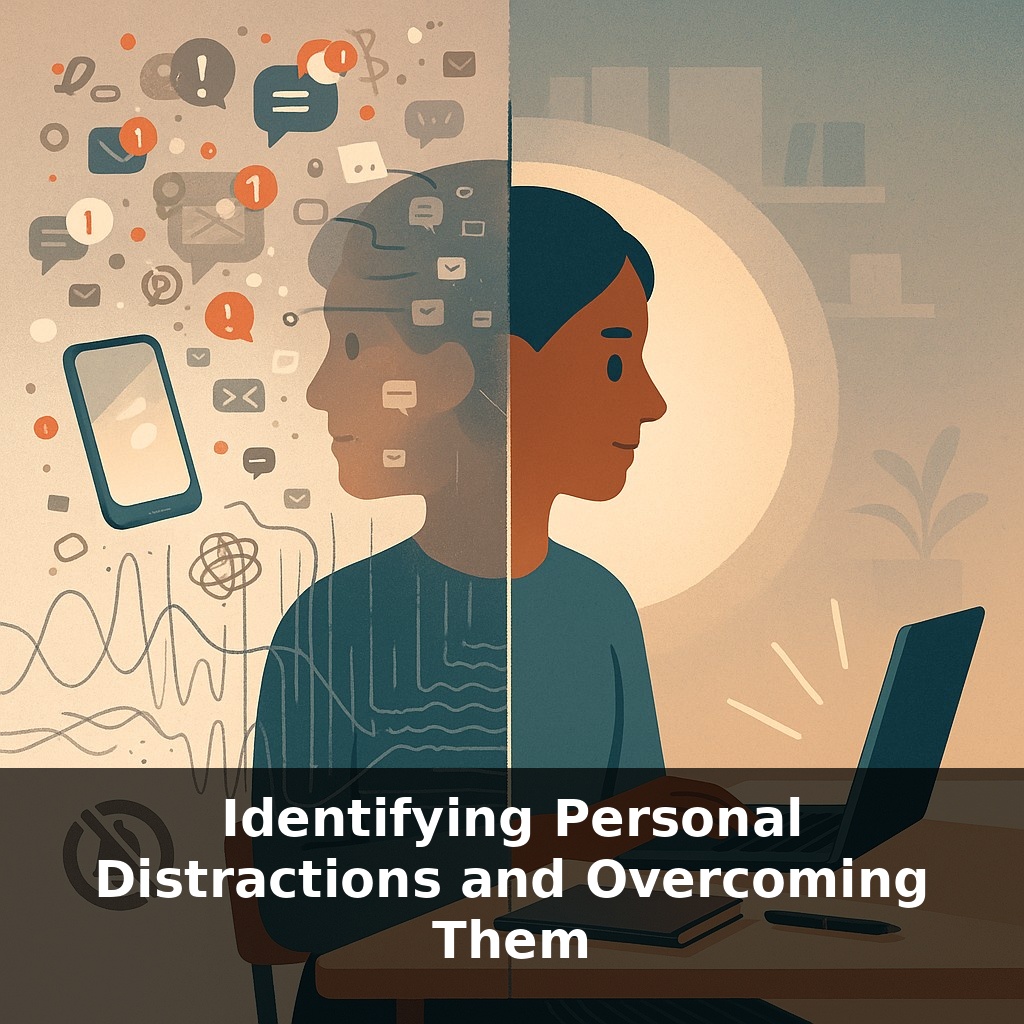
You probably think you know what distracts you: your phone, your inbox, noisy people, random thoughts. But your *felt* distractions and your *real* ones often don’t match. The obvious culprits are like clickbait headlines—loud, easy to blame, and sometimes not the main story. The silent killers are the subtle habits: that “quick check” of messages before starting a tough task, the urge to tidy your desk instead of finishing a draft, the way you suddenly remember a “small errand” right when the work gets uncomfortable. These patterns aren’t accidents; they’re learned escape routes your mind runs to whenever it senses friction, boredom, or uncertainty. Today, we’re not trying to eliminate every distraction—that’s impossible. We’re going to start by catching them in the act, so you can see which ones actually control your day.
Some of your biggest time-thieves don’t look like “distractions” at all. They wear respectable costumes: replying to one more email, checking a “quick” update, opening a new tab to “just confirm a detail.” They feel productive, even responsible, yet they quietly slice your attention into fragments. On top of that, your environment is constantly auditioning for your focus—46 notifications a day, endless social feeds, background chatter. The result isn’t chaos you can see, but shallow work you can feel. Our job now is to trace the exact moments where your attention leaks, in real life, not in theory.
Think of today as reconnaissance: you’re mapping your personal “distraction terrain” instead of trying to bulldoze it. To do that, it helps to distinguish two broad territories your attention keeps slipping into: what attacks you from the outside, and what quietly pulls you away from the inside.
External pulls are usually easier to spot. These are the things that *reach in* and tap you on the shoulder: your phone lighting up, a colleague pinging you, a door slamming, a new email badge, someone talking nearby. They’re concrete, visible, and often feel justified: “I had to check, it might be important.” The real question isn’t whether they exist; it’s *which* of them actually deserve to pierce your focus, and how often.
Internal pulls are subtler. Nothing happens on the outside; you just suddenly find yourself on a new tab, in a new app, or lost in a story in your head. Maybe you’re replaying a tense conversation, stressing about money, fantasizing about a future success, or planning dinner. These shifts are powered by the same reward systems that make social media sticky: your brain gets a tiny hit of relief or novelty when it lets go of the uncomfortable task in front of you.
Here’s where habit loops sneak in. A cue appears (feeling stuck on a sentence, a wave of fatigue, a flicker of anxiety), you run a routine (check messages, open a new tab, grab a snack, scroll), and you get a reward (distraction, comfort, stimulation). Repeat that hundreds of times, and your brain learns: “Whenever work feels like *this*, do *that*.” Over time, the cue doesn’t even need to be strong; the routine fires automatically.
Instead of judging these loops, you’re going to start labeling them. When you catch yourself drifting, ask:
1. What just happened *right before* I switched? 2. Was the pull mainly external or internal? 3. What did I get from switching—relief, excitement, connection, numbing out?
You’re not trying to change anything yet. You’re building a kind of “debug log” of your attention—so later, you can re-code the routines without guessing.
Think of three different moments in your day: starting work, hitting a hard patch, and winding down. In each, your “default distraction” often changes. For some people, mornings are full of external pulls—Slack, news, messages. Midday, internal pulls dominate—hunger, restlessness, self-criticism. Evenings might blend both: half-scrolling, half-ruminating about tomorrow.
To see this more clearly, zoom in on concrete scenes. You open your laptop, intending to work on a proposal. Before you touch the real task, your hands auto-pilot to email, then calendar, then a “quick” feed check. Nothing dramatic—just a quiet chain of moves that postpones the first hard decision. Or you’re editing a portfolio; the moment you reach a confusing section, your mind offers five “urgent” alternatives: coffee, messages, a settings tweak, reorganizing files, checking analytics. Notice how plausible each one sounds in the moment.
Maintaining your attention here is less about willpower and more like tuning a mixing board: you’re learning which specific dials spike noise at which times of day.
As tools get smarter at tracking your clicks, swipes, and pauses, they’ll predict exactly *when* you’re most likely to drift—and nudge you at that precise moment. That can tilt either way: some systems will quietly extend your “just one more” cycle, others will act like a trusted spotter, handing you the next plate only when you’re steady. The skill that separates benefit from burnout won’t be tech fluency, but choosing which systems are allowed to co‑pilot your attention.
As you log these moments, patterns will surface like footprints on a well‑worn trail—certain apps, times, or moods that always seem to detour you. Don’t rush to pave a new road yet. Curiosity comes first. Changing these routes later will be easier once you’ve seen, in detail, how your day actually gets quietly rewritten.
Before next week, ask yourself: 1) “Looking at yesterday hour by hour, when did I reach for my phone, email, or ‘just one quick check’ instead of doing the work I’d planned—and what *exactly* was I trying to avoid in that moment (boredom, fear of failure, uncertainty)?” 2) “If I had to choose just *one* recurring distraction (social media, email refresh, Slack, YouTube, news, etc.) to ‘quarantine’ for a 60-minute block tomorrow, which would free up the most focus—and what simple barrier could I put in place (app blocker, phone in another room, closing tabs) to make that hour distraction-proof?” 3) “When I do slip into my favorite distraction this week, how will I pause and ask, ‘What do I actually need right now—rest, clarity, or courage?’ and then give myself *that* on purpose instead of more scrolling or busywork?”