Mid-interview, your brain blanks—and yet, a week later, the recruiter still remembers your answer better than dozens of others. How? Research shows short, well-structured stories stick in an interviewer’s mind far more than long resumes. Today, we’re diving into how to craft those stories.
So now that we know *what* sticks in an interviewer’s mind, the next step is understanding *how* to shape your answers so they’re easy to follow, fast to process, and hard to forget. Interviewers are essentially scanning your responses for proof: proof that you’ve faced real challenges, made intentional choices, and produced outcomes that matter to their business. But under pressure, most candidates either ramble through every detail or skip straight to “and then it worked out.” Neither gives the listener enough structure to accurately judge your impact. Think of your responses like a navigation app: the interviewer wants to see the starting point, the destination, the route you chose, and where you actually ended up—without unnecessary detours. That’s where the STAR method comes in: a simple blueprint for turning past experiences into credible, decision-ready evidence.
Think of this phase as moving from “I did a good job” to “Here’s the data.” Many candidates vaguely recall projects but haven’t broken them into moments an interviewer can actually picture or evaluate. That’s why STAR works best when your stories are pre-selected and pressure-tested *before* you’re in the hot seat. In practice, that means mining your past year for concrete challenges, decisions, and outcomes—especially where stakes were high, tradeoffs were real, and you can point to numbers, not just effort. Like reviewing your bank statements, patterns emerge: where you took risks, led change, or delivered more than was expected.
Let’s turn STAR from a concept you’ve heard of into a tool you can actually *drive* in an interview.
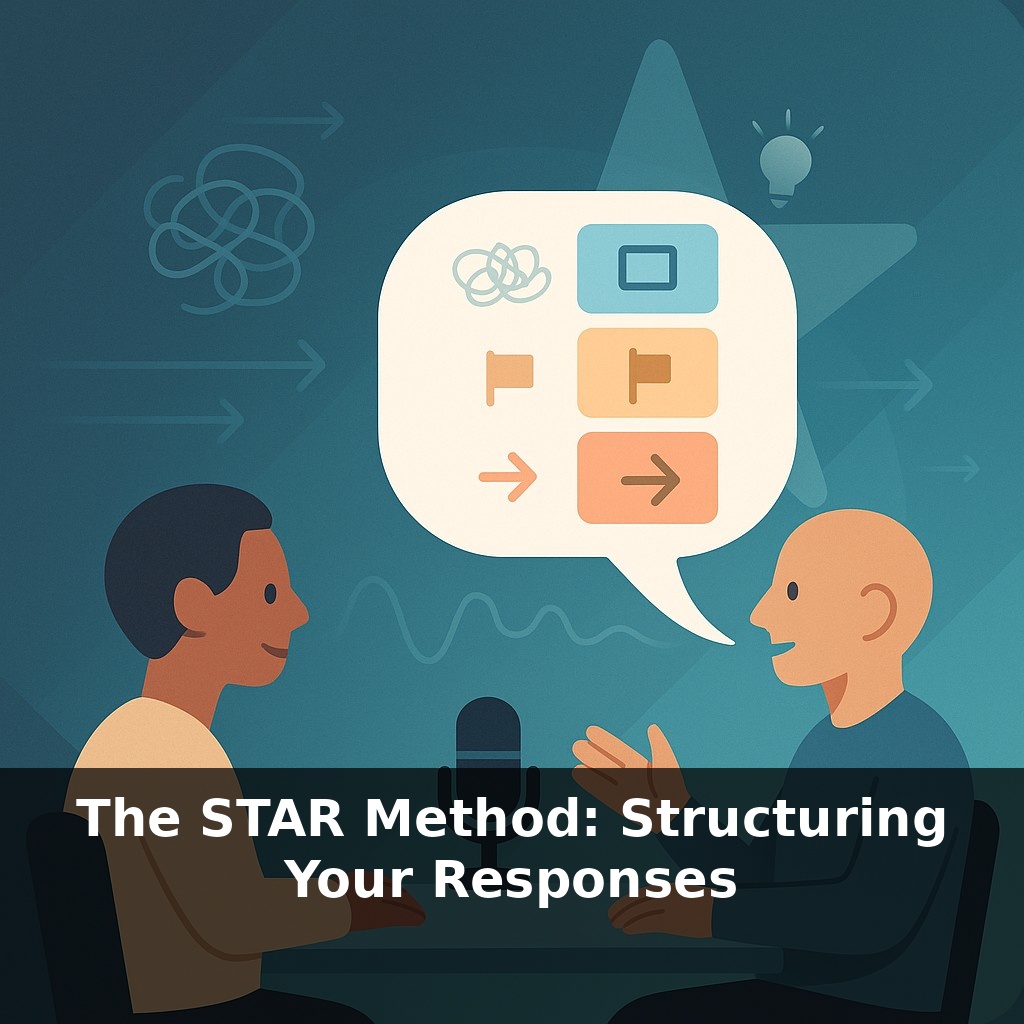
Start with **Situation** by briefly anchoring the listener in time, place, and stakes. One or two sentences is enough: role, context, and why it mattered to the business. You’re not writing a novel; you’re giving just enough backdrop so your later decisions make sense.
Next, clarify the **Task**—but think beyond your job description. What were you *specifically* responsible for in that moment? Tighten it into a single, sharp sentence: “My goal was to reduce X by Y,” or “I needed to deliver Z under constraint Q.” This is where many answers fall apart: if your goal is fuzzy, your impact will sound fuzzy too.
Then, zoom into **Action**—the part interviewers unconsciously lean forward for. Instead of listing every step, choose 2–3 pivotal moves that reveal your judgment: what you prioritized, who you involved, which tradeoffs you accepted. Focus on verbs that show ownership: “I designed,” “I negotiated,” “I escalated,” “I tested.” If a team was involved, still make your slice of the pie unmistakable.
Finally, land on **Result** with something that can be verified. Numbers are best—percentage changes, time saved, revenue influenced, error rates reduced. When numbers aren’t available, use concrete before/after contrasts: “Previously X happened weekly; after, it dropped to once a quarter.” Tie the outcome back to the original stakes so the through-line is obvious.
One helpful way to think about it: you’re editing a long documentary of your experience down into a tight highlight reel—keeping only the shots that prove you can handle the kinds of problems this company actually faces.
As you practice, you can add a quiet, optional fifth step—**Reflection**—especially for senior roles: one sentence about what you’d repeat, avoid, or scale next time. This signals growth, not just performance.
Well-constructed STAR responses don’t sound robotic. When you know the skeleton—S, T, A, R—you’re actually *freer* in the room: you can adapt details to the question while keeping your story crisp, credible, and easy to remember.
Think of STAR as your way to “zoom in” on the right details at the right time. To make it concrete, look at how different companies quietly reward this style.
At **Amazon**, a Leadership Principle question like “Tell me about a time you disagreed with your manager” isn’t really about conflict; they’re listening for how clearly you frame stakes, your specific role, and a measurable business outcome. A candidate who says, “We debated a launch date; I modeled the risk of delaying, proposed a phased rollout, and we hit 94% of target with 40% fewer incidents,” is far easier to advocate for in debrief.
Or take a **Deloitte**-style client story: instead of “I worked on a process improvement project,” a sharp STAR answer might end with, “Cycle time dropped from 10 days to 3, letting the client reassign two FTEs to higher-margin work.” Notice how the numbers don’t brag; they *translate* your story into business language.
Over time, you’re not just collecting examples—you’re building a personal “evidence portfolio” that different interviewers can all read the same way.
Soon, your STAR stories won’t just be for live interviews—they’ll be parsed by algorithms scoring clarity, relevance, and evidence of outcomes. Treat each answer like a well-tagged dataset: clean inputs (concise context), labeled variables (your decisions), and clear outputs (verifiable change). As formats shift to async video and gamified assessments, those who’ve pre-organized experiences into STAR “modules” will adapt fastest, remixing examples for new roles, industries, and even cross-border careers.
Treat STAR like a reusable template, not a script: the more you iterate, the more flexibly you can swap in fresh examples for different roles, levels, and industries. Your challenge this week: rehearse one story aloud, then “refactor” it twice—once to highlight leadership, once to highlight execution—like rewriting code for a new feature set.