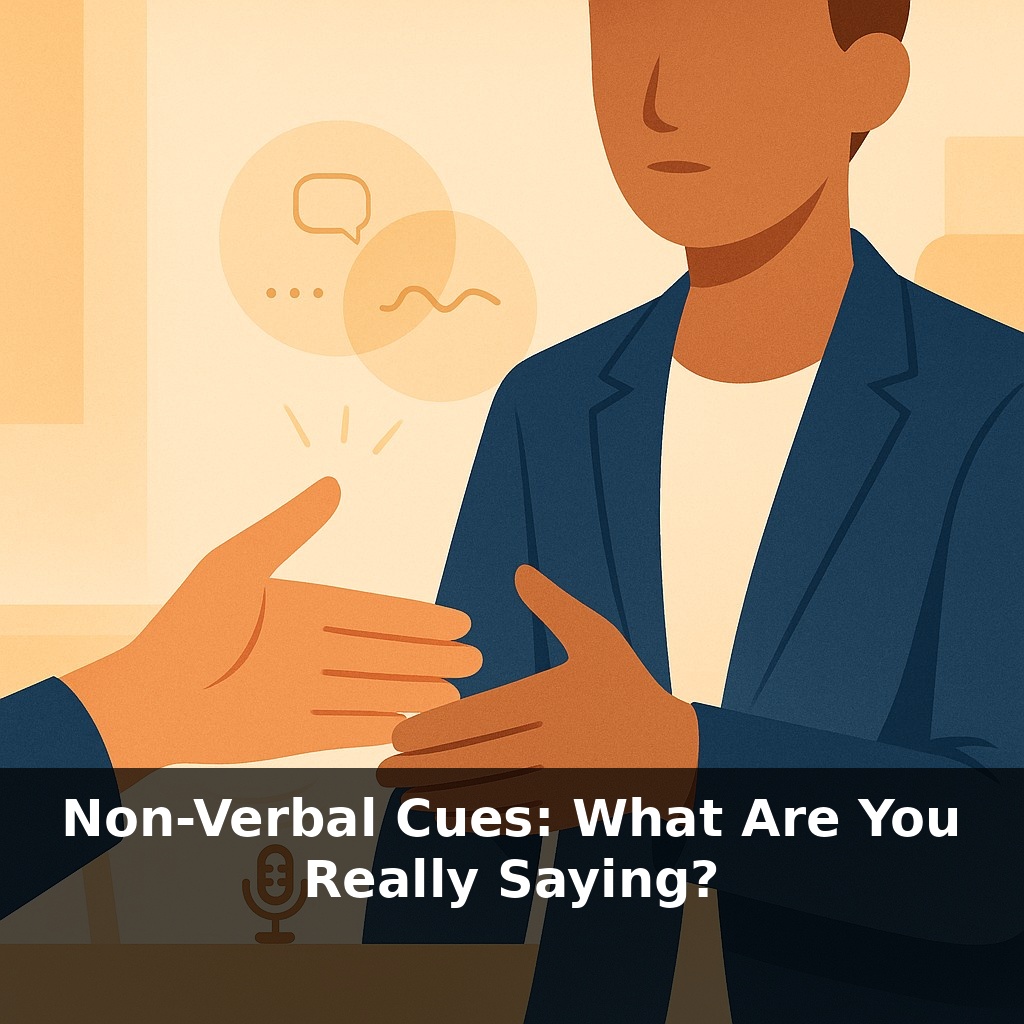
In the time it takes to shake hands and say your name, most interviewers have already decided how they *feel* about you—before they’ve processed a single sentence you’ve said. Today, we’re stepping into that silent space where your body speaks first, and often louder, than your words.
Up to 80 % of an interviewer’s first impression is shaped before they’ve really *thought* about you—your brain and theirs are trading signals on autopilot. This is where things get interesting: your posture, tiny shifts in your face, and even how still you keep your hands can quietly upgrade or sabotage everything you say.
You’re not trying to “perform” a different person; you’re learning to make your internal story visible on the outside. When your words say “I’m confident with clients” but your eyes dart away and your foot taps, the interviewer believes the leak, not the line.
The goal in this episode isn’t to become a statue or a fake smiler. It’s to spot the handful of cues that move the needle most: how far you lean in, how often you fidget, how long your smile lasts, what your eyes do when you answer hard questions. We’ll turn those from unconscious habits into deliberate tools you can actually control.
Those first seconds don’t just affect whether they *like* you; they shape what they expect from you for the rest of the conversation. Psychologists call this the “halo effect”: if your early signals feel steady and open, interviewers unconsciously grade your later answers more generously. Think of it like compound interest on behaviour—small early gains keep paying off, while early “red flags” force your words to work twice as hard. The upside? Tiny, specific shifts—where you look when listening, how you hold pauses, what your hands do while you think—can quietly tilt that halo in your favour.
Up to 60–80 % of that early judgment is coming from channels most candidates barely monitor: what your face does *between* words, how your eyes move at the end of a sentence, the tiny shifts in your hands when a tough question lands. Think of today as a lab session where we zoom in on four of the most “expensive” non-verbal habits—because they silently spend or save trust on your behalf.
Start with your **face**. Micro-expressions—those flashes of doubt, annoyance or pride that flicker in under half a second—often appear right *before* you answer. Interviewers may not consciously spot them, but their brains register something “off” when your story sounds polished yet your eyebrows flash anxiety. You’re not trying to erase emotion; you’re aiming for a baseline of calm alertness so brief spikes don’t dominate the signal.
Next, your **eyes**. You already know constant eye contact can feel intense, but darting away exactly when you say “I led the project” quietly undercuts the claim. A practical rule: maintain contact while you state the key point, then feel free to glance aside while you search for details, and return to them as you land the sentence. This makes your gaze pattern look like thinking, not escaping.
Then, **hands**. Above about 15 restless movements a minute, interviewers start to rate candidates as less decisive. But stillness isn’t the goal; *purposeful* movement is. Gestures that “trace” structure—counting on fingers, outlining a timeline, showing size or direction—help your story feel concrete. Random pen-clicking, sleeve-tugging or spinning a ring signal internal noise instead.
Finally, **torso and lean**. That 10–15° forward lean doesn’t just read as engagement; it also prevents a common problem: shrinking back slightly whenever a question feels evaluative (“Tell me about a failure”). Leaning in through the uncomfortable parts of your story tells a different story about you: “I own this, and I can look at it with you.”
Underneath all of this is congruence. When your verbal “headline” and physical “footnotes” match, the interviewer relaxes. When they fight, their brain starts fact-checking you instead of listening with you.
Think about how small, observable tweaks play out in real rooms. Two candidates give nearly identical answers about handling conflict. One keeps their hands hidden under the table, voice steady but body half-turned toward the door. The other turns their chair square to the interviewer, rests forearms lightly on the table, and lets their hands mark the stages of the story—escalation, pause, resolution. Same words, different “subtitles” for the brain: avoidance versus ownership.
Hiring managers at firms like McKinsey and Google often debrief using phrases like “felt grounded,” “felt slippery,” or “felt energising.” Those judgments usually track less with vocabulary and more with visible patterns: Do you *stay* physically present when the question cuts close? Do your gestures match the emotional weight of what you’re describing?
You can treat this almost like debugging code: when a response lands badly in practice sessions, don’t rewrite the answer first. Re-run it while changing only what your eyes, hands, and shoulders do, and watch how the “output” shifts.
Your future interviewer may first be an algorithm, not a person. As multimodal AI starts “reading” tiny shifts in gaze and timing, your patterns become data points, not just vibes. That doesn’t mean acting like a robot; it means knowing which habits are consistent under stress. Tools like VR mock interviews will soon work like flight simulators for your presence, letting you safely crash, review the tape, and upgrade how you show up before real stakes arrive.
Treat your next interview like a live A/B test: one version with your usual habits, one where you tweak just a single signal—slower breathing, steadier hands, or a longer exhale before tough questions. Notice how the room feels different. You’re not chasing perfection; you’re learning your own “settings” for calm, clear presence under real pressure.
To go deeper, here are 3 next steps: (1) Watch Amy Cuddy’s TED Talk “Your body language may shape who you are” and practice two minutes of a power pose before your next meeting, then record a quick voice memo describing how your confidence and presence felt different. (2) Use your phone’s camera to silently film yourself during a mock conversation (you can read a paragraph from a book), then replay it with Vanessa Van Edwards’ cues from *Cues: Master the Secret Language of Charismatic Communication* beside you, pausing to note every mismatch between your words and your facial expressions, posture, and gestures. (3) Install a “posture and presence” reminder tool like Upright Go or a free posture reminder app, and set it to ping you every 30 minutes today; each time it goes off, deliberately reset into open posture (uncrossed arms, relaxed shoulders, eye level gaze) and hold it through at least one real interaction—email, Zoom, or in-person.