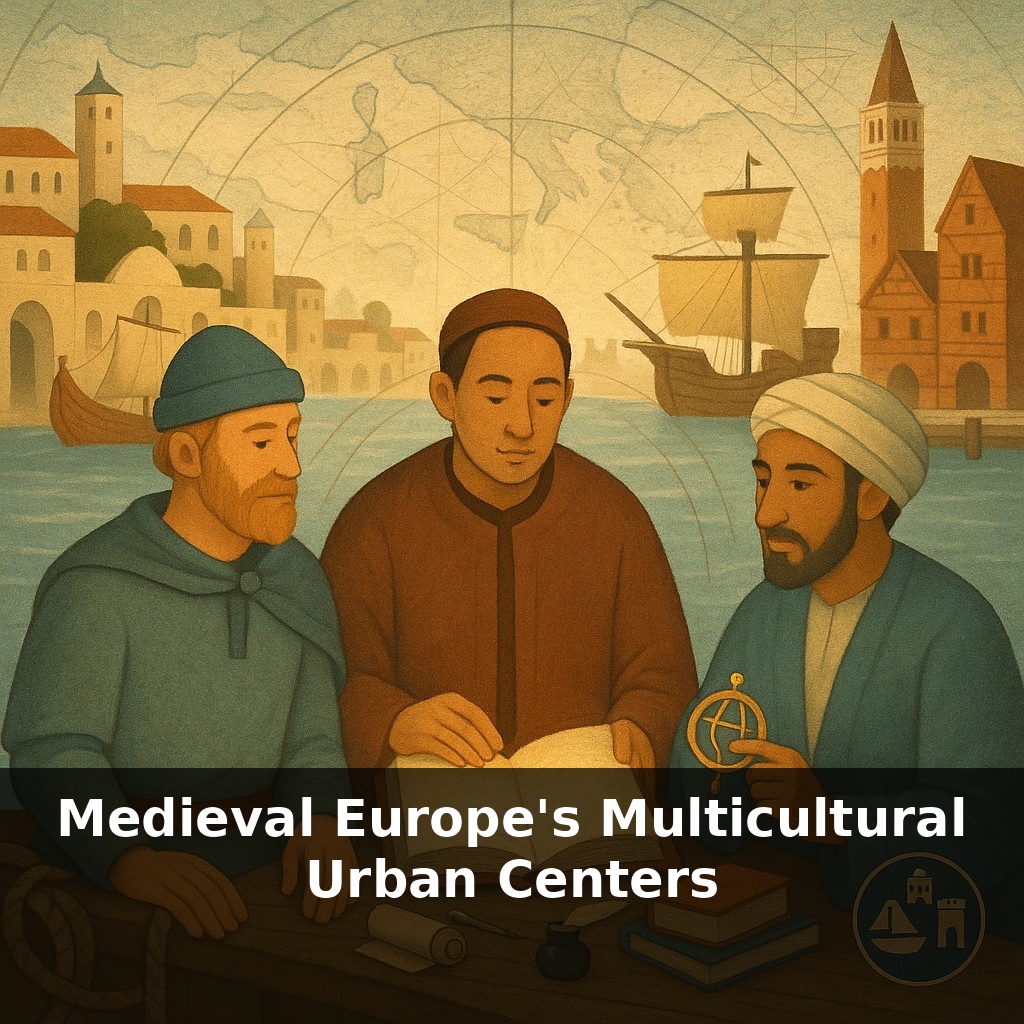
Córdoba once boasted a library holding hundreds of thousands of books while many European kings could barely sign their names. A Norse sailor, a Jewish translator, and an Arab doctor meet in a Mediterranean port—are they rivals, or coworkers in the same sprawling city project?
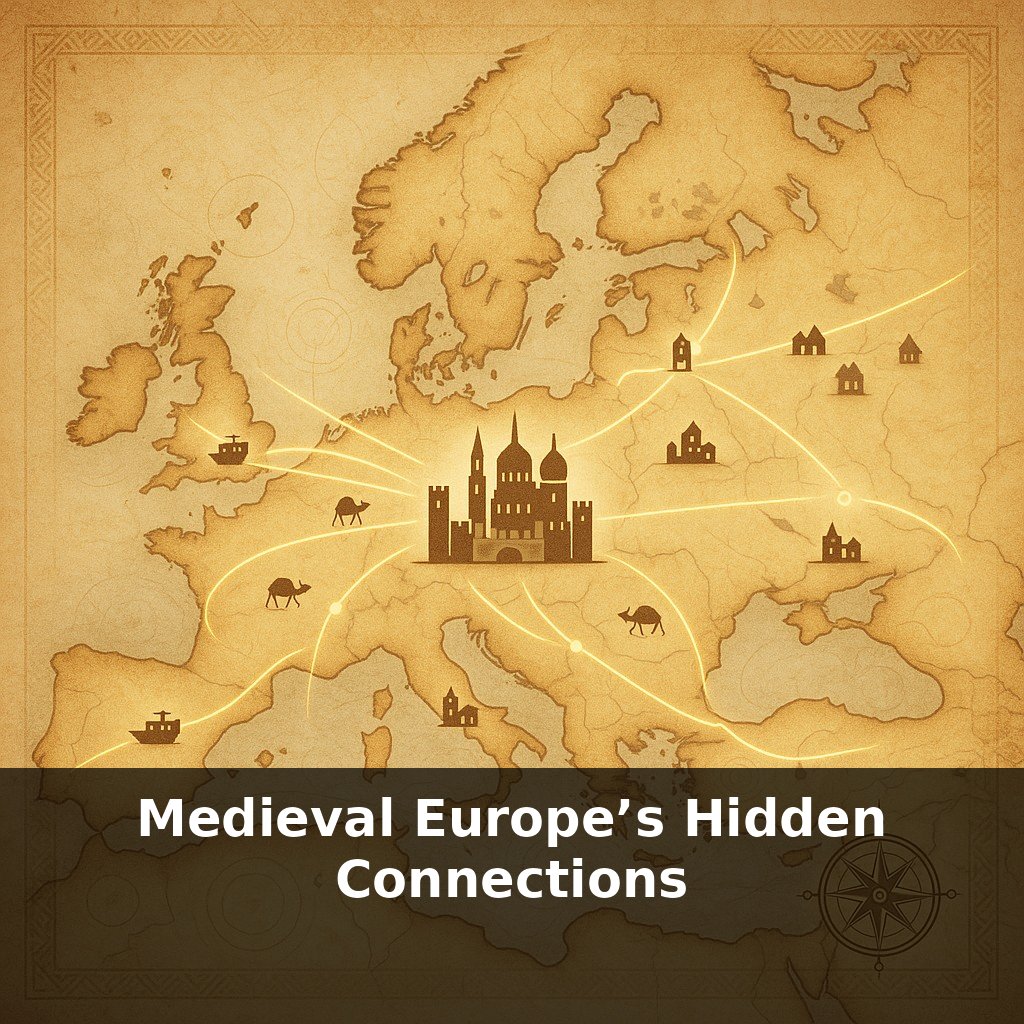
Venice logs thousands of foreign sailors; Lübeck exports its legal code across the Baltic; Ragusa signs shrewd treaties with distant sultans. These aren’t outliers—they’re clues that much of medieval Europe’s real action happened in salt‑streaked harbors and crowded market streets, not in isolated castles.
Step into Palermo at noon: Greek-speaking notaries drafting contracts for Arab merchants who hire local Sicilian porters; a Latin bishop negotiating docking fees while Jewish brokers tally grain prices. It’s less a clash of civilizations than a slow-cooked stew—different ingredients sharing one pot, each keeping its own flavor while contributing to a shared broth.
In these cities, diversity wasn’t an ideal; it was an infrastructure problem to solve. How do you tax, police, and protect people who don’t share gods, laws, or hometowns—but absolutely need one another to get rich?
City councils and merchant courts became the “software” running these urban machines. Statutes dictated where foreign traders slept, which streets certain crafts could occupy, even which days different faiths could hold public processions. But the rules weren’t only restrictive; they also created shortcuts. Shared weights and measures, standardized contracts, and recognized seals meant a deal struck between a Catalan cloth dealer and a Syrian spice importer could be enforced across borders. Urban governments learned to turn potential flashpoints—taxes, ships, feast days—into predictable routines that kept the docks busy and the markets full.
Start with the street level. In many of these cities, identity was literally mapped into space. Venice’s Fondaco dei Tedeschi was not just a warehouse but a locked compound: German merchants slept upstairs, traded downstairs, and submitted to Venetian inspection at the gate. In Palermo, whole streets clustered by language or craft—Greek scribes near the chancery, North African traders closer to the docks—yet their contracts intertwined like threads from different looms feeding one cloth.
Religious lines also folded into urban design. Jewish quarters in places like Córdoba or later Dubrovnik were often walled at night, but they sat next to main commercial arteries, not hidden on the outskirts. Muslim visitors in Christian ports might get their own prayer spaces, sometimes temporarily converted rooms in fondacos or private homes. The aim wasn’t harmony; it was manageability: keep groups legible to officials while leaving enough overlap that business could flow.
Guilds added another layer. In Lübeck, a shipbuilder’s guild might include masters from German, Danish, and Slavic backgrounds who swore to one set of workshop rules while keeping distinct parishes on Sunday. Venetian glassmakers guarded techniques so jealously that members could be banned from emigrating, but they happily imported Syrian raw materials and Balkan lumber. Think of the whole system like a software platform with plug‑ins: the core rules stayed stable, while each community bolted on its own customs and networks.
Diplomacy was urban, too. Ragusa’s 1372 treaty with an Ottoman emir didn’t emerge from royal courts alone; city envoys knew precisely which clauses on safe‑conduct, quarantine, and customs would please local merchants. Lübeck’s law code spreading across the Baltic created a kind of Hanseatic “legal zone” where a Tallinn trader and a Hamburg captain could predict how a dispute would be settled.
All this made cities shock absorbers for wider tensions. When crusades or border wars flared, ports often carved out temporary exceptions—limiting certain armed ships, requiring bonds from risky visitors—so that grain, timber, and silver kept moving even when politics turned violent.
Venice’s German merchants buying Baltic furs on credit from a Parisian banker, then settling accounts in Florentine coin, feel oddly familiar if you’ve ever used three apps just to pay one bill. A single cargo might layer contracts, currencies, and credit lines from half a dozen cities—yet dockside notaries could still untangle who owed what. In Dubrovnik, notarial registers show Slavic ship captains quietly hiring Greek pilots for tricky island passages, like subcontractors brought in for a specialized software patch.
Your one analogy here: these towns worked a bit like modular tech stacks. Lübeck’s legal norms could “plug into” Visby’s harbor rules and Gdańsk’s grain fees, letting a merchant move from port to port without rewriting every deal from scratch.
And then there’s knowledge flow. A medical recipe copied in Palermo in Arabic might be translated into Latin in Salerno, glossed in the margin by a Jewish physician, and finally recopied in Paris. The text moves, mutates, and survives because cities keep generating incentives—profit, prestige, or simple curiosity—for people to bridge gaps others treat as walls.
Urban DNA and isotopes now trace childhood origins, revealing dockworkers from inland valleys and elite burials with steppe or Saharan links. As archives go online, historians can “zoom out” like using a map app, following a single surname or cargo route across regions. Your challenge this week: when you walk through your own city, note where signage, food, or worship spaces cluster—then ask what quiet rules and bargains allow them to coexist.
So the “Dark Age” city starts to look less like a closed fortress and more like a crowded co‑working space: noisy, improvised, and permanently under construction. Next time a news story claims our world has never been more interconnected—or divided—remember that medieval dockside alleys were already beta‑testing ways to live with both, every single market day.
Start with this tiny habit: When you open a map app or glance at a map today, pause and pick one medieval city from the episode—like Córdoba, Palermo, or Constantinople—and quickly look up a single image of a building, market, or street from its medieval past. As you look at that one image, say out loud one group that lived or traded there (for example, “Jews,” “Muslims,” “Latin merchants,” or “Greek Christians”). If you have 10 extra seconds, notice one detail (a script on a wall, a type of arch, clothing, or goods in the market) and imagine which community likely brought it there.