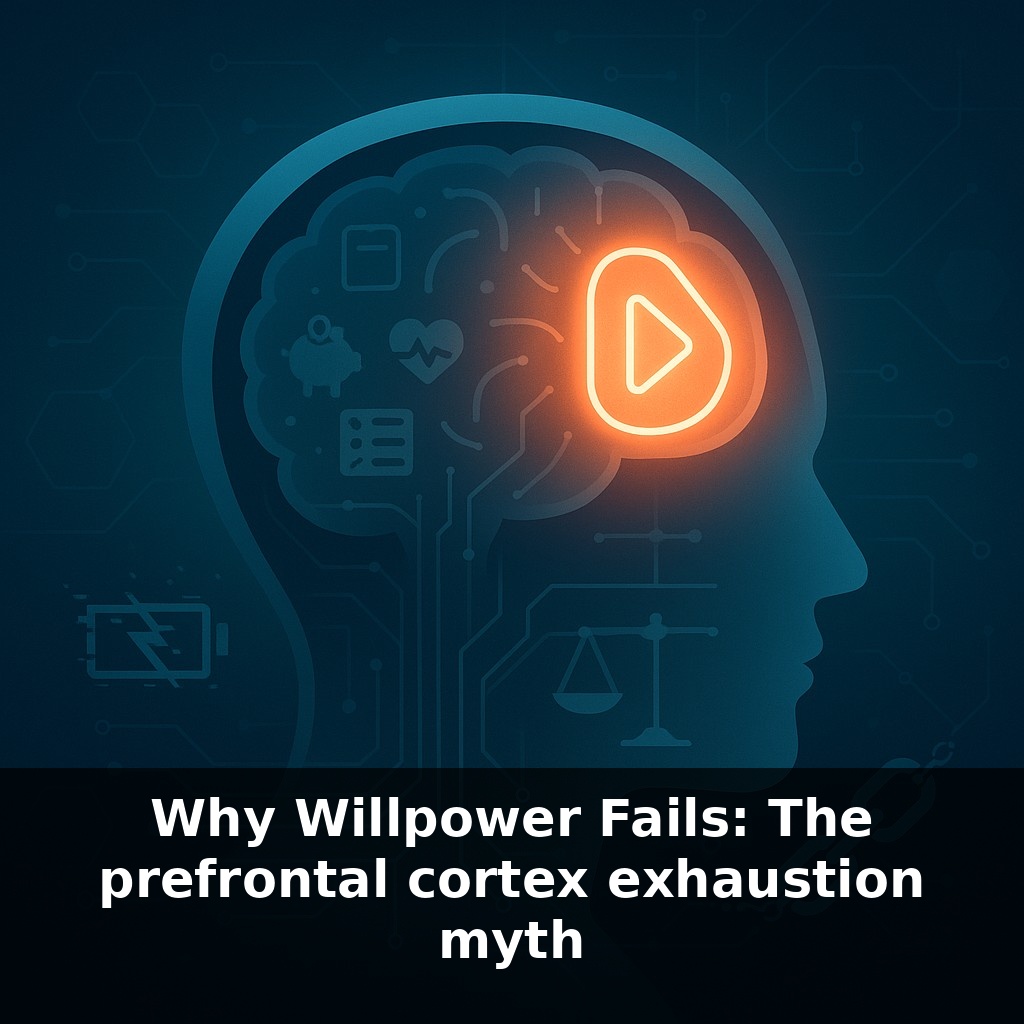
You’ve been lied to about willpower. You’re told your brain’s “gas tank” runs dry, so of course you cave on the diet, the budget, the side project. But here’s the twist: your prefrontal cortex isn’t running out of fuel—it’s changing its mind about what matters most.
Here’s where the story gets more interesting. When you “run out” of self-control, your brain isn’t simply quitting—it’s renegotiating. After a long day of disciplined choices, the system that once backed your long-term goals starts quietly reweighting the options in front of you. Comfort, relief, and quick rewards get an automatic bonus. Effort, restraint, and future benefits suddenly feel oddly expensive. You experience this as “I just don’t care anymore,” but under the hood, your brain is running a new cost–benefit calculation. Stress hormones, blood sugar dips, and even tiny cues of unfairness or fatigue can push that calculation toward “screw it.” And if you firmly believe your willpower is limited, your brain treats that belief like a hard budget line—not a suggestion.
So where does that leave the old “mental energy tank” idea? It captured a real feeling, but it missed how dynamic the brain is. When you hit that late-night scroll, snack, or splurge, it’s rarely one thing failing. Tiny, mostly invisible variables stack up: how meaningful the task feels, how fairly you think you’ve been treated, whether anyone is watching, how close you are to a reward, even subtle cues like time of day or environment. These signals nudge your brain’s priorities moment by moment, tilting your behavior long before you consciously decide to “give in.”
Here’s where the “PFC exhaustion” story really falls apart: when researchers look directly for evidence that control systems are literally running out of resources, they mostly don’t find it. In big, carefully run studies, people can keep doing demanding tasks without the dramatic collapse you’d expect from a drained battery. What does shift, reliably, is how much they *want* to keep doing the hard thing, how much effort they *choose* to invest, and how attractive alternatives start to feel.
One major player is **attention**. After repeated effort, your focus becomes more “slippery.” Distractions grab you more easily, not because the control system is gone, but because the brain starts assigning more value to novelty and relief. That’s why, after hours of deep work, even a boring notification suddenly feels compelling.
Then there’s **motivation drift**. At the beginning of a project, your brain heavily weights future rewards: promotion, health, financial freedom. As time passes without an immediate payoff, the scales tip. Fast, concrete pleasures gain leverage. Subtle cues—like seeing others relax, or finishing a subtask—signal it might be “safe” to ease up. You experience that as “I’ve earned this” or “I’ll get serious tomorrow.”
Physiology matters too, but not in the simplistic “low sugar = no willpower” way. Glucose is tightly regulated; in everyday life, your brain is rarely starved. What research suggests instead is that your brain becomes *less willing* to spend scarce metabolic resources on tasks that feel pointless, unfair, or endless. Rest, mood, sleep, and stress history all feed into that willingness.
Crucially, **beliefs about limits** act like a governor on an engine. In studies where people are told willpower is easily depleted, they show sharper performance drops after exertion. Those primed to see it as resilient keep going longer with fewer errors—even when the tasks are equally hard.
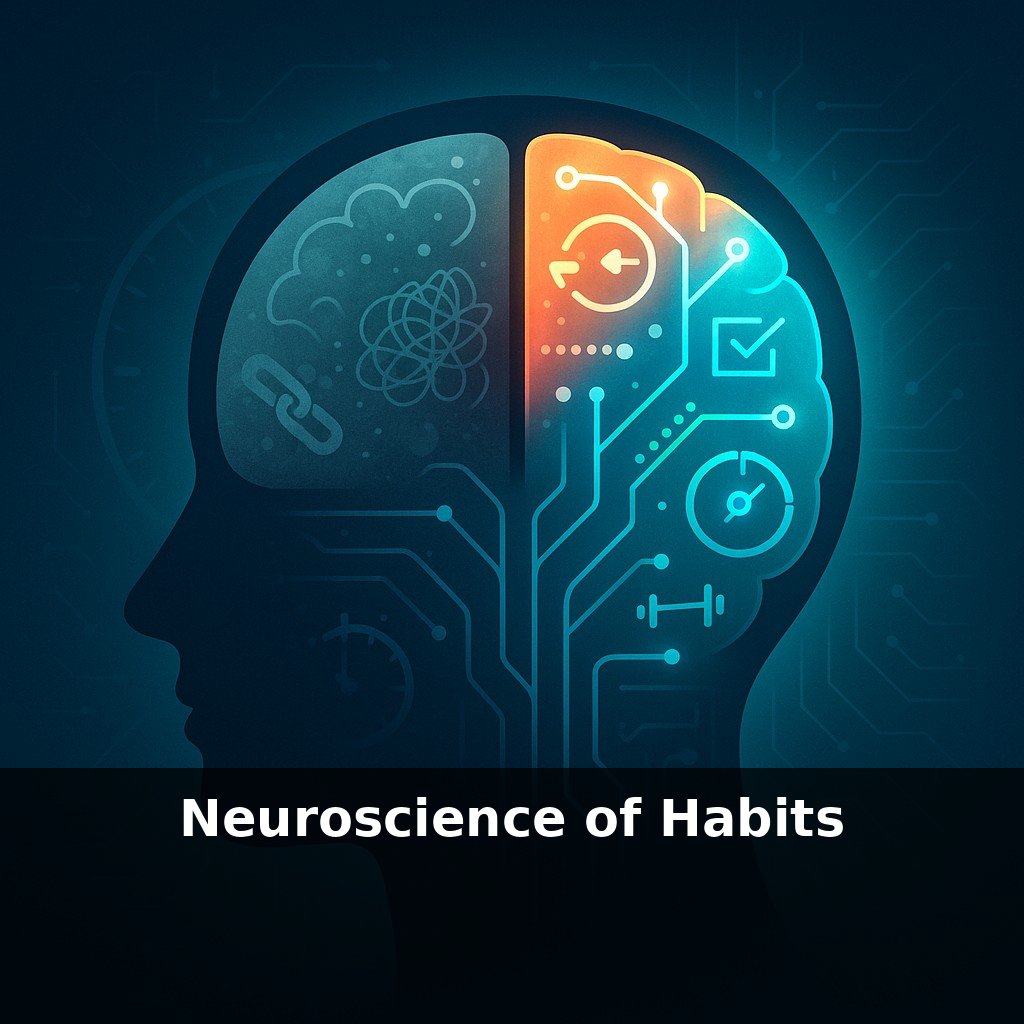
All of this explains why habits are such a powerful workaround. Repetition gradually shifts control from effortful, moment-to-moment regulation to streamlined circuits that run with minimal subjective effort. The less you need to argue with yourself, the less those shifting valuations can derail you.
A useful way to see this in daily life is to zoom in on *where* things fall apart. Notice how “I’m done” moments rarely appear during a crisis deadline or when someone you respect is watching. They hit on the sofa at 10:37 p.m., or halfway through a workout when no one would notice if you coasted. The shift isn’t just effort; it’s context. Tiny cues—lighting, posture, the apps on your home screen—quietly reshape what feels reasonable.
Think of a touring musician between shows: in rehearsal, every note is deliberate; on stage after months on the road, sequences happen with almost no felt effort, freeing attention for the crowd and improvisation. In your life, repeated cues plus consistent responses do something similar. Setting the same playlist for deep work, using a specific mug when writing, or always starting weekly planning in the same chair teaches your brain, “When this pattern appears, we do *this* next,” without needing a fresh inner debate every time.
When repetition reshapes behavior, the frontier shifts from “try harder” to “design smarter.” Future tools may feel less like productivity whips and more like subtle collaborators. Think of apps that learn your daily “slump zones” and quietly dim temptations, or wearables that sense cognitive strain and cue tiny recovery rituals—like a conductor signaling a softer passage before the orchestra burns out, keeping you in rhythm without constant inner negotiation.
Your challenge this week: run a tiny “anti-ego-depletion” experiment. On a day you’d usually say “I’m done,” tweak one small lever—environment, timing, or reward—*before* the slump. Treat it like adjusting a recipe, not testing your character. Notice how behavior shifts when you redesign the kitchen instead of yelling at the chef.