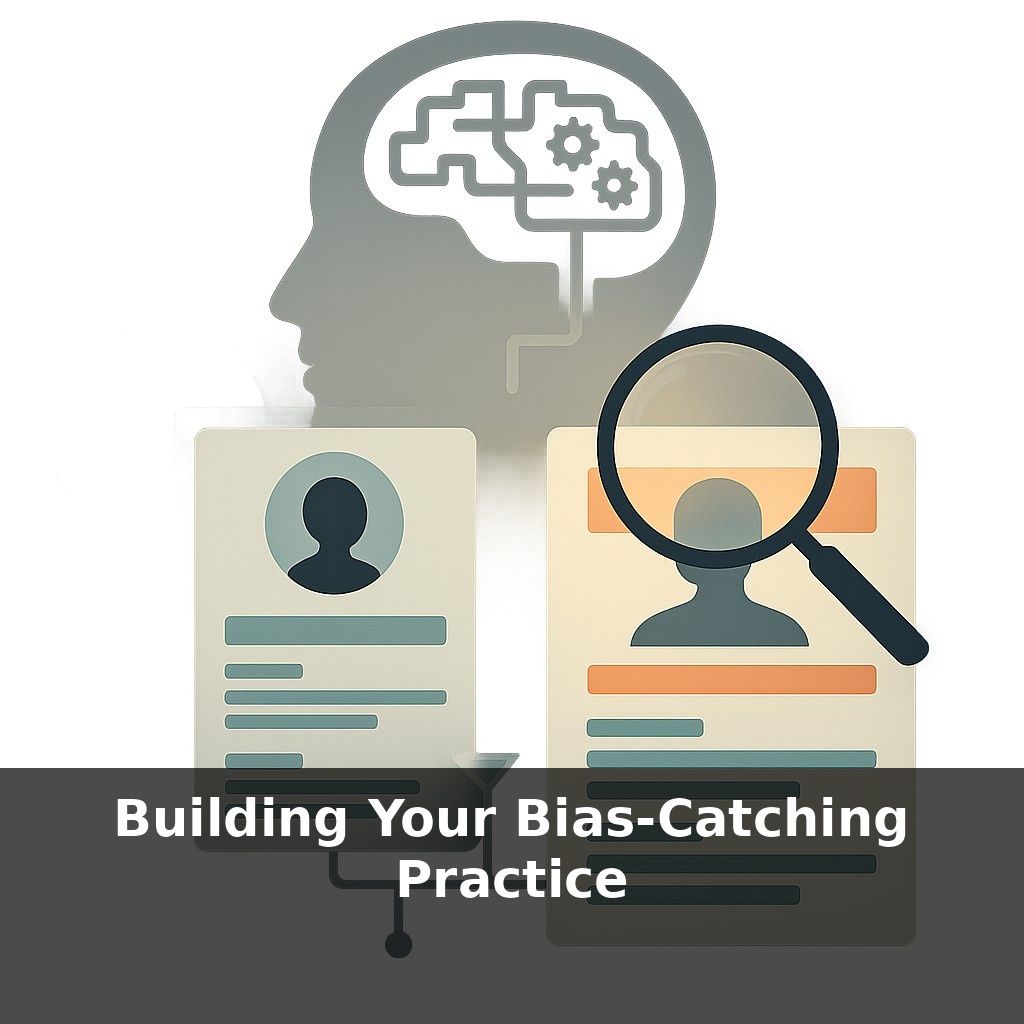
A hiring manager scans two identical résumés, but a tiny, irrelevant change in name affects who moves on. Every day, our most routine decisions are subtly influenced by hidden biases, sometimes deciding who gets hired, trusted, or ignored without us even noticing. You made thousands of tiny choices today before breakfast—and almost all of them ran on autopilot—revealing the hidden influence of bias in our everyday decisions. In this episode, we’ll train your mind to catch those split-second biases in the act.
Research teams studying bias don’t just look at opinions; they track behaviour in hard numbers. In one hiring experiment with identical résumés, simply changing the name from “Greg” to “Jamal” cut callbacks by around 50 %. In another line of work, structured decision tools – like checklists and rating grids – boosted objective decision quality by about 15 % across 30 different debiasing interventions.
This episode is about turning findings like that into a personal system. Instead of relying on one-off insights, you’ll learn how to build a repeatable “bias-catching” practice that fits into real life: during a performance review, in a conflict with a colleague, or while scanning news about a protest. We’ll combine three levers—awareness, tools, and social support—into a routine you can actually run every day.
Researchers who study real‑time decision making talk about “micro‑moments”: tiny junctures where your next move can tilt fair or unfair, inclusive or dismissive. In one study of loan approvals, simply adding a 3‑item pause‑and‑check step cut biased rejections by roughly 20 %. In policing simulations, officers who used a short, rehearsed If‑Then plan (“If I feel rushed, then I slow my assessment by 2 seconds”) showed fewer shoot/no‑shoot errors. Your goal now isn’t to think harder about bias in general, but to wire in small, repeatable moves at the exact moments they matter.
Think of this as building a tiny operating system around your decisions. Three layers make it work: moment‑to‑moment noticing, preloaded tools, and outside scaffolding.
Start with noticing. Instead of trying to “watch everything,” pick 2–3 recurring decision zones where your choices affect others: hiring, grading, feedback, conflict, promotions, who gets stretch work. For each zone, identify one reliable early warning sign that you’re sliding into default: time pressure, strong emotion, fatigue, overconfidence, or total certainty about a “gut feeling.” Research on medical errors shows that just tracking these trigger states can cut wrong‑site surgeries and misdiagnoses by double‑digit percentages; you’re doing the same for judgment errors.
Next, load tools at those choke points. Design one ultra‑short checklist per zone—3 to 5 items, max. For hiring, that might be: (1) Have I compared candidates only on pre‑defined criteria? (2) Did I score each criterion before reading names or demographic info? (3) Have I written one evidence‑based reason for the score? In one global firm, moving to a 1‑page evidence checklist increased gender balance in leadership shortlists from 20 % to 45 % in 18 months.
Now embed simple prompts where you actually work: at the top of a feedback form, in your calendar before performance reviews, inside your email templates. A bank in Europe added a 2‑line fairness prompt into their loan approval screen; within a quarter, approval gaps between comparable majority and minority customers shrank by about 12 %.
The third layer is structural. Swap “hoping to be fair” for predictable safeguards. Examples: blind the first review of résumés or proposals; rotate who plays structured challenger in big decisions; require at least one divergent perspective before final sign‑off on hires, firings, or large spends. When a U.K. orchestra moved to blind auditions behind a screen, the odds that a woman advanced from preliminary rounds jumped by roughly 50 %.
One practical way to see this: like configuring a firewall in your organization’s tech stack, you decide which “ports” (decision points) are open, which need authentication (a checklist or second pair of eyes), and which are blocked without extra justification. Over time, that configuration—not your willpower—does most of the work.
A concrete example: a mid‑size tech firm mapped 10 recurring decision points in a product launch—feature prioritisation, beta‑tester selection, marketing imagery, support triage, and more. They added one 4‑item fairness checklist to just 3 of those points. Within 2 release cycles, customer complaints about “overlooked use cases” from smaller markets dropped by 28 %, and uptake in those markets grew by 11 %. Nothing else in their roadmap changed.
You can do a lightweight version personally. Pick one recurring meeting each week where you influence outcomes: a stand‑up, a design review, a hiring huddle. Before the meeting, jot down 3 names of colleagues who rarely speak. During the meeting, track airtime in rough minutes. Your aim is not to force equality, but to notice patterns. One engineering manager who tried this for 6 weeks found that two junior women spoke less than 10 % of the total time, despite owning critical components. After he quietly restructured the agenda—explicit turns, shorter monologues—bug‑resolution time on their components improved by 19 %.
In 5 years, leaders who can show a “bias audit trail” for key calls will have a measurable edge. Boards are already asking for proof that promotions, pricing, and product decisions were stress‑tested. Expect tools that log your decision steps, flag gaps, and export a 1‑page fairness summary. Teams using such audit trails in procurement pilots cut disputes over “unfair bids” by 30 % and reduced appeal time from 90 to 52 days, freeing weeks for actual project work.
Your challenge this week: Treat one recurring decision—like who gets speaking slots, stretch assignments, or client introductions—as a live experiment. For 7 days: 1) Before acting, write the decision and 3 concrete options. 2) Apply a 3‑item fairness checklist you design in advance. 3) Capture the final choice plus one sentence on why. At week’s end, review all 7 decisions. Where did the checklist change your mind—or fail to? Adjust the checklist and repeat next week.
Treat this like skill training, not self-judgment. Pilots log 100s of hours before flying solo; you’re logging decisions to fly fairer. After a month of 1–2 logged choices per day, you’ll have 30–60 data points—enough to spot who you overlook, whose risks you overestimate, and where a 10‑second checklist reliably shifts your call. Then you can scale what works.
Try this experiment: For the next three meetings or conversations where a decision is made (hiring, assigning a project, choosing a “lead”), say out loud: “Let’s do a bias check—who are we defaulting to and why?” and force yourself to offer at least one concrete alternative (a different person, a different source, a different example). Pay attention to when your brain reaches first for “the usual” (the most outspoken person, the person who looks like past leaders, the “safe” idea) and treat that as your cue to pause and question it. After each conversation, quickly note which default you caught (e.g., “chose the extrovert again,” “assumed parents wouldn’t want travel,” “only referenced US examples”) and whether naming it out loud changed the group’s decision in any way.