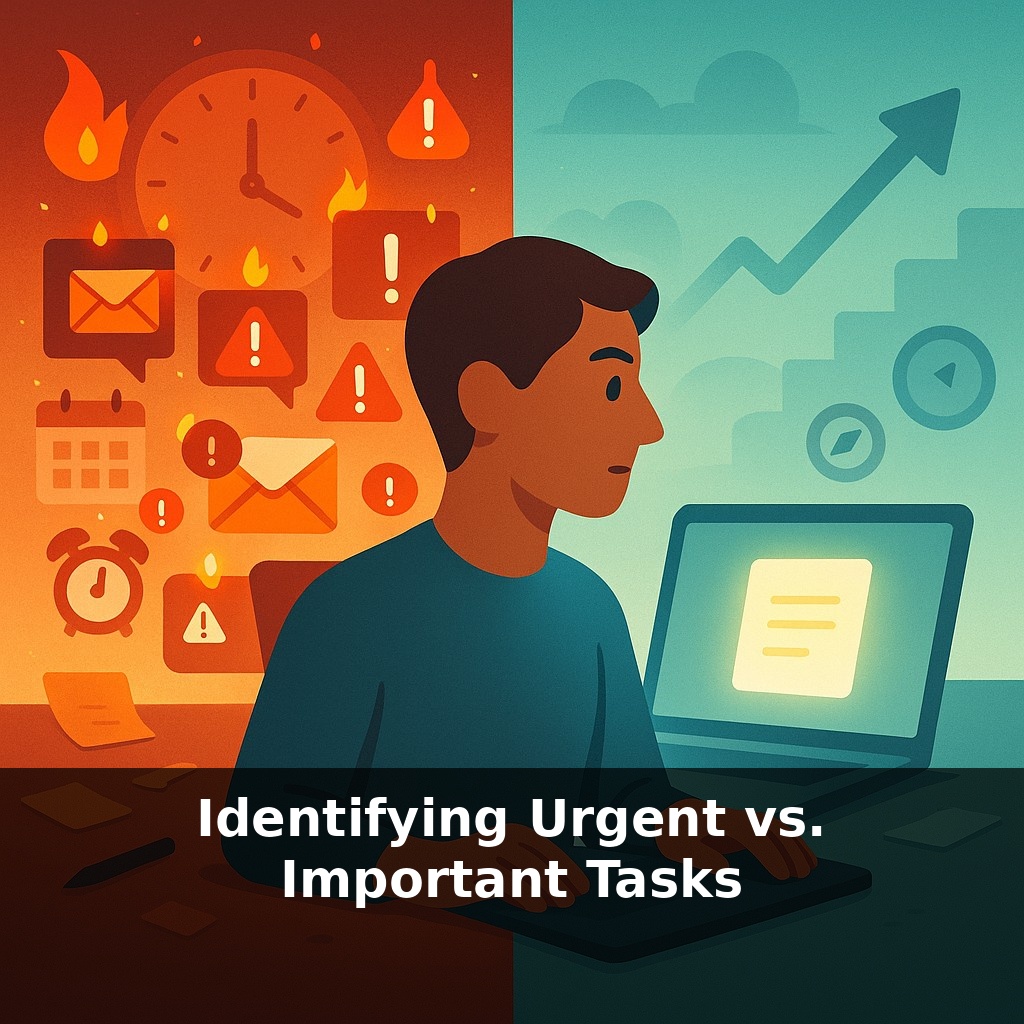
About half the things you rush to finish today are not actually urgent. Yet your heart races, your inbox screams, your calendar chokes. One coworker’s “tiny favor” derails your morning, while a quiet, career-changing project waits in the corner, completely ignored.
So the real problem isn’t just the rush—it’s the quiet stuff you *don’t* feel pulled toward. Your brain is wired to chase visible fires: the ping of a new message, a meeting invite that pops up like a flashing light, someone standing at your desk waiting. Those signals feel like sirens you can’t ignore, while the work that actually moves your career forward sits there, silent, like a tab you keep meaning to click “later.”
Over time, this creates a strange pattern: your days feel full, your calendar looks heroic, but your progress on what matters feels strangely thin. You end each week exhausted yet slightly disappointed, wondering where the time went. It’s not laziness; it’s a priority system running on autopilot.
This episode is about interrupting that autopilot—training yourself to see, in real time, which tasks truly deserve your best hours and which only *pretend* to be important.
Think of today’s to‑do list as a crowded train station. Some tasks shove their way to the platform, waving and shouting; others wait quietly on a bench with a small suitcase and huge potential. Most people board whichever train is loudest, not the one going closest to their real destination. Research backs this up: we routinely misjudge which departures are truly time‑critical and which just *feel* that way. The result? You stay in motion but drift off course. To change this, you need a simple, visible way to sort trains before you jump on.
Here’s the good news: you don’t need a complicated app or a personality overhaul to stop boarding the wrong “trains.” You just need a stricter check at the gate before a task gets your time.
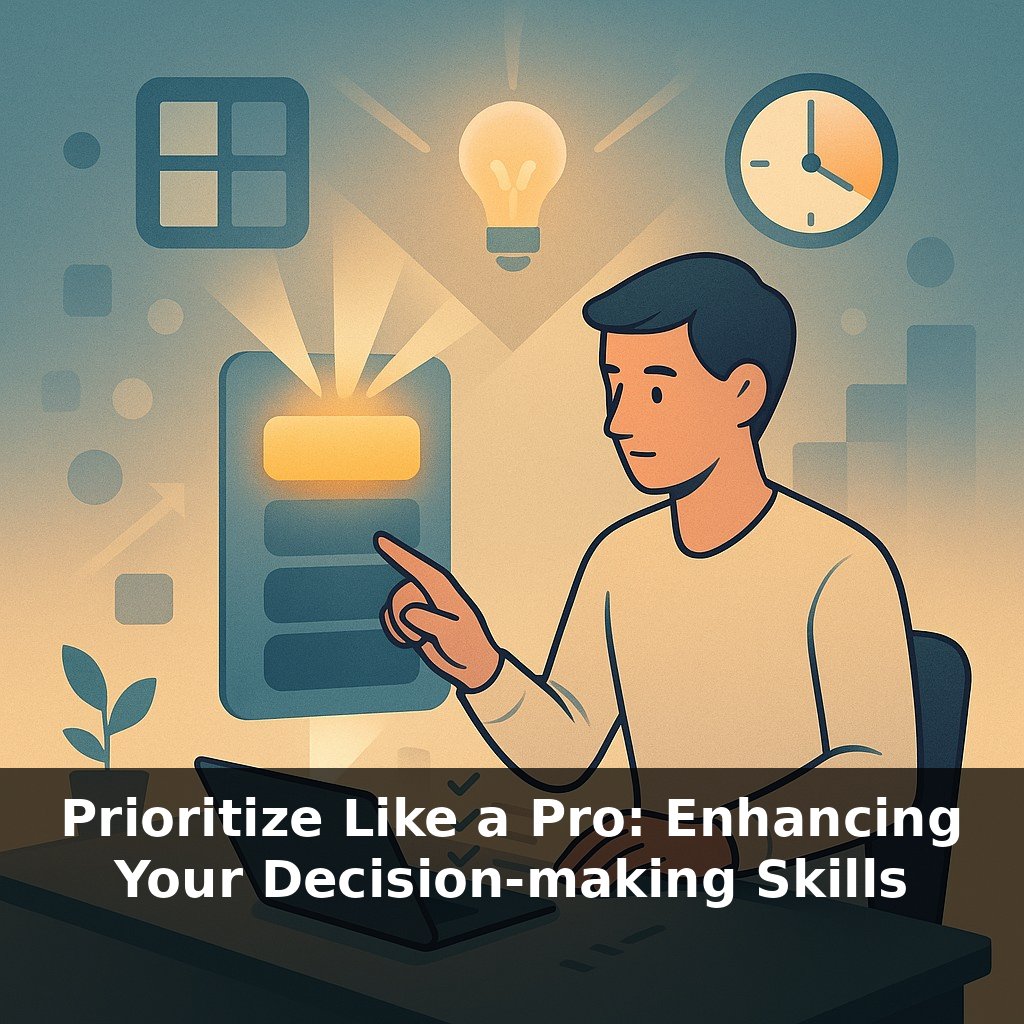
This is where the classic four-box priority grid—the Eisenhower Matrix—actually earns its reputation. Not as a poster on a wall, but as a living filter you apply to the next thing you touch.
The grid has two axes: one for how *urgent* something is, and one for how *important* it is. Put them together and you get four squares, or “quadrants,” that behave very differently in your week:
- Q1: urgent *and* important - Q2: not urgent, but important - Q3: urgent, not important - Q4: neither urgent nor important
On paper, this looks obvious. In the middle of a workday, it’s anything but.
Take email. The research you saw earlier says most messages don’t need a rapid reply, yet they arrive with the same visual weight. A client subject line in all caps lands in your brain right next to an automated report. Without a filter, they both feel like Q1. With the grid in mind, you start asking: “If I ignored this for 48 hours, what would actually happen?” Often, the answer is “nothing at all”—instant Q3 or Q4.
Notice what this question does: it shifts your attention from *who is shouting* to *what would change* if you delayed the task. That’s the difference between judging by noise and judging by impact.
Real teams use this. NASA’s Mission Control during Apollo 13 didn’t list every issue that came up; they identified a tiny set of actions that directly affected survival and mission recovery. Everything else waited. Your world is less dramatic, but the logic holds: fewer Q1 items than you think truly deserve panic-level response.
Most careers stall not because people ignore crises, but because they starve Q2: deep work, relationship building, long-term projects. These rarely demand you; you have to consciously choose them. Harvard Business Review’s finding—that managers who devote at least a quarter of their time to Q2 double their odds of hitting strategic targets—isn’t magic. It’s arithmetic: more time in the right quadrant compounds.
Think of Q2 work like planting a row of slow-growing trees along a path. On day one, nothing looks different. Six months in, there’s shade where there used to be heat—and everyone thinks it appeared “suddenly.”
Consider three snapshots from a single week.
On Monday, a product manager spends the morning replying to every “quick question” in chat. By lunch, she’s a hero in five threads and behind on the roadmap she’ll be judged on at year’s end. Those chats? Mostly Q3. The roadmap thinking time she bumped? Classic Q2.
On Wednesday, an engineer blocks two hours labeled “system health review.” No one pings him because his calendar shows “busy.” In that quiet block, he spots a scaling risk that would have turned into a 2 a.m. outage next quarter. Two hours in Q2 just erased a future mountain of Q1.
On Friday, a team lead looks at a full afternoon and deliberately drops one standing status meeting. In its place, she schedules one‑on‑ones with two high‑potential reports and a draft session for next quarter’s proposal. Her calendar didn’t get lighter; it got sharper.
Notice the pattern: nobody worked more hours. They simply stopped letting other people’s clocks choose their quadrant for them.
Your future workload won’t just be longer—it’ll be louder. AI will pre‑label requests, calendars will suggest “focus zones,” and dashboards will quietly expose how much of your week leaked into low‑value work. That transparency cuts both ways: it can protect your attention or just create fancier noise. The real shift is this: priority skills become a health skill and a career skill. Like posture, you’ll either train it on purpose—or tech and other people’s plans will bend it for you.
Your week is basically a series of doors: some swing open on their own, others stay closed until you turn the handle. Urgent noise throws doors wide; the work that shapes your next role often waits behind the quiet ones. Your challenge this week: twice a day, pause and rename one “later” door as “now,” then step through it on purpose.