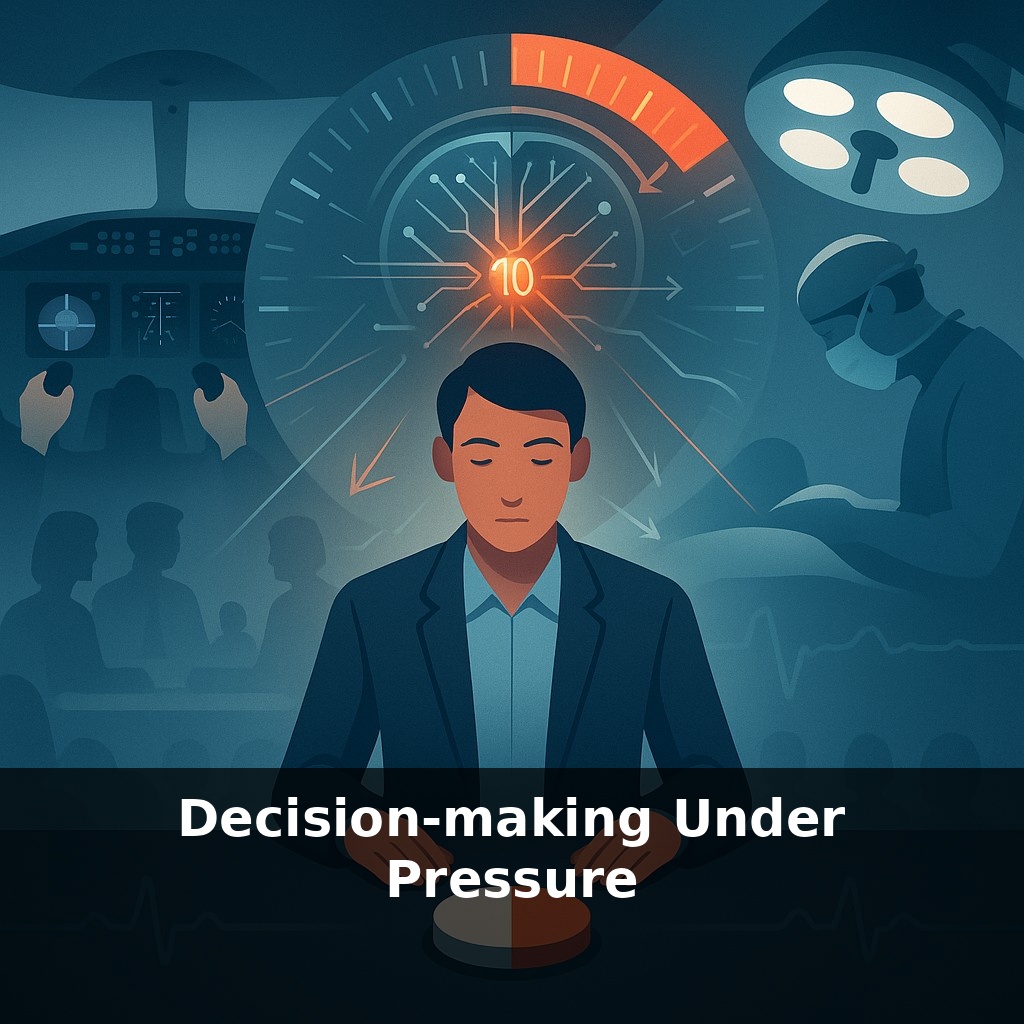
A pilot has ten seconds to decide whether to abort a landing. A surgeon has about the same time to react to a bleeding artery. You, at work, might have just a few heartbeats to answer a tough question in a meeting. Under pressure, your brain quietly rewrites your options.
On a normal day, you might compare options, weigh trade-offs, even sleep on it. Under pressure, that luxury disappears—but your influence over the moment doesn’t. The key shift is this: you stop trying to “be less stressed” and start designing how you’ll decide *while* stressed. High performers don’t count on willpower; they install rails so that when the train is moving fast, it’s still on the right track.
This is where simple decision structures and tiny physical resets become career tools, not just wellness tips. A two-step checklist before you answer in a tense meeting. A 10-second breathing reset before you commit to a risky deadline. A pre-agreed rule with your team for when to pause, and when to push through. Used consistently, these turn pressure moments from IQ tests into execution drills—less about how smart you are, more about how well you’ve prepared your brain to stay online when it matters most.
Most careers don’t feel like cockpit emergencies, yet the same stress circuitry quietly shapes your “yes” and “no” all day. A surprise Slack from your VP, a client escalation at 4:45 p.m., a teammate dropping work on your lap—each can flip you from thoughtful to reactive in seconds. The tricky part is that pressure rarely announces itself as a crisis; it arrives disguised as urgency, emotion, or social risk. So the real skill isn’t heroic calm in rare disasters, but recognizing the subtle onset of pressure early enough to switch from autopilot to a more deliberate, repeatable way of deciding.
When pressure hits, two things usually vanish first: your sense of time and your sense of choice. That’s when your brain quietly defaults to whatever you’ve rehearsed the most—whether that’s snapping “yes,” freezing, or over-explaining. The goal isn’t to become emotionless; it’s to pre-load a small set of moves that are more reliable than your panic habits.
One useful lens: think in “tiers” of decisions rather than one-size-fits-all bravery. Tier 1 is micro-choices you can afford to get slightly wrong: how to respond to a mildly tense email, whether to take an impromptu meeting, what to say when a colleague pushes back. Here, your job is to *practice* under mild pressure: short pauses, one clarifying question, one confirming statement. You’re not chasing perfection—you’re installing a pattern.
Tier 2 is consequential but reversible: committing to a tight deadline, agreeing to a scope change, choosing which project to drop when something urgent appears. Under pressure, these often get treated as Tier 3 “life or death” calls, which is how they steal your bandwidth. A simple reframe—“If this goes wrong, can it be fixed in a week or a quarter?”—quietly moves many “emergencies” down a tier and gives you permission to decide with 80% data instead of 100%.
Tier 3 is rare, high-impact, and genuinely hard to unwind: hiring or letting someone go, green-lighting a big spend, choosing a strategic direction. The trap is being baited into Tier 3 decisions on Tier 1 timelines. Part of performing under pressure is having pre-agreed *defaults*: for example, “If a decision feels Tier 3 but the timeline is under an hour, our default is: small experiment, not full commitment.”
Notice how this shifts the pressure from “I must pick the perfect option now” to “I must classify the decision correctly.” That’s a lighter cognitive lift, and it keeps more of your judgment available. Over time, you start recognizing patterns: which people, channels, or topics tend to inflate the tier, and which actually deserve the red lights on the dashboard.
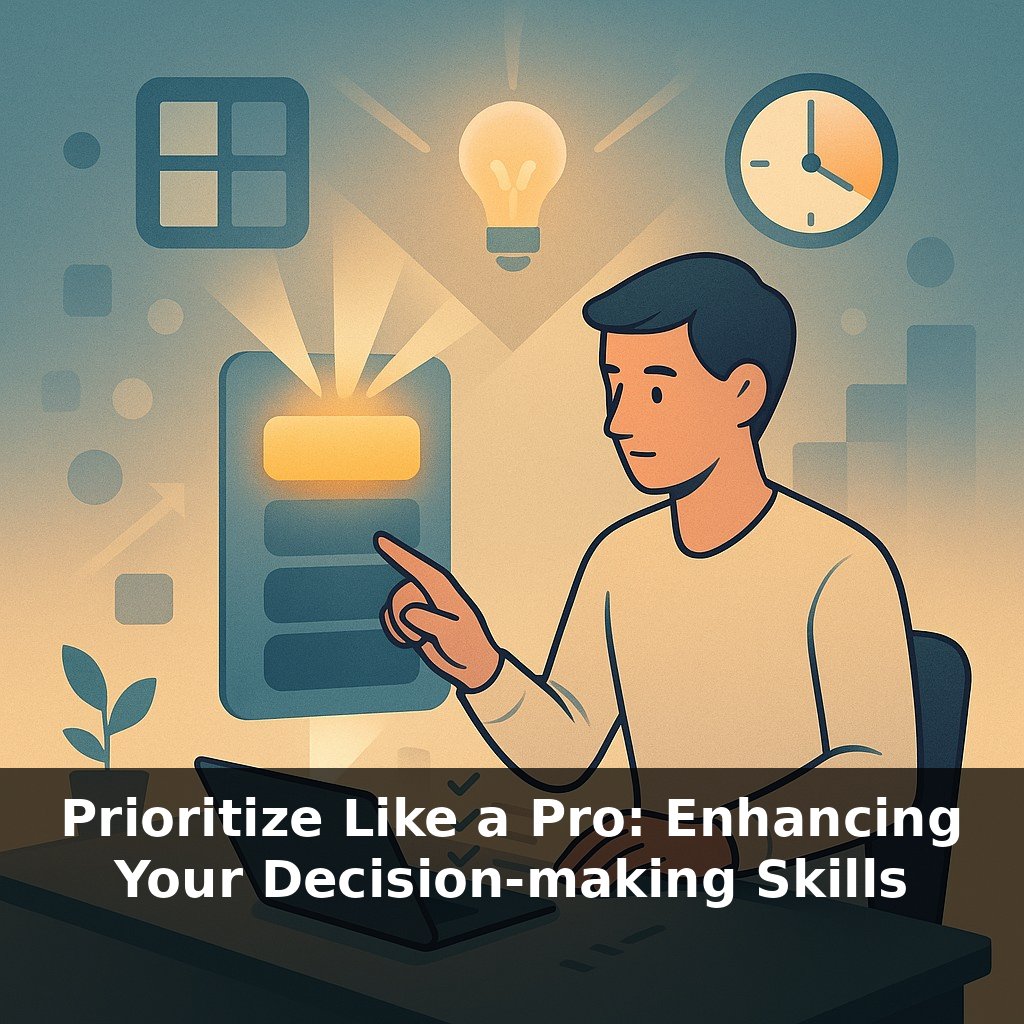
An executive at a fast-growing startup keeps a sticky note on her laptop with three words: “Pause–Probe–Place.” In heated budget reviews, she forces herself to do those three micro-steps before committing: pause for one breath, probe with a single targeted question (“What’s the hidden cost?”), then place the decision into a tier. She’s not calmer by nature; she’s rehearsed that tiny sequence so many times it fires faster than her urge to appease the loudest voice in the room.
A product lead I coached built a different pattern. When a senior stakeholder pings with an “urgent” request, his script is: “I can do A by Friday, or B by Wednesday, not both. Which matters more?” That one line instantly surfaces trade-offs instead of silently absorbing pressure. Over months, his team stopped treating every ask as non‑negotiable; they learned to reshape demands into choices.
Think of it like learning to navigate a dense forest trail at dusk: the path doesn’t get brighter—you just get better at recognizing key markers before you trip.
As tools evolve, the real advantage may belong to people who treat them like climbing gear, not elevators. AI co-pilots and VR drills will likely shift your role from “decider” to “designer of decision environments”—choosing what inputs appear, how options are framed, and when to slow or speed the process. The open question: will organizations reward those who can *challenge* their dashboards, not just obey them, when the data and the reality diverge?
Treat this like learning a new instrument: the first rehearsals feel clumsy, but over time the “right” notes come out even when the room is noisy. Your challenge this week: pick one recurring pressure moment and install a tiny, repeatable move—one phrase, one breath, one tiering question. Notice not just what you decide, but how your process quietly upgrades.