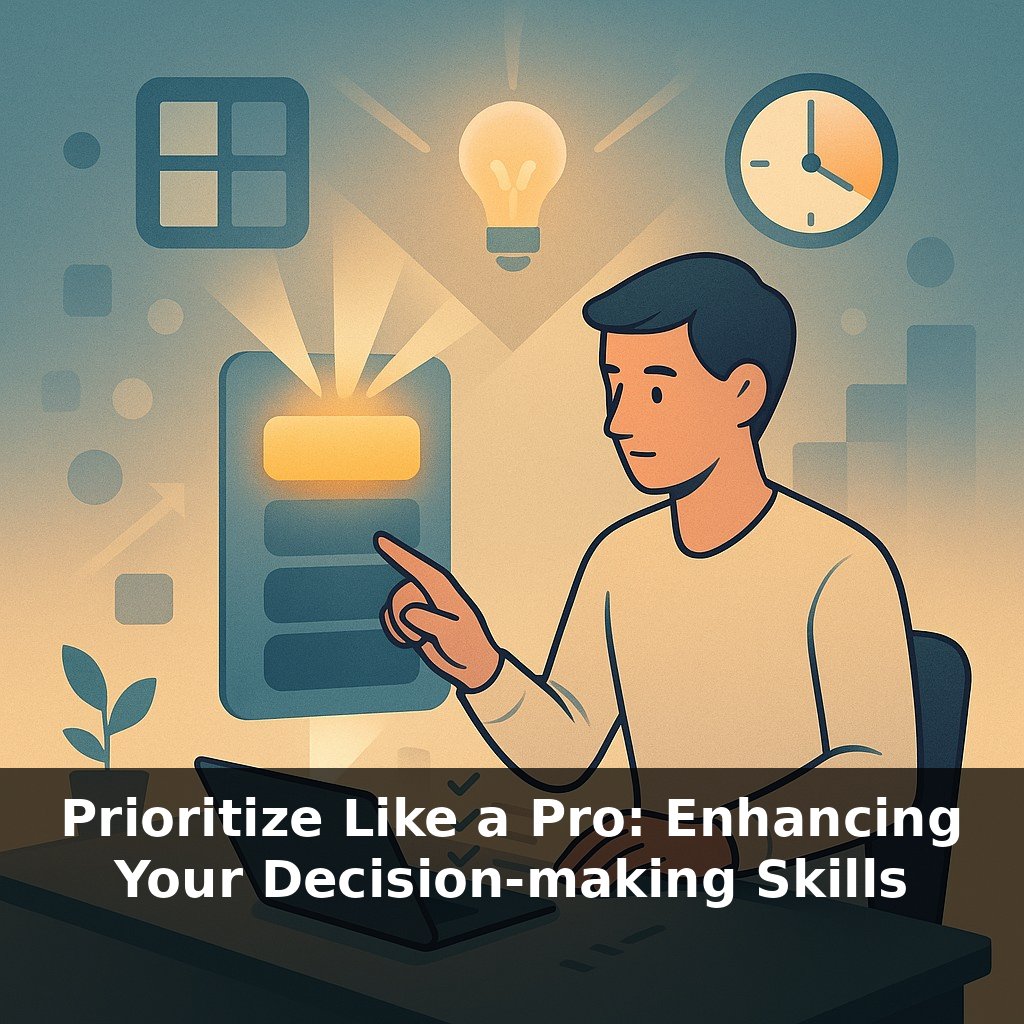
About half the tasks on a typical to‑do list quietly make no real difference. Yet your day gets swallowed by them. A simple email reply, a “quick” slide tweak, one more meeting accept… By noon, your focus is gone—and the work that actually moves your career forward is still untouched.
Forty‑one percent of the average employee’s day is spent on work that could be automated. That means almost half your effort might be going to tasks a script, template, or workflow rule could handle better—and without getting tired or resentful.
This series is about something most professionals skip: *how* you decide what deserves your attention in the first place. Not just “urgent vs. not urgent,” but questions like: Which tasks actually move your goals? Which are invisible time leaks? Which should be delegated, batched, or simply never done?
We’ll look at practical frameworks used by military planners, Lean factories, and Agile software teams—and translate them into everyday career moves: choosing which stakeholder to answer first, which project to over‑deliver on, and which recurring chore to systematize so it stops stealing your best hours.
Most professionals treat all “work” as equal, but it quietly sorts itself into three very different buckets: signal, noise, and sludge. Signal is the stuff that genuinely advances outcomes or learning. Noise looks busy but changes nothing once it’s done. Sludge actively slows you and others down—unclear requests, approval chains, status meetings with no decisions. The trap is that noise and sludge often arrive dressed as “helpful” or “urgent.” Before we layer on any matrices or scoring methods, we need a sharper eye for which category a task actually belongs to in the first place.
Forty‑one percent of your day is statistically up for grabs—work that doesn’t really need *you*. The question is: how do you spot it *before* it eats your afternoon?
Start by looking at tasks through three lenses: **value, timing, and friction**.
- **Value:** Ask, “If I nailed just this today, who would actually feel a difference next week or next quarter?” Not in theory—name the person or metric. That quick “sure, I’ll help” on a low‑impact side request often fails this test. In contrast, a draft strategy doc or a prototype might clearly tie to revenue, risk reduction, or a senior stakeholder’s priority.
- **Timing:** Instead of “Is this urgent?”, ask, “When would doing this *later* meaningfully hurt the outcome?” Some things genuinely degrade fast (incident responses, blocking approvals). Others only *feel* time‑sensitive because someone else is anxious or you hate seeing an unread notification.
- **Friction:** This is where noise becomes sludge. How many handoffs, clarifications, or context switches will this task trigger? A 10‑minute status update that spawns three new meetings and a Slack thread is more expensive than it looks. High‑friction, low‑value work is your prime candidate for redesign, delegation, or elimination.
This is where simple frameworks help you get honest with yourself. The Eisenhower Matrix forces a split between “must happen now” and “matters long‑term.” MoSCoW (Must, Should, Could, Won’t) is brutally clarifying in planning sessions: every “Should” you quietly treat as a “Must” steals time from real Musts. WSJF and Cost of Delay go a step further by making you quantify the tradeoff: “Is this hour better spent on a small, fast win or a slower, higher‑value bet?”
Notice the shift: you’re not asking, “Can I fit this in?” You’re asking, “What deserves my best hour today?” That’s how some teams see 10–35 % faster delivery and less burnout—they *stop* treating all work as morally equal.
Evaluating tasks is like packing a carry‑on for a week‑long trip: you lay out everything you might bring, then ruthlessly keep what earns its space, serves multiple purposes, and keeps the essentials within easy reach.
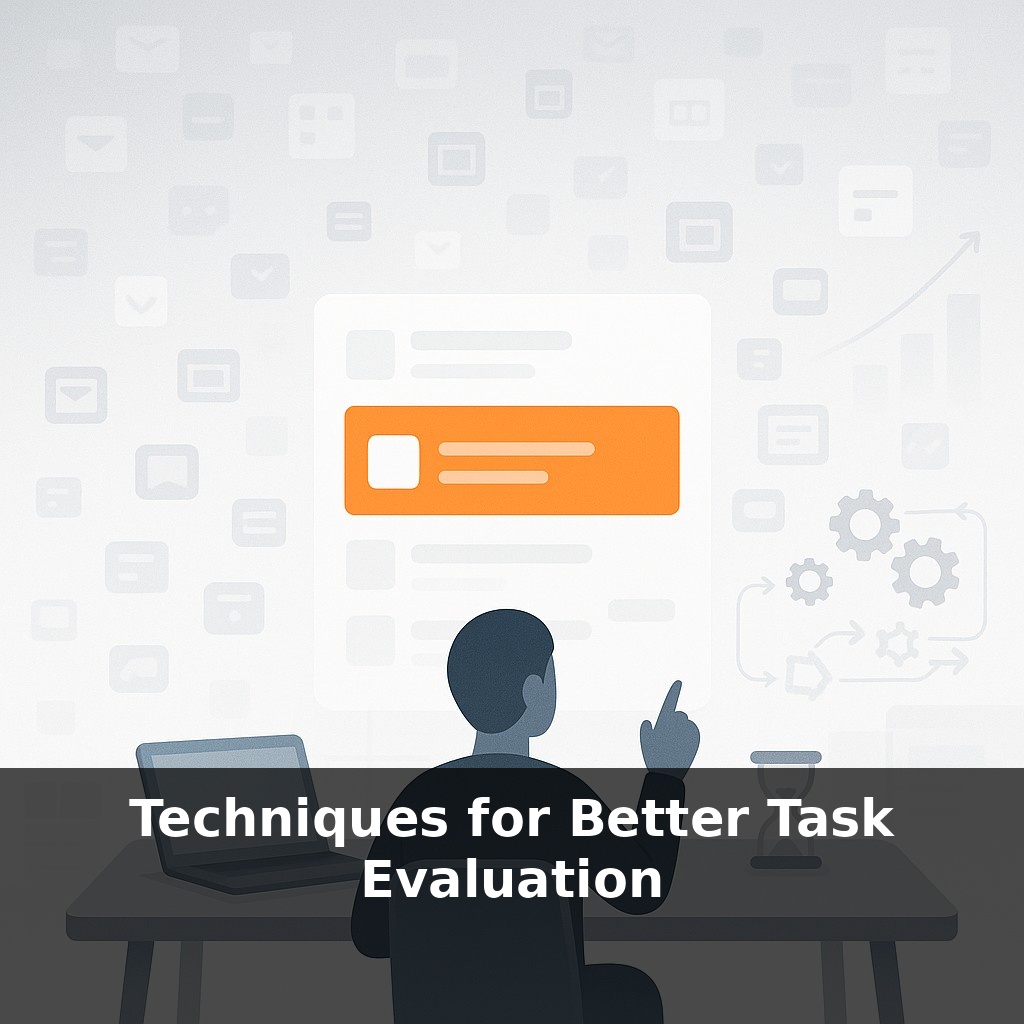
Your challenge this week: pick *one* workday and, for that day only, score every task you touch from 1–5 on value, timing sensitivity, and friction. At day’s end, highlight anything with low value but high friction. Those are your redesign candidates—bring just one to your next 1:1 and ask, “How can we do this differently or less often?”
Think of a day where your calendar looks harmless—just a few check-ins, a “quick” review, a couple of approvals. By 5 p.m., you’re oddly drained and can’t point to anything meaningful you moved. That’s usually a sign your hours were quietly traded for other people’s convenience.
A product manager at a midsize SaaS company once mapped a single feature request through value, timing, and friction. On paper, it was “small”: tweak a button label. But the friction map showed design review, legal sign-off, localization changes, release notes, and regression testing. Low value, medium timing, massive friction. Instead, she batched eight similar tweaks into one monthly “micro-change” release. Same total work, 60% less coordination, and far fewer interruptions for engineers.
You can borrow that move at any level: combine similar low-value, medium-friction tasks into one intentional block—one afternoon to clear simple approvals, one slot for minor doc edits—so they stop splintering your best attention across the entire week.
Soon, your calendar won’t just show meetings; it will *negotiate* them. AI will quietly reshuffle low‑impact work, surfacing the few actions that actually bend long‑term metrics. As wearables learn when your mind is sharpest, they’ll cluster deep work in those windows and nudge admin into your natural slumps. Task scores may even factor in carbon impact or learning value, like a nutrition label for your day: not just “Can I do this?” but “Is this worth my energy, growth, and footprint right now?”
Treat this as an ongoing craft, not a one‑time fix. As your role shifts, so will what “high‑value” looks like. Careers that compound fastest belong to people who regularly prune their workload, like gardeners shaping a tree so light reaches the strongest branches. Keep experimenting, keep renegotiating expectations, and your calendar will start to reflect the work only you can do.
Try this experiment: For the next three days, pick one recurring task (like your weekly status report or daily standup prep) and run it through a “three‑lens” evaluation: outcome, effort, and leverage. Before you start, give the task a 1–5 score for each lens (how important the outcome is, how much effort it really takes, and how much it unlocks for other work), then do the task exactly as usual. Right after finishing, rescore it using the same three numbers, but this time based on how it *actually* felt and what it produced. On day three, compare your “before vs. after” scores and use that gap to decide: will you automate it, batch it with similar tasks, delegate it, or kill it entirely next week?