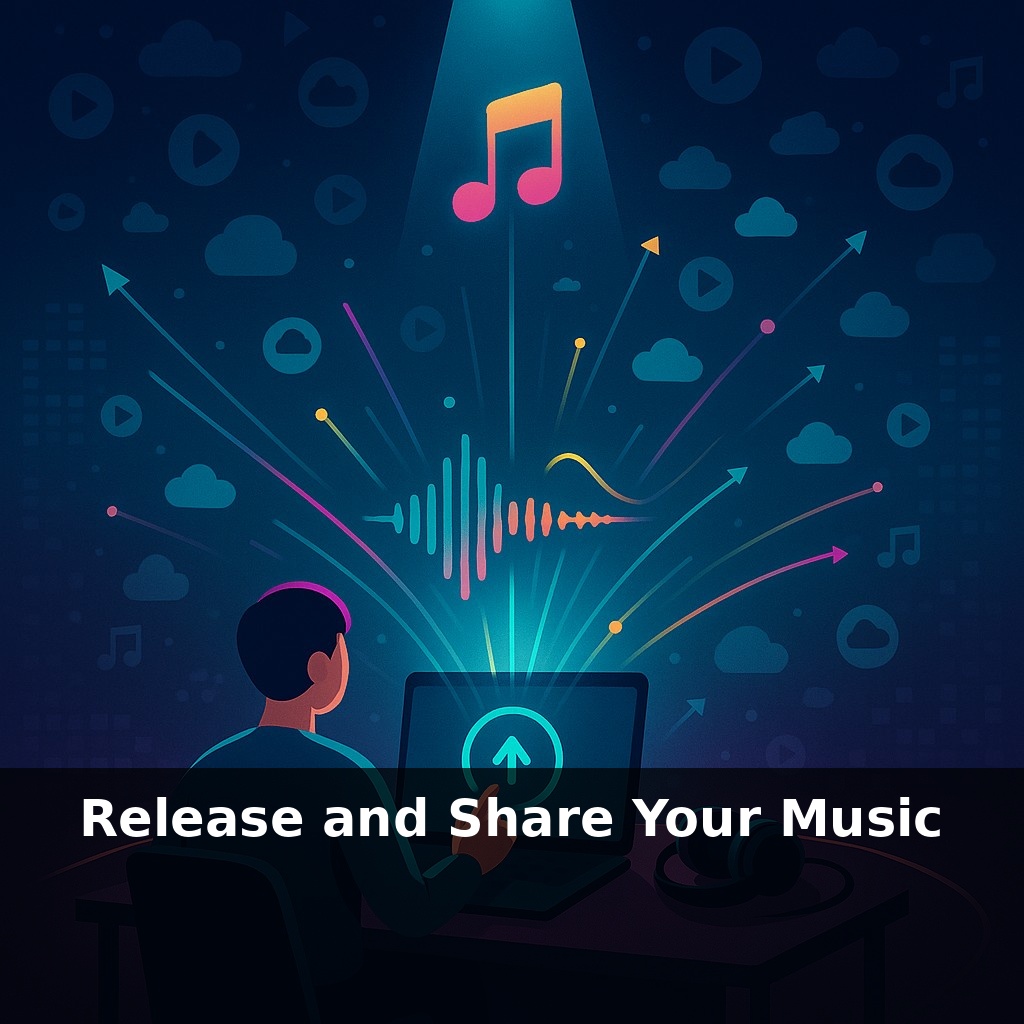
An unsigned artist can upload a track tonight and be earning streaming royalties before the weekend starts. So here’s the tension: the gates are wide open, but so is the crowd. Your song can reach everywhere—yet vanish instantly. How do you release music that actually gets found?
In earlier episodes, you shaped ideas into finished tracks. Now comes the part most beginners quietly fear: letting those tracks leave your hard drive. A release isn’t just clicking “upload”—it’s deciding what story your song tells the world, and how easy it is for people (and platforms) to understand it.
This is where metadata, timing, and ongoing promotion start to matter more than another tiny EQ tweak. The same track can either slide past unnoticed or slowly snowball, depending on how you package and support it. Think of each detail—title, artwork, description, credits, links—as small doors you’re either opening or leaving locked.
In this episode, we’ll zoom in on three things: choosing a distributor, preparing your track’s digital “paperwork,” and building a simple, realistic plan to keep talking about the song long after release day.
Now we shift from “Will anyone care?” to “How do I give this song its best shot?” The landscape is noisy: DistroKid alone claims it handles up to 40% of new indie releases, and Spotify’s editors see tens of thousands of pitches every day. But that scale cuts both ways. The same systems that bury forgettable uploads can quietly reward clear, consistent artists who do a few key things right. Short‑form video, smart metadata choices, and a simple release setup can work together like well‑placed road signs, guiding strangers from a 15‑second clip to your full track—without you shouting into the void.
Choosing *where* and *how* to send your track out shapes what happens next. Since you don’t need a label to hit the major platforms, your first real decision is which aggregator fits your goals, budget, and release style.
Some prioritize speed and simplicity: one annual fee, unlimited uploads, quick delivery to services. Others work on a per‑release basis but may offer better human support, opt‑in marketing tools, or label‑like dashboards. A few take a percentage of your royalties instead of charging upfront. None of these is “the” right answer; it’s more about your pattern: do you plan to drop lots of sketches and experiments, or a few carefully curated releases each year?
Look closely at three things: how they handle ownership and takedowns, how easily you can update details later, and which extra services they bundle—like YouTube Content ID, “fast track” releases, or automated splits if you’re collaborating. Those add‑ons might quietly save you headaches when a song unexpectedly travels.
Metadata now moves from abstraction to a checklist. You’ll need: a final artist name (consistent everywhere), a track title that’s easy to search, credited collaborators, genre and mood tags that actually match the song, and a clear main artist vs. featured artist structure. This is also where the ISRC comes in: treat it like the track’s fingerprint. Every remix, radio edit, or live version needs its own. Most aggregators assign these for free; just keep a simple spreadsheet so you never guess later.
Then there’s timing. A 4–6 week lead time before release gives you room to pitch on-platform, line up visual assets, and seed early interest. It also means you can test ideas—snippets on socials, alternate cover drafts, even different one-line descriptions of the track—to see what language or imagery actually makes people stop scrolling.
Think of your pre‑release window like a small beta launch in tech: you’re not chasing hype for hype’s sake, you’re quietly learning what resonates so that, when the song finally appears everywhere, every caption, link, and clip is pointing in the same clear direction.
Treat this stage like designing the *on-ramp* to your track, not the highway itself. For example: instead of dropping a full song out of nowhere, post a bare‑bones synth hook one day, then a drum‑only groove the next, then a clip of you tweaking a sound. Notice which one pulls comments or saves—use that part as the centerpiece of your first teaser.
Look at how artists like Fred again.. or Peggy Gou share work-in-progress clips that feel casual but always circle back to the same core motif. They aren’t just “posting”; they’re training listeners to recognize a song before it’s officially out.
Your wording matters too. Test two totally different one‑liners for the same track: one focused on mood (“2 a.m. headphones only”), another on story (“made this after missing the last train home”). Whichever version gets more replies becomes your default caption across platforms.
One solid analogy: releasing through an aggregator is like shipping code through GitHub Actions—once you configure the pipeline, each new push (song) rolls out everywhere with far less friction.
A track you upload in 2026 might still be paying you—and your collaborators—in 2036 through systems that barely exist today. As blockchain tools mature, individual stems or remix rights could be sold like limited sneakers, each with automatic splits baked in. Fans might “sponsor” your next EP by buying a tiny royalty share, turning supporters into true partners. Meanwhile, fair-pay reforms could tilt algorithms toward depth, rewarding artists who build steady listener habits over quick spikes.
Your first upload won’t be a final verdict—it’s more like launching a kite and watching which way the wind pulls. Some songs stall, others suddenly glide. Treat each release as field data: where listeners come from, which countries light up, which clips spark saves. Over time, your catalog becomes less a scrapbook and more a map for your next move.
To go deeper, here are 3 next steps: 1) Grab a free DistroKid or CD Baby trial/account and actually upload one finished track today—follow their checklist step-by-step (ISRC, cover art, credits) so you experience a full release workflow once. 2) Watch one YouTube tutorial on basic music mastering using tools like iZotope Ozone Elements or LANDR, then run your next track through it and compare before/after so you learn what “release-ready” loudness and polish feel like. 3) Open a free Canva account and create a simple single cover plus two social promo graphics, then schedule a release announcement and a 15-second teaser clip on Instagram/TikTok using your DAW’s export + your new artwork.