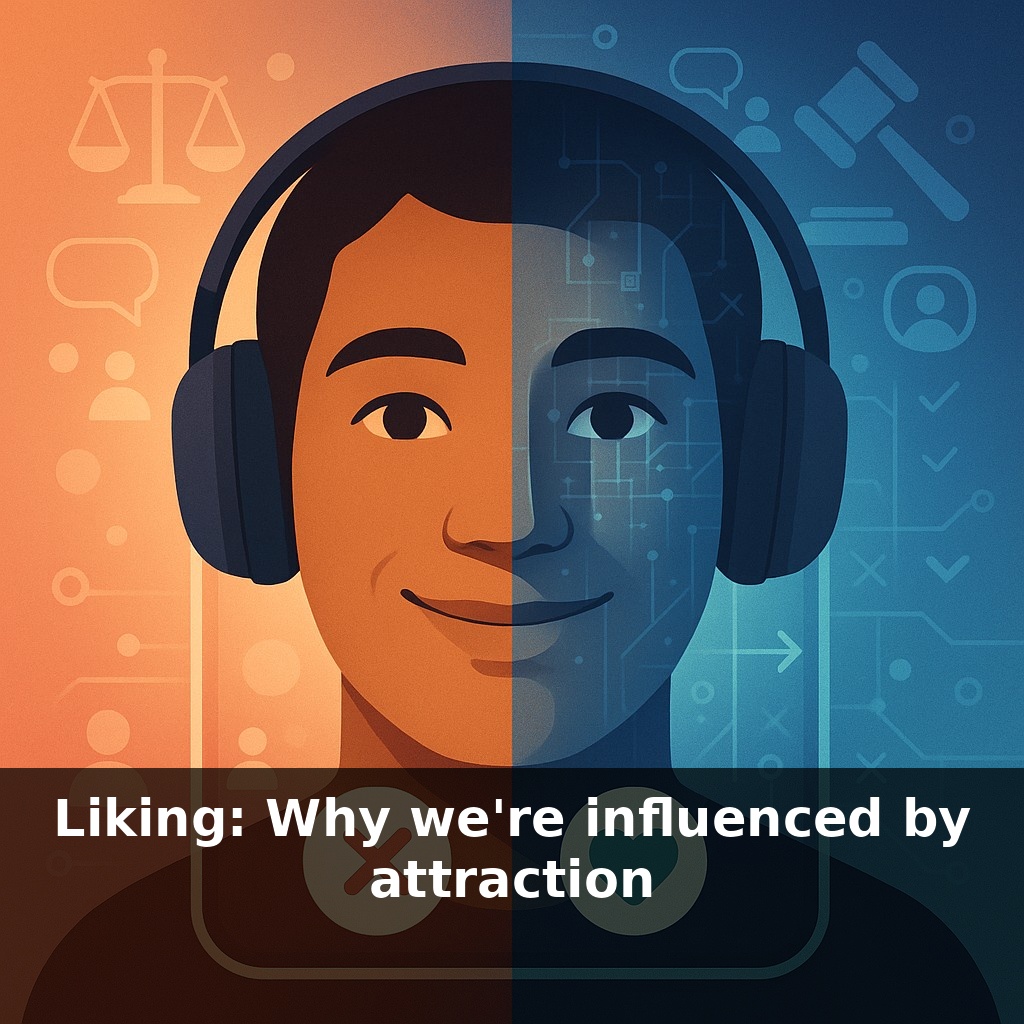
A stranger’s smile can quietly tilt a courtroom verdict, a sales call, even a swipe on your phone. In one classic study, better-looking defendants were noticeably less likely to be convicted. So here’s the puzzle: why do our brains trust “likable” faces long before we check the facts?
An attractive face can sway a verdict—but liking isn’t just about looks. We’re also drawn to people who sound like us, move like us, and share tiny, almost meaningless details of our lives. A sales rep who casually matches your pace and tone can feel “right” the way a well-tuned instrument blends into a band: you stop noticing it and just go along with the music. Researchers find that small overlaps—same hometown, same sports team, even the same birthday—quietly increase compliance, from buying insurance to filling out surveys. Online, the effect scales: a genuine smile or a warm bio line can lift swipe rates, response rates, and click-throughs long before merit enters the picture. This isn’t just a social quirk; it’s a powerful layer in modern persuasion, from dating apps to leadership—and it works fastest when we don’t see it.
Liking matters most when we’re unsure. In a courtroom, jurors juggle conflicting stories; in a sales pitch, customers sift through options that all look similar. When facts blur, our brains quietly lean on “who feels right” as a shortcut. That’s where the halo effect and similarity come in—not as villains, but as fast, fallible filters. In tech products, this gets engineered: friendly avatars, warm color palettes, even chatbots that mirror your wording nudge you toward yes. The ethical question isn’t whether these tools work; it’s whether they’re revealing real alignment or disguising a bad fit.
Here’s the uncomfortable twist: your brain often decides who to follow before you’re even aware a decision is being made—and it’s using faster systems than logic. At a neural level, cues of warmth and similarity light up reward and social bonding circuits. That means “I like this person” feels less like a judgment and more like a subtle sense of safety and ease in your body: relaxed shoulders, smoother breathing, less internal resistance to their ideas.
This is why timing and context matter so much. A leader who only turns on the charm when pushing an unpopular decision feels fake. But one who consistently shows small, human details—admitting uncertainty, sharing credit, remembering names—builds a reservoir of goodwill that makes later asks feel natural instead of forced. The same pattern shows up in product design: interfaces that use conversational language, gentle microcopy, and clear feedback loops are rated as “more trustworthy,” even when the underlying functionality is identical to a colder-looking rival.
Similarity doesn’t have to be demographic to be powerful; it can be about values and motives. A negotiator who explicitly surfaces shared goals—“we both want this project to last at least five years” or “we’re both trying to reduce risk here”—creates a sense of being on the same side of the table, even when price or terms are contested. In user research, people are notably more candid when the interviewer briefly discloses parallel struggles or constraints; that moment of “you get my world” opens the tap.
In technology, liking is increasingly automated. Recommendation systems amplify content from creators you’ve lingered on, gradually surrounding you with familiar faces and tones. Customer-support bots are trained on transcripts from top-rated agents, reproducing linguistic patterns that correlate with higher satisfaction: slightly longer affirmations, more “we” language, subtle paraphrasing of your problem. None of this changes the actual solution time much—but it changes how you feel about the wait.
The risk is complacency: once someone feels likable, we lower scrutiny. Contracts get skimmed, app permissions get accepted, “limited-time offers” slide through. The opportunity, especially for ethical practitioners, is to treat liking not as camouflage, but as a spotlight: use the extra trust to make trade-offs clearer, not fuzzier.
A manager rolling out an unpopular software tool might quietly pilot it with a small, already-supportive team. As their positive stories spread—“it actually saves me an hour a day”—skeptical departments soften; the tool now carries the glow of respected peers, not just top-down orders. In product onboarding, some fintech apps show first-time users a short, human story from someone with a similar income range describing how they approached their first investment; suddenly the interface feels less like a test and more like a guide.
In negotiation, skilled founders sometimes open with, “Here are two places this deal might not be right for you,” then calmly walk through trade-offs. The unexpected candor increases their perceived integrity, making tough clauses easier to accept. A subtle twist shows up in communities: open-source projects that feature contributor spotlights—with photos, quirks, and non-work interests—see higher volunteer retention. People don’t just adopt tools; they join tribes that feel like a decent place to belong.
In the next decade, your “default crowd” of influencers may be tuned less by fame and more by micro-signals of fit: accent, humor style, even typing rhythm. AI tools will quietly test thousands of versions of “you might like this person,” then lock onto the ones that slip past your skepticism. Your defenses may shift too: browser plugins flagging charm like ad blockers, or VR spaces that label when an avatar’s traits were optimized to match you—like nutrition labels for social contact.
As tools learn to mirror your quirks the way noise‑cancelling headphones learn a room, the question shifts from “Does this person seem likable?” to “Who tuned this moment, and why?” Your challenge this week: notice one interaction a day that feels unusually smooth, and quietly ask: if the charm vanished, would I still choose the same thing?