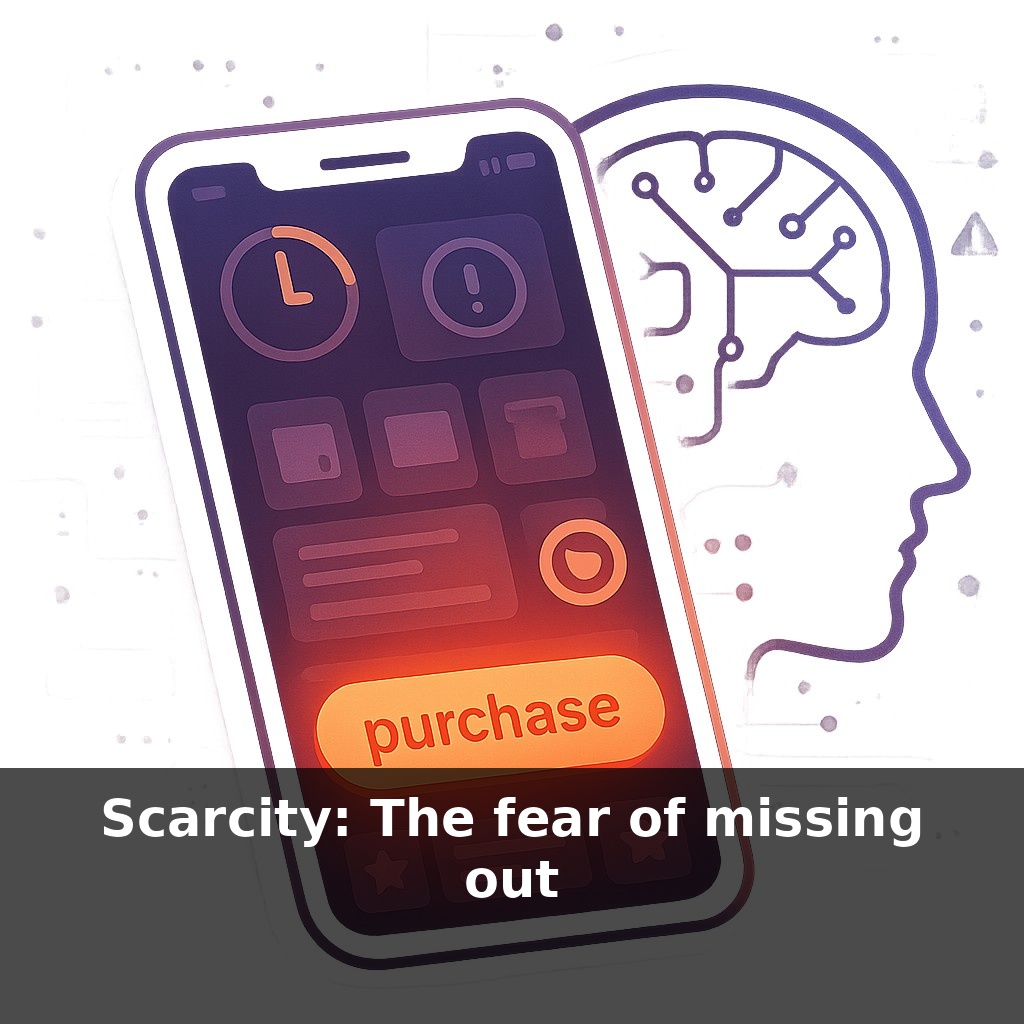
About seven in ten young adults admit they’ve bought something just because they were afraid of missing out. You’re at checkout, a timer is ticking down, “only a few left” flashes on your screen—and suddenly this thing you barely wanted feels too important to lose.
On the surface, scarcity looks simple: fewer spots, fewer items, less time. But under that simplicity is a surprisingly sophisticated system in your brain, tuned by evolution to treat “rare” as “important.” When something seems about to slip away, your attention locks on, your sense of time narrows, and options that felt easy to decline a moment ago suddenly feel weighty, like a train you can’t afford to miss.
Online, this gets amplified. You’re not just seeing a limited deal; you’re seeing numbers drop in real time, reviews from people who “got in,” and content feeds that never stop reminding you what others are doing instead. Platforms quietly stack these cues: low-stock labels, “X people viewing,” expiring offers layered on top of social proof. It’s not one message; it’s a coordinated score, carefully arranged to keep you playing along.
Scarcity doesn’t only change what you buy; it changes *how* you think while you’re deciding. When a deal, seat, or invite looks like it’s disappearing, your brain quietly shifts modes—from long-term, “Is this right for me?” to short-term, “Will I lose out if I pause?” The systems that usually help you compare options, check your budget, or align with your values get pushed into the background. That’s why a trip, gadget, or event can jump from “interesting” to “I’ll regret skipping this” in seconds, even when it doesn’t really fit your plans, priorities, or finances.
Scarcity doesn’t just speed you up; it quietly rewrites *what* feels like a good decision in the first place.
When your brain detects that something is limited, value gets recalculated around a different question: not “Do I want this?” but “What would it mean *about me* to miss this?” That’s where the social side kicks in. Experiments show that when people believe others are competing for the same scarce item, they don’t just like it more—they feel a sharper sense of threat if they walk away. The item becomes a proxy for status, belonging, or competence: “If I don’t grab this, I’ll fall behind the people who did.”
You can see this in how platforms layer signals. A hotel site doesn’t just say “2 rooms left”; it adds “booked 14 times in the last 24 hours” and “someone in your city just reserved this.” That stack of cues doesn’t give you much *new* information about the actual room. Instead, it paints a story: smart, active people are moving quickly; are you one of them? The missing-out risk is no longer only about the room; it’s about your place in the flow.
Neuroscience findings line up with this. When scarcity cues appear, reward circuits light up *at the same time* as areas tied to conflict and monitoring. You’re pulled forward by anticipated gain, but you also feel a low hum of “decide now or regret it.” That tension is why scarce experiences—festivals, launches, “only this weekend” trips—often feel vivid in memory. Your brain encoded them under a special tag: “moments when stakes were high.”
Marketers and product designers know this, and they can choose how hard to lean on it. Some use truthful constraints: limited seats in a workshop, real inventory levels, early-bird pricing tied to actual costs. Others manufacture a sense of competition: endlessly resetting countdowns, fake “almost sold out” labels, or waitlists that aren’t really needed. Both approaches may produce the same short-term behavior, but they don’t produce the same *stories* in people’s heads afterward.
That story—whether you felt guided or cornered—shapes future trust. A one-time rush can be exciting; a pattern of “I always feel hustled here” becomes fatigue. Over time, people learn to discount certain scarcity messages the way they tune out pop-up ads. The tactic still works on the margins, but the relationship is thinner, more transactional, easier to abandon when an alternative appears.
Limited-edition sneakers that drop at midnight, pre-sale codes for “members only” concerts, and “early access” travel deals all lean on the same move: turning an ordinary choice into a race. Brands know that the *format* of the offer can matter more than the offer itself. A $20 discount feels meh; “200 passes, then doors close” can feel electric.
Some companies flip the script and use scarcity as a filter instead of a lure. Small online communities cap membership, not to tease outsiders, but to keep conversations deep and manageable. A workshop might deliberately keep spots few, then ask applicants thoughtful questions. The message shifts from “hurry up” to “if this is for you, we’ll make it worth it.”
Think of a live gig in a tiny venue versus a festival main stage: both sell out, both are scarce, but one promises intimacy and focus, the other spectacle and hype. How a product *frames* its limits quietly tells you which experience to expect—and which version of yourself you’re being invited to be.
Scarcity will increasingly be *designed* rather than discovered. As AI tunes offers to your habits, the line between a helpful nudge and a rigged game blurs, much like a DJ quietly adjusting tempo to keep you on the dance floor. Expect new literacy: people asking “why is this limited?” before clicking. At the same time, status may shift from “I got in” to “I opted out,” with calm, slower spaces feeling like the true luxury in a culture of engineered urgency.
Treat each “only a few left” like a pop-up ad in your mind: sometimes useful, often noise. The more you notice the pattern, the more you can choose which moments are worth the rush and which deserve a slower look. Your challenge this week: let one tempting offer expire on purpose, just to prove to yourself that not every closed door matters.