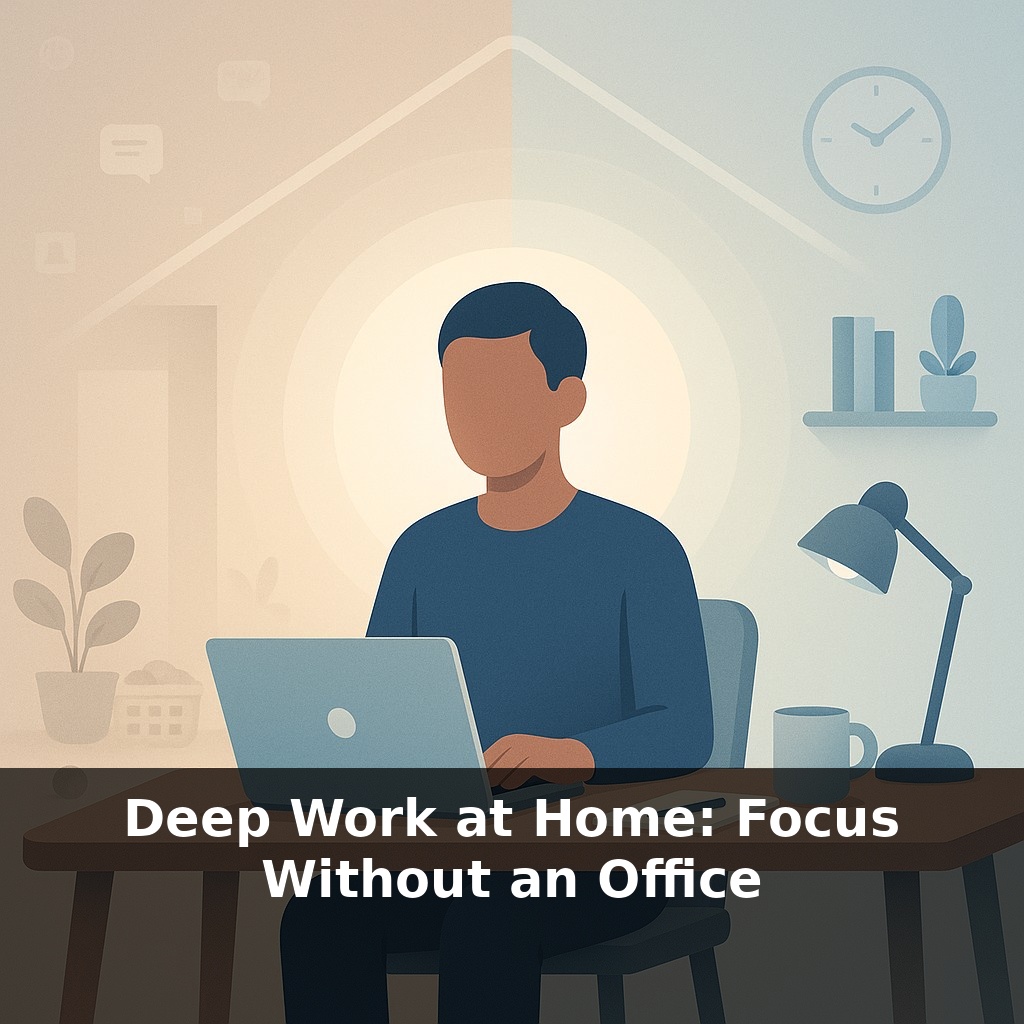
On average, office workers lose over 20 minutes of focus after a single interruption. Now, zoom in on your home: Slack ping on the laptop, laundry buzzer in the hall, someone calling your name. You’re remote, but your attention is being managed like a crowded open-plan office.
Remote work quietly changed one rule without telling you: your home is now both your office and your brain’s performance lab. The companies that figured this out early—Basecamp, GitLab, Dropbox—didn’t just hand people laptops and Zoom links; they redesigned how attention is spent. They treat deep work like a scheduled asset, not a lucky accident.
At home, you don’t need an office to work like a pro, but you do need systems. Not just “close your apps” systems, but architectural ones: when you’re reachable, how work enters your day, where decisions live so they don’t hover in your head. Neuroscience backs this up: your brain does its best thinking when it handles fewer “open tabs,” both digital and mental.
In this episode, we’ll turn your home setup, calendar, and communication habits into something closer to a remote-first company playbook—scaled down to one person: you.
The twist is that deep effort at home isn’t just about willpower; it’s about controlling what *gets in* to your day in the first place. Most people treat their time like a public inbox: any meeting invite, notification, or favor request can land there and stay. Remote-first teams flip this. They act more like editors than recipients, deciding which tasks, conversations, and tools deserve front-page placement. At home, you can do the same. We’ll experiment with three levers: physical space, time blocks, and digital rules that gently but firmly gatekeep your attention.
Neuroscience gives us a useful constraint: your brain likes clear edges. Clear start, clear stop, clear “this matters more than that.” At home, those edges blur fastest in three places: where you sit, when you start, and how work finds you.
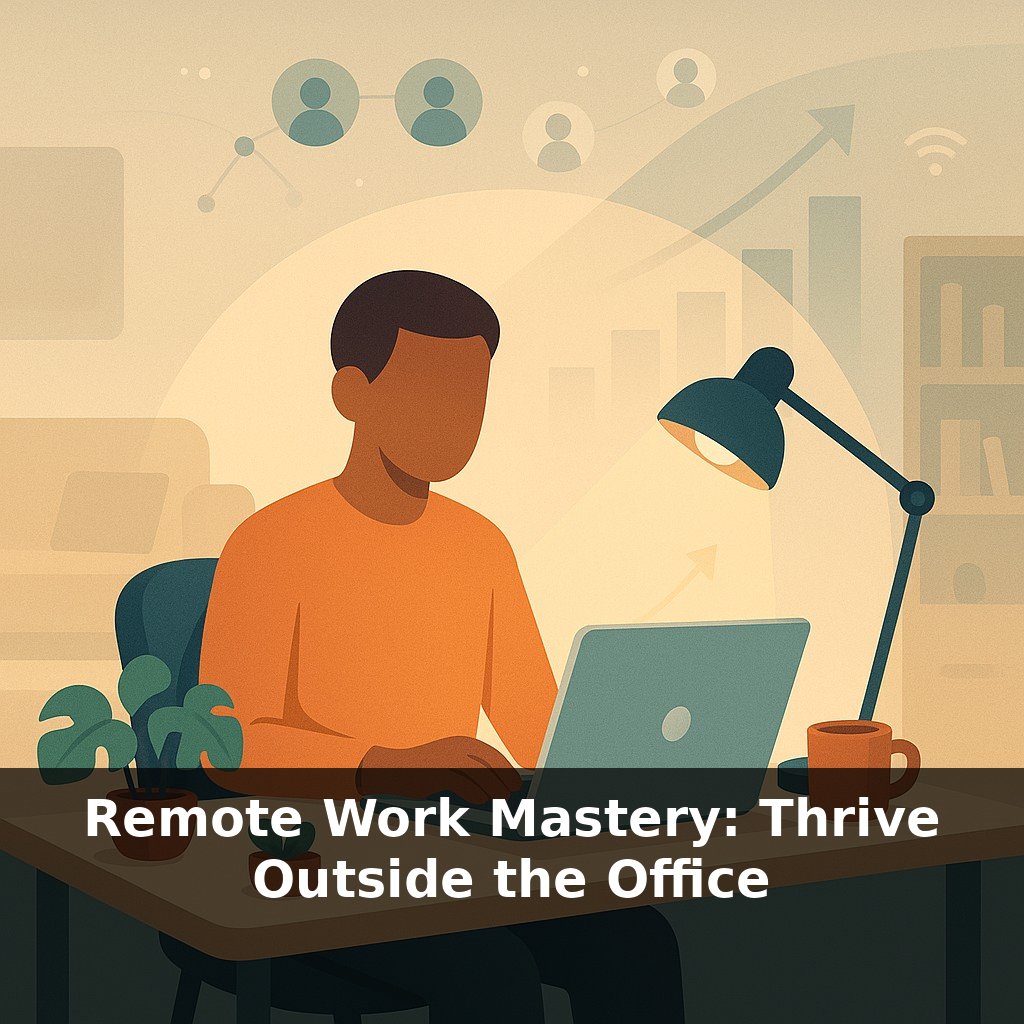
First, space. You don’t need a separate room, but you *do* need a consistent cue that says, “now we’re in focus mode.” Remote-first teams do this with status indicators; you can do it with something physical and repeatable: the same chair, a specific lamp on, noise-cancelling headphones, even a particular mug that only appears during focus blocks. It’s less about aesthetics and more about a ritual your brain can learn to associate with depth. Over a week or two, that cue becomes a shortcut into concentration.
Second, time. Instead of asking “When do I feel like working deeply?” flip it to “When is my mind naturally sharpest—and how do I guard that?” Many people discover a 90–120 minute window in the morning and a smaller one later in the day. Remote-first companies turn similar windows into “maker time.” You can do the same by creating 1–2 recurring blocks on your calendar, labelled with the specific type of work you’ll do—“strategy draft,” “analysis pass,” not just “focus.” Specific labels reduce the friction of starting and prevent those blocks from becoming generic “catch up” time.
Third, digital gates. At home, your tools are both the factory and the interruption system. The goal isn’t zero communication; it’s to make every ping *earn* its way into your awareness. Asynchronous-first teams lean on written updates and clear response-time norms. You can mirror that solo: batch your inbox checks at set times, switch chat status to “heads-down” by default, and keep only one “front door” for new requests (for example, everything lands in a single notes app or task manager, not scattered across DMs, email, and text).
Think of it like adjusting room temperature for sleep: you’re not forcing yourself to rest; you’re nudging conditions toward what your body already wants to do. Your mind already prefers fewer choices and cleaner boundaries. You’re just giving it a home environment that finally cooperates.
At Basecamp, a designer blocks two hours each morning, closes Campfire, and opens a single project doc. Her team knows this isn’t “quiet quitting”; it’s standard practice. She ships a full interface revision by noon, not because she worked longer, but because nothing else was allowed into that window. At GitLab, engineers lean on merge requests and detailed issues; a single, well-written comment replaces a flurry of back-and-forth pings. The structure of their tools makes it easier to stay in one mental lane instead of swerving between tabs.
You can borrow this at home by turning one project into its own “mini-office.” For one week, give it a dedicated slot, a single source of truth (one doc, one board), and a simple rule: questions go into that doc, not into your brain. Notice how much less you rehearse half-finished thoughts while making coffee.
Your challenge this week: choose one recurring task—reports, coding, writing—and run this mini-office experiment three times. Keep conditions the same each session; tweak only one variable (time of day, music vs. silence, standing vs. sitting). By the third run, look for which setup quietly pulled you in fastest and felt easiest to return to after a break. That’s your personal template for at-home deep work—tested, not theorized.
The next wave of advantage won’t come from working more hours, but from defending a few hours with almost surgical precision. As tools quietly take over the easy, repeatable tasks, what’s left on your plate will look less like answering messages and more like solving puzzles nobody has seen before. In that world, your ability to enter long, uninterrupted stretches of thinking becomes less a “nice habit” and more like basic hygiene—something you either maintain or slowly lose without noticing.
Treat this like learning a new recipe: the first tries feel clumsy, then your hands just know what to do. As you repeat your small experiments, notice which cues, tools, and time blocks quietly “set the table” for better thinking. Keep what works, discard what doesn’t. Over time, you’re not chasing focus—you’re training your day to serve it.
Before next week, ask yourself: 1) “If I protected just one 60–90 minute ‘deep work block’ at home each day this week, what exact time would it be, where in my home would I do it, and what specific distraction (phone, email, kids’ TV, kitchen chores) will I deliberately remove or relocate during that block?” 2) “Looking at my current to‑do list, which 1–2 tasks are truly ‘deep work’ (require intense focus and create real value), and how will I redesign my morning routine tomorrow so that I start with one of those before I check messages or open any browser tabs?” 3) “What simple, visible cue can I set up at home—like a door sign, noise‑canceling headphones, or a particular lamp or playlist—that tells both me and everyone else in the house, ‘I’m in deep‑work mode now,’ and when will I test it this week?”