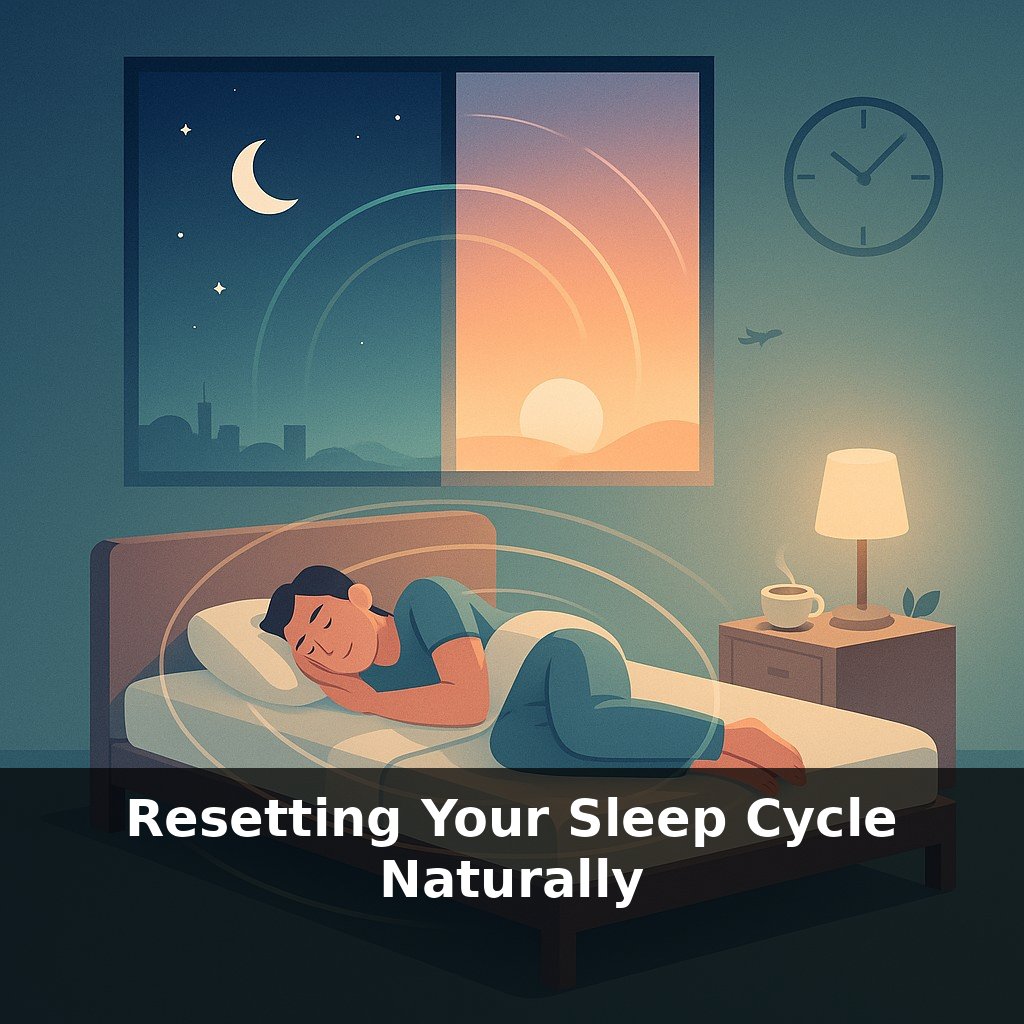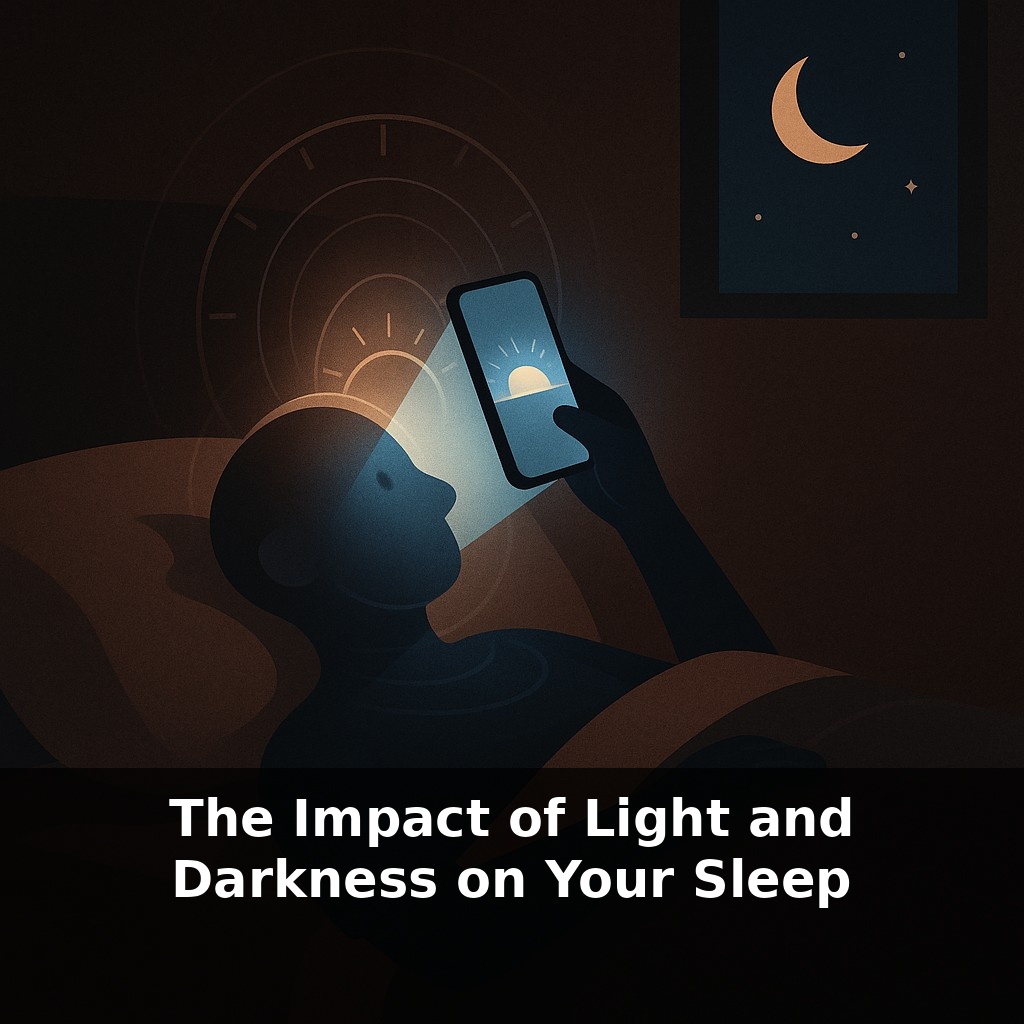
You scroll through your phone in bed for “just a minute”… and suddenly feel wide awake. Here’s the twist: your eyes don’t just see that light, they treat it like a morning sunrise signal. Same bedroom, same time, but your brain thinks the day has secretly started again.
That “fake sunrise” from your screen doesn’t just delay sleep; it quietly reshuffles your whole 24‑hour script. Hunger signals, mood, body temperature, even when your gut digests best—all of it is time‑stamped. So when evening light drifts later and later, your internal schedule does too, and your life starts running on jet lag you never boarded a plane for.
Here’s where it gets tricky: it’s not only how *bright* the light is, but *when* and *what kind* it is. Cool, blue‑heavy light late at night is like slamming an espresso; warm, low light is more like turning the volume down slowly. And morning light isn’t just a “nice to have”—it’s the daily reset that keeps tonight’s sleep connected to tomorrow’s energy, focus, and willpower.
In this episode, you’ll start treating light and darkness as levers you can actually control.
Here’s where most people get stuck: they treat light as background scenery, not as something to *dose* on purpose. Yet your eyes are constantly logging “light data” and sending it upstairs to be time‑stamped. The catch is that your brain cares more about *contrast* than rules. A dim apartment after a dark commute feels like “evening,” but the same lamp after hours of bright daylight barely registers. This is why two people under identical bulbs can have totally different sleep outcomes—what came *before* that light exposure changes the message your brain receives about what time it is.
Most people assume, “Lights on, lights off—how complicated can it be?” The nuance lives in *how much*, *how long*, and *from where* that light hits your eyes.
Your SCN is especially responsive to brightness measured at the eye in lux. Outdoors on a clear morning, you can easily hit 10,000–30,000 lux even in the shade; indoors, you might not crack 500. That gap doesn’t just change how a room looks, it changes whether your brain stamps the moment as “anchor the day” or “weak, ambiguous signal.” This is why a brief coffee on a balcony can do more for your clock than hours under office LEDs.
Timing layers on top of this. Light in the first half of your waking day tends to shift your internal time earlier and boost alertness; the same amount in the late evening pulls your timing later. Your SCN builds a 24‑hour prediction based on light history, then adjusts it slightly each day. A few nights of late streaming isn’t just “one bad bedtime”—it feeds data into that prediction model, teaching your clock that your “day” runs later than it really does.
Color also matters, but not in the way marketing suggests. Those intrinsically photosensitive retinal ganglion cells are most sensitive to blue‑turquoise wavelengths, yet they still respond to strong white light that *contains* blue. A bright overhead LED, even if it looks “soft,” can be more disruptive than a slightly bluer but much dimmer lamp placed at floor level and off to the side.
Direction and distance change the story again. Overhead, face‑level light has a louder impact than a small, distant source. Light that enters from above is particularly salient, because for most of human history, “bright overhead” meant midday sun. A laptop on your knees is often less potent than a big ceiling fixture, even if it *feels* brighter because it’s what you’re staring at.
Think of managing light like managing a tech device’s power settings: you’re not just flipping it on or off, you’re choosing performance modes across the whole day—boost here, battery‑saver there—so the system doesn’t overheat at night or crash in the afternoon.
Think of your day like a budget, but instead of money, you’re spending “light credits.” Each strong hit of brightness early on buys you clearer timing later; waste those credits on late‑night blasts and you’ll be “paying interest” in the form of delayed sleep and groggy mornings.
For example, someone who commutes by bike in daylight, works near a window, and keeps evenings lamp‑lit will often fall asleep faster than a coworker who drives in pre‑dawn darkness, sits in a windowless office, then relaxes under bright kitchen LEDs at 10 p.m. Same city, same job, different light budget, different sleep.
Consider screens too: a tablet at arm’s length on low brightness may nudge you less than a big TV across the room in vivid mode, especially if that TV is the brightest thing your eyes see all evening. Even the pattern matters: jumping between apps with white backgrounds is like rapid‑fire “light notifications” to your clock, while an audiobook in a dim room barely spends credits at all.
A few years from now, your “alarm clock” may be a living room that brightens itself before your eyes open, then slowly dims your whole block at night. Offices could run “light schedules” the way they now run HVAC, tuning brightness for focus in the morning, collaboration in the afternoon, and calm near closing. Think of it like software updates for buildings: instead of fixing bugs in code, we’ll patch the lighting environment to debug groggy mornings, night‑shift burnout, and jet lag on the ground.
Treat this like tuning a playlist: some tracks wake you up, others wind you down, and the order changes the whole feel of the day. You don’t have to nail it perfectly—just notice which “tracks” of light leave you calmer at night and clearer in the morning, then shuffle your routine until the daily mix fits the kind of life you want.
Before next week, ask yourself: 1) “Tonight, what exact time will I turn off overhead lights and switch to just one or two warm, dim lamps—and how different does my body feel when I do that for three nights in a row?” 2) “If I stepped outside within an hour of waking for at least 10 minutes of natural light every day this week, what changes do I notice in how sleepy I feel at night and how alert I feel in the morning?” 3) “Looking at my current evening screen habits, what’s one specific change I’m willing to test for the next three nights—like setting a ‘screens off’ time, using night mode after 8 p.m., or moving my phone out of the bedroom—and how does that shift my ability to fall asleep?”