You might be falling asleep on salad and waking up on ice cream. Research shows that what you eat at dinner can change how much deep sleep you get—without you going to bed any earlier. Tonight’s menu might be quietly rewriting your entire night.
Here’s the twist: your “sleep diet” doesn’t start or end at dinner—it’s a full‑day pattern your brain quietly tracks. The snacks you grab at 3 p.m., the coffee you “need” at 4:30, the late‑night dessert you tell yourself you’ve earned—all of these are like tiny votes for the kind of night you’re going to have.
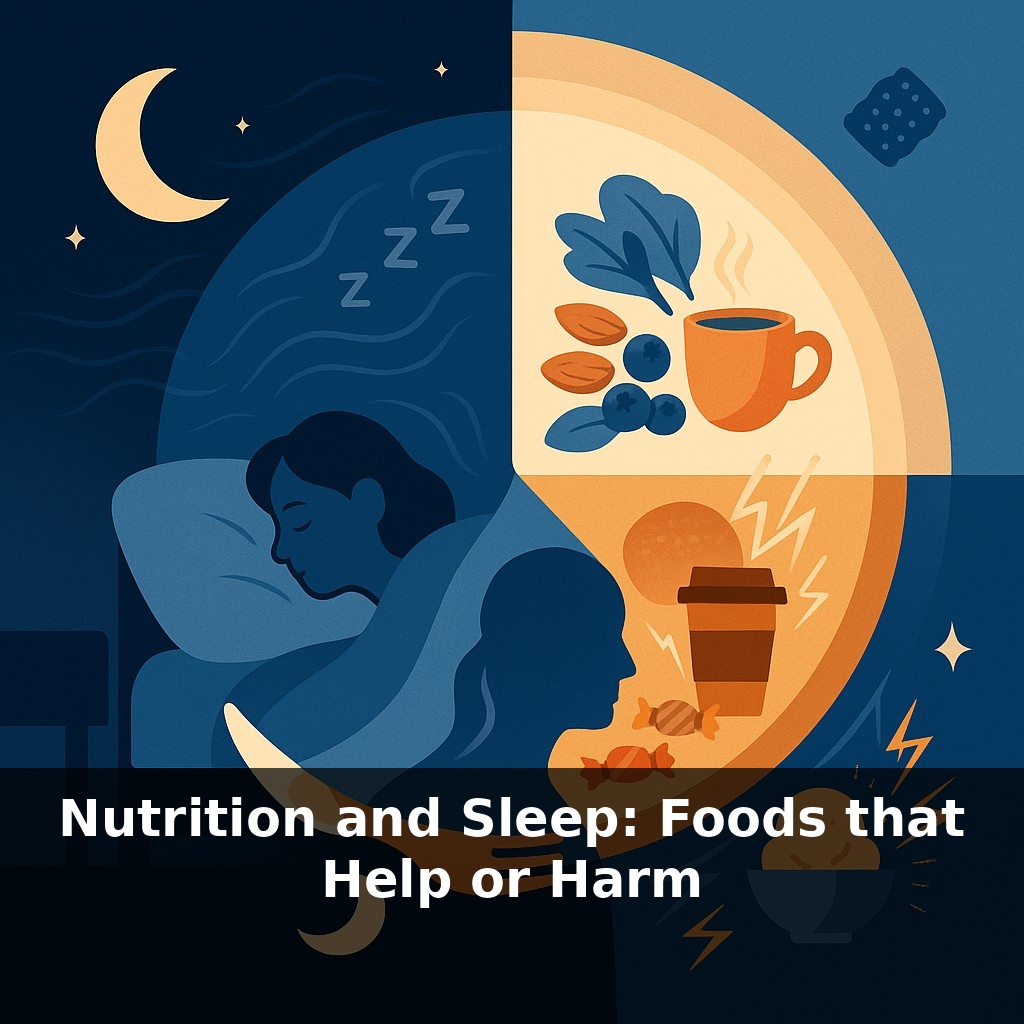
Nutrients such as magnesium, tryptophan, and naturally occurring melatonin are scattered across your meals, not packed into a single “sleep superfood.” At the same time, caffeine, sugar, alcohol, and heavy fats act like background apps on your phone, draining the battery long after you’ve stopped using them. You might fall asleep anyway, but the night can become choppier, lighter, and more fragile.
In this episode, we’ll zoom in on specific foods and timings that quietly tilt that balance toward deeper, steadier rest.
Think of your 24 hours of eating as a series of small “nudges” to your body clock. Some meals tell it, “We’re winding down,” while others shout, “Stay on high alert.” The twist is that your brain doesn’t just care *what* you eat; it also pays close attention to *when* those calories show up. Shift meals later and your internal schedule can quietly drift, a bit like changing the timestamps on all your emails. Over time, that creates tension between when you feel sleepy and when you’re actually trying to sleep—and your nights start to feel out of sync.
Most people think of sleep helpers as pills, powders, or maybe a cup of tea. Yet in study after study, the most powerful levers are ordinary foods eaten at very ordinary times.
Let’s start with the builders—food that gives your brain the raw materials to slide into the night. Tryptophan is one of those builders. When you eat foods like turkey, pumpkin seeds, or chickpeas during the evening, levels of melatonin in your blood rise within about two hours. That means a 6:30 p.m. dinner or 8 p.m. snack can still be nudging your brain toward “lights out” around 9–10 p.m., even if you’re not thinking about sleep yet.
But tryptophan doesn’t work alone. It competes with other amino acids to get into the brain, and it “wins” more easily when you pair it with complex carbohydrates. That’s one reason a small bowl of oatmeal with seeds, or hummus on whole‑grain toast, often feels more soothing at night than a steak or cheese plate. In a 2020 randomized crossover trial, when people ate higher‑fiber, lower‑sugar meals, they spent about a quarter more of the night in the kind of sleep that leaves you feeling restored.
Minerals quietly shape this picture too. Magnesium, found in foods like leafy greens, beans, nuts, and dark chocolate, helps your muscles and nervous system release tension. People who meet their daily magnesium needs from food often describe falling asleep as “sliding” rather than “dropping,” because their body isn’t fighting them.
There’s also timing around stimulation and overload. Caffeine late in the day is an obvious issue, but the less obvious one is heavy or spicy food close to bed. Large late meals increase the chance that acid creeps where it shouldn’t, especially if you lie down soon after. Studies show that eating within an hour of bedtime can roughly double the odds of nighttime reflux—one of those things you might not fully wake up for, but that can still fragment your night.
On the flip side, gentle, predictable timing helps. When your meals land at roughly the same times most days, your digestive system and brain start to anticipate them, much like a computer that boots faster when it knows your usual startup apps. That predictability makes it easier for sleep signals to stand out in the evening instead of competing with late‑breaking “we’re still eating” messages.
Think of your day like building a “sleep playlist” instead of just a single bedtime track. A calm evening actually starts at breakfast. For example, front‑loading protein earlier in the day (eggs, Greek yogurt, tofu scramble) can steady your appetite so you’re not raiding the pantry at 10 p.m. Swapping an afternoon pastry for a piece of fruit plus nuts gives you slower, steadier energy, so you’re less tempted to chase a second or third coffee.
Even small swaps matter: trading fries for a baked potato at lunch, or choosing a grain bowl over a burger, means your evening hunger arrives more gently, making a lighter dinner feel satisfying instead of punishing. People often notice that when they’re less “wired‑hungry” at night, they naturally stop eating sooner.
Your challenge this week: pick *one* daytime swap that makes your evening meal calmer (like moving dessert to earlier in the afternoon), and stick with it for seven days. Then notice whether falling asleep feels less like crashing and more like easing into neutral.
Soon, you might wear a watch that quietly learns which late‑night snack leaves you staring at the ceiling and which one lets you drift off. Food labels could evolve too, not just listing calories but “evening‑friendly” scores based on how people with your pattern actually sleep. Cafeterias and delivery apps may act more like smart thermostats, nudging choices toward calmer nights. Your role shifts from guessing to fine‑tuning, like adjusting sliders on a soundboard until your days and nights feel in sync.
Treat this less like chasing a perfect menu and more like tuning a radio: tiny twists in what and when you eat can clear the static from your nights. You could experiment with a “sleep window” for food—no meals in the last two hours before bed—and notice how dreams, mood, and morning focus shift, the way a lens slowly brings a blurry scene into focus.
To go deeper, here are 3 next steps: 1) Use a free app like Cronometer tonight to log your last two meals and drinks, then compare the timing (especially caffeine, alcohol, and heavy fats) to the sleep graphs in Matthew Walker’s *Why We Sleep* (chapters on caffeine/alcohol) and note exactly what to shift tomorrow (e.g., “no caffeine after 2 p.m.”). 2) This week, cook one magnesium- and tryptophan-rich “sleep dinner” from a specific recipe—like salmon, quinoa, and steamed spinach—from a site such as Harvard’s Nutrition Source, then track your sleep quality for three nights with a sleep app like SleepCycle to see how it affects latency and night wakings. 3) Print or bookmark the “Mediterranean diet for sleep” guidelines from a reputable source (e.g., Mayo Clinic’s Mediterranean diet page) and build a simple 3-day evening meal plan around it, making a grocery list focused on whole grains, leafy greens, nuts, and fatty fish that you can shop for and start using at dinner tonight.