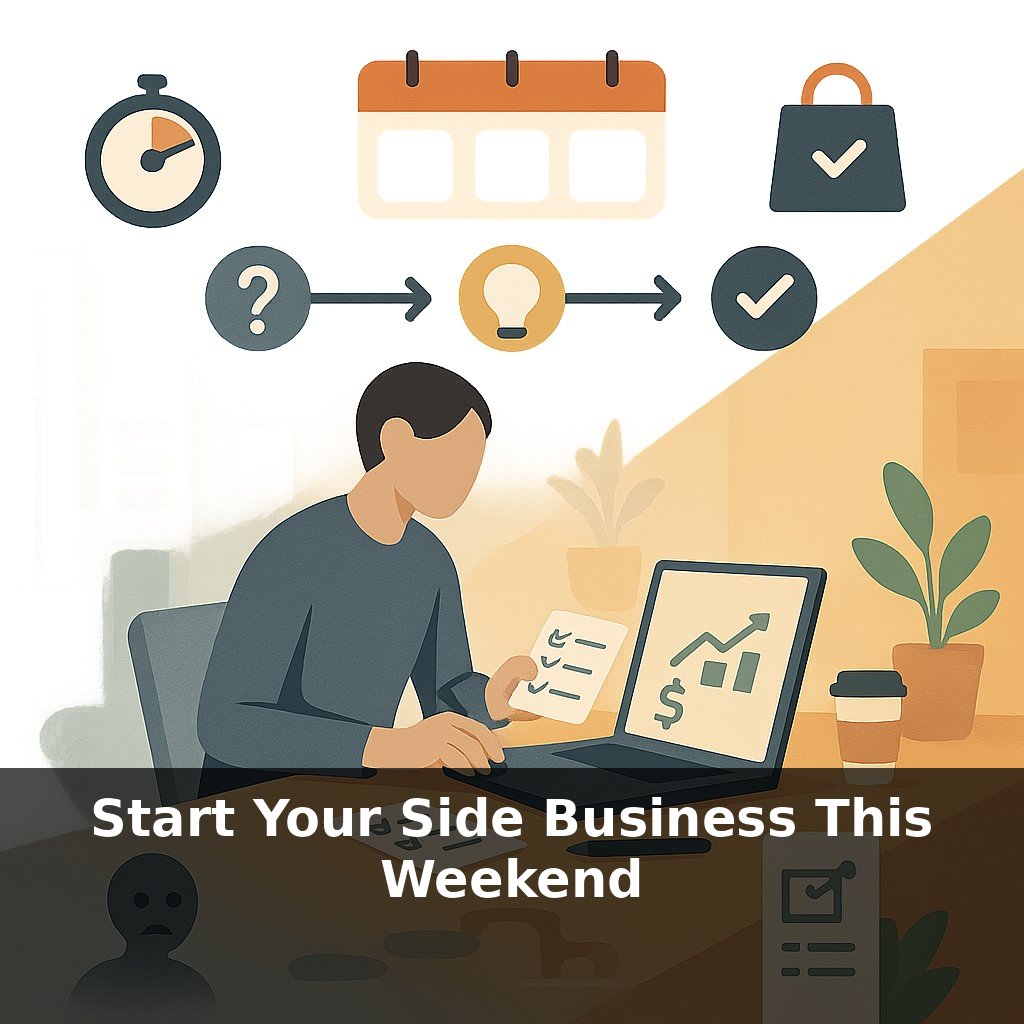
Almost half of buying decisions trace back to one thing most founders ignore: a single conversation. Not a funnel, not an ad—one focused offer to one real person. Today we’ll zoom into that moment, where your “idea” quietly turns into an actual paying customer.
This is the step where most side businesses stall out—not because the idea is bad, but because the founder keeps “getting ready” instead of getting specific. The risk feels personal now. You’re no longer tinkering with a project; you’re inviting someone to bet money that you can actually help them.
So instead of polishing logos or tweaking landing pages for the tenth time, we’re going to do something far more uncomfortable and far more useful: choose exactly who we’re helping first, what tiny but concrete problem we’ll fix for them today, and how we’ll reach them before the weekend is over. Think of it as moving from sketching recipes to actually serving a dish to one hungry, real person.
Here’s the twist most people miss: your first customer isn’t found in a crowd; they’re hiding in a tiny, obvious corner of your existing life. A colleague who keeps complaining about spreadsheets. A neighbor overwhelmed by their inbox. A local café owner who groans about Instagram. The goal isn’t to design a “perfect” business; it’s to spot a pattern in these everyday complaints and offer a fast, low-risk win. Think less “launching a brand,” more “doing a precise favor for money”—like a pop-up stand on a quiet street where you already know who walks by and what they’re thirsty for.
Most people jump straight from “idea” to “website” and skip the quiet but crucial middle step: turning one real person’s situation into a sharp, testable offer. Not a list of features—an outcome they can feel.
Start by shrinking the spotlight. Don’t think “busy professionals” or “small businesses.” Think: “Realtors in my city who lose weekend time manually formatting listing photos,” or “freelance designers who dread writing their own About page.” When you zoom in that far, you stop guessing and start recognizing names and faces.
Next, translate what you do into a before-and-after. What is their life like 10 minutes before they meet you? What could it be like 10 minutes after? Maybe it’s: “Right now, you spend Sunday fixing your email newsletter layout. After, you get a ready-to-send template and instructions, so next Sunday takes 10 minutes instead of two hours.”
This is where your value proposition quietly forms: a specific person, a specific moment in their week, and a specific relief. You don’t need fancy wording; you need a clear “so that…” at the end of your sentence:
“I set up simple automations for solo consultants so that they stop losing leads who fill out their contact form.”
Notice how different that feels from “I do automation consulting.” One is a label; the other is a promise.
Then, make it ridiculously easy to say yes. That doesn’t always mean “cheap.” It means low emotional and practical friction. A defined scope (“one page,” “one process,” “one hour”), a short timeline (“by Tuesday”), and simple terms (“pay by bank transfer after we’re done”). Those boundaries signal safety.
One more lever: stakes. Why this, and why now? Connect your help to a near-term event they already care about—a launch next month, tax season, a conference, a hiring push. Your offer moves from “nice to have someday” to “saves me from a headache I can already see on my calendar.”
Finally, remember that the first “customer experience” begins the moment you suggest working together. How quickly you reply, how clearly you summarize next steps, how you handle tiny hiccups—all of that writes the story they’ll later tell about you. Even a single check-in message (“Here’s where we are, here’s what’s next”) can tip someone from nervous to relieved.
Think of this like baking a single test batch of cookies for a neighbor before opening a bakery. You’re not trying to feed the whole town; you’re proving that one person will happily come back for more.
For example, say you’re handy with data. Instead of “analytics consulting,” you offer: “I’ll clean and visualize last month’s sales for one local shop, so they can spot their three best products at a glance.” You message the owner on Thursday, deliver a simple dashboard on Sunday, and close with: “If this helped, next month I can automate this so it updates without you lifting a finger.”
Or you’re good at writing. Rather than “content services,” you propose to a fitness coach you know: “In one afternoon, I’ll rewrite your ‘About’ section and one service description so visitors instantly know who you help and how.” You share a short Google Doc, ask two specific questions, then send a polished version and a loom walkthrough. Each small, done-with-care project becomes a story your first buyer can’t wait to retell.
AI is quietly turning “Sunday experiment” into “same-day micro business.” You can sketch an offer over coffee, then let tools draft 10 tailored outreach messages before lunch. Soon, models will predict which tiny niche is ripest this week, like a weather app for demand: “Photographers in your city are hunting for faster editing help right now.” Your job shifts from grinding through tasks to choosing which signal to follow and showing up as a real human when someone says yes.
Your first “yes” isn’t a finish line; it’s a doorway. Treat it like planting a seed in good soil: follow up, ask what surprised them, notice where they still hesitate. Those tiny signals are clues for your next offer, your next message, even your pricing. Keep iterating in public, and each small promise you keep quietly invites the next person in.
To go deeper, here are 3 next steps: (1) Use **Canva Whiteboards** (free) to sketch a 1-page “Sunday Offer” that clearly states your result, price, and deadline, then paste that into a simple landing page using **Carrd.co** so you have a real link to send people today. (2) Open **Apollo.io** or **LinkedIn Sales Navigator** and build a list of 25 people who already experience the problem you solve (same job title/industry mentioned in the episode), then send each a short DM offering your “Sunday Offer” free or discounted in exchange for a 20-minute Zoom call this week. (3) Before those calls, binge the first 3 chapters of **“$100M Offers” by Alex Hormozi** (audio or Kindle) and use his value stack formula to tighten your promise and bonus list, then immediately update your offer page so it reflects what you learned before the end of the day.