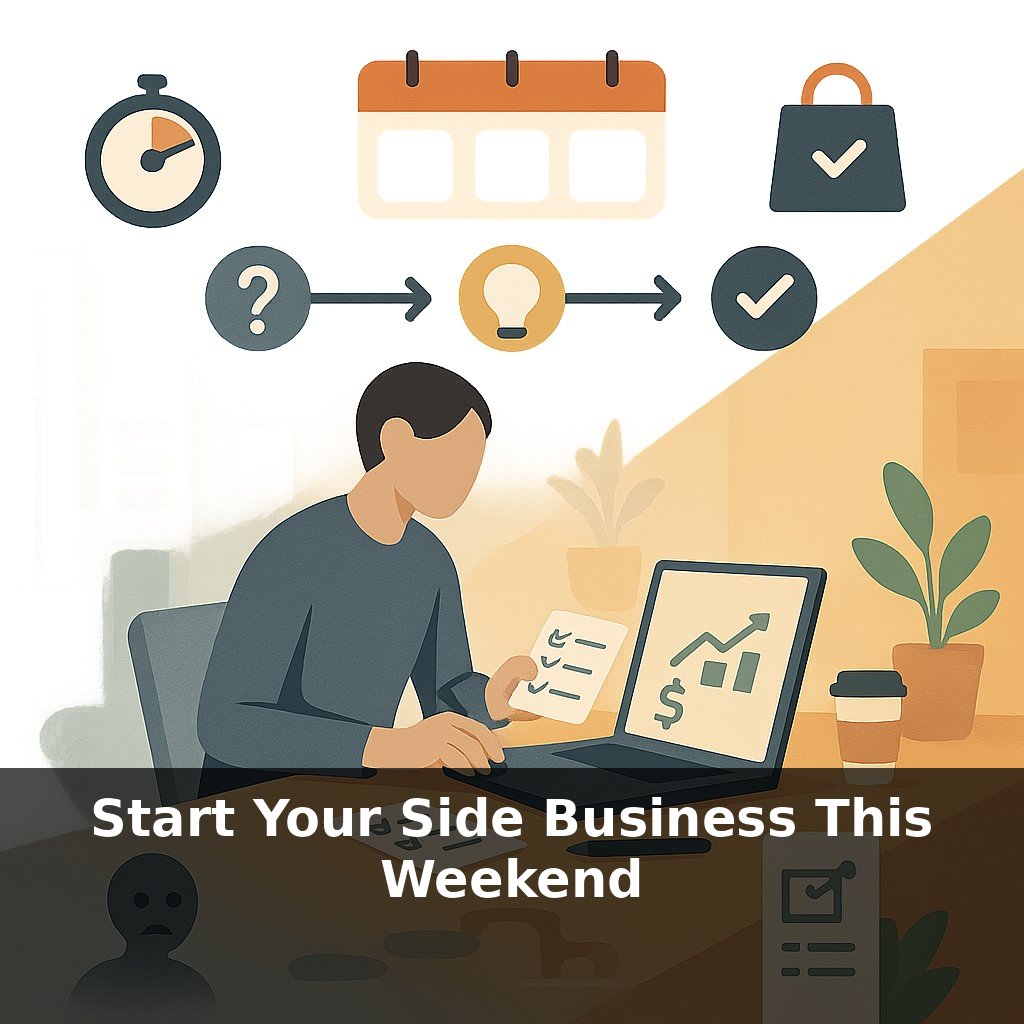
About half of full‑time workers quietly run a side business. Yet most never cross even a modest extra paycheck each month. In this episode, we’ll step into that tipping point moment—where your idea stops being “cute project” and starts reliably covering real bills.
36 % of side‑hustlers are already at $1K/month or more—while working full‑time. The difference usually isn’t a genius idea; it’s what they do with their limited hours after work.
In Week 1, we focused on proving that someone will pay you. This week, we shift from “Can this work?” to “How do I make this pay me every month without burning out?”
You’re no longer hunting for random wins. You’re looking for a small set of actions you can repeat, then gradually hand off to simple systems. Think of how a good recipe works: once you’ve nailed the taste, you standardize the steps so anyone—or anything—can follow them.
We’ll zoom in on two levers: how new customers find you again and again, and how much of the boring, repeatable work you can automate so you’re not trading every evening and weekend for that extra $1K.
Most people jump from “This works once” straight to “How do I make this passive?” and stall in the gap. The missing middle is a boring phrase with huge power: reliable systems. Not flashy dashboards—just clear answers to: Where do my customers actually come from? What makes them buy again? And which steps absolutely must happen every single time?
This is where 80/20 thinking becomes real. You’re hunting for the few inputs that reliably create money out the other side, then using simple tools to make those inputs happen on schedule, even when you’re stuck in meetings.
Think of this week as upgrading from “trying a bunch of stuff” to running controlled experiments.
Start with customer acquisition. Not “marketing” in the vague sense—literally: how does a stranger go from never having heard of you to sending you money? List the last 5–10 sales. For each, trace the path back: Where did they first see you? What did they look at or ask before buying? What finally tipped them over the line?
You’re looking for patterns, not perfection. Maybe three people came from a single Reddit post, two from a friend’s referral, and one from a tiny newsletter mention. That’s already a signal: double down on the path that shows up most often and design a repeatable version of it.
Now layer in simple structure: a weekly “growth block” where you only work on getting eyeballs and conversations. For example: - Every Tuesday: publish one useful post in the best‑performing channel. - Every Thursday: send one short, value‑driven email to your list with a clear offer. - Every Friday: personally follow up with warm leads or past customers.
This isn’t about doing more; it’s about making the most likely-to-work actions non‑negotiable and scheduled.
Next, look at fulfillment and operations. Walk through your last few orders or clients and write down each step in painful detail: intake, payment, delivery, follow‑up, bookkeeping. Anywhere you write the same thing twice, copy‑paste the same info, or set the same reminder is a candidate for automation.
Start with tiny, boring wins: - Automatically send an invoice when someone fills a form. - Auto‑tag new customers in your email tool and send them a welcome sequence. - Log payments into a simple sheet without you touching it.
These are small, but they claw back real hours and mental bandwidth. Each mini‑system turns a fragile, memory‑based process into something the tools can handle while you’re doing your day job.
Finally, combine these pieces into “loops”: each new customer should be nudged to bring in the next one or come back themselves. A referral link in your delivery email, a simple “How did we do?” survey that leads to a testimonial, a discount for repeat orders—tiny hooks that recycle each win into new chances to earn.
A chef doesn’t redesign the whole menu each night; they refine one dish until it sells out, then prep it so the line can crank it out fast. Treat your next $1K like that dish. Pick one offer that people already say yes to, and tighten everything around it: a single, clear promise, one main way to buy, one main place you consistently show up.
Concrete example: a designer notices all her orders cluster around “podcast cover art.” Instead of adding services, she trims. One fixed-price package, a simple booking form, auto-sent prep questions, Stripe link, and a scheduled delivery window. Then she stacks a loop: every delivery email includes a short request—“Know a podcaster who needs cover art? Forward them this link and I’ll upgrade one of your graphics for free.”
Another angle: use email like a slow-cooking stew on the back burner. A short weekly tip plus a soft mention of your offer keeps people warm without live chatting every night. Over a month, that quiet rhythm often outperforms loud one-off promos.
If AI tools keep compounding, the real leverage won’t be finding time—it’ll be deciding what *not* to hand off. Think of it like weather patterns: once you spot the winds that usually bring rain, you plan your crops around them instead of checking the sky every hour. As agents handle more support, outreach, even light sales, your edge shifts to designing clear offers, ethical boundaries with employers, and tiny recurring models that still feel human, not robotic, to the people paying you.
You don’t need everything polished to hit that first $1K; you just need one path that works “well enough,” then turn it up a notch. Treat each small win like a lab result: save what worked, retire what didn’t, and keep iterating. Over time, you’re not just earning more—you’re quietly building proof that your skills belong in the market.
Before next week, ask yourself: 1) “If I had to earn my first $1K this month with just one offer, which exact problem would I solve, for which specific person, and how would I describe that in one clear sentence they’d instantly ‘get’ after a long workday?” 2) “Looking at my current schedule, what two 30–60 minute blocks this week can I protect (like meetings with my boss) to do only revenue-focused tasks—sending DMs, following up with warm leads, or making concrete offers—instead of tweaking logos or thinking about ‘someday’ plans?” 3) “Who are three people already in my existing network (coworkers, LinkedIn contacts, past clients, friends of friends) that I can reach out to today with a specific, results-focused offer—no landing page, just a simple message and a clear next step?”