You will touch your phone dozens of times today and barely remember a single tap. In one moment, it’s a quick check; a few swipes later, your mood has shifted and your focus is gone. The paradox is this: we feel in control online, right up to the moment we realize we’re not.
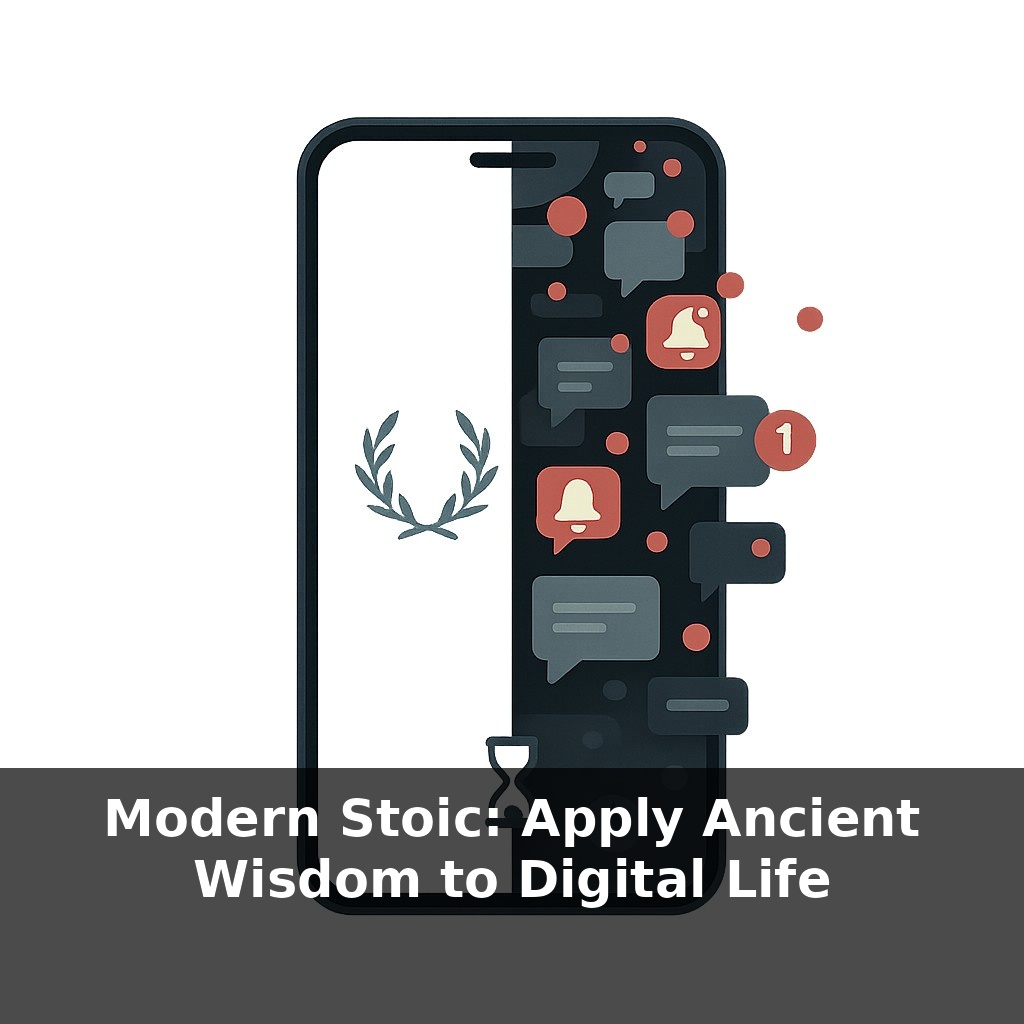
Your phone isn’t just a tool anymore; it’s part of your mental environment, like the weather you live in. Alerts, badges, and endless feeds create a kind of digital climate—sometimes sunny and productive, often stormy and distracting. Stoicism enters here not as nostalgia for a simpler past, but as a surprisingly sharp operating manual for this always‑on world. Marcus Aurelius was writing between battles, not on a mountaintop; his notes were field instructions for a mind under siege. Modern research backs this up: the same reflective questioning used in CBT and attention training can turn your notifications, timelines, and apps into a live practice ground. Instead of treating the internet as an enemy, we’ll use Stoic principles to redesign how you move through it—so your phone becomes less like a slot machine, and more like a well‑stocked toolbox you open on purpose.
Most of your digital stress doesn’t come from the internet itself, but from tiny, unexamined micro-choices: Do I open this notification? Do I reply now? Do I scroll a bit more? Each tap feels trivial, yet strung together they form the habits that shape your day. Modern attention research shows that every context switch carries a “restart cost” for your brain, like repeatedly stopping and reheating a meal instead of finishing it in one sitting. This is where ancient practice meets modern design: we can start treating each digital decision as a place to pause, notice, and deliberately choose our next move.
Every time your phone lights up, three stories compete in your head—usually so fast you don’t hear them.
Story one: “Urgent. Now.” This is the automatic, emotional track. A red badge, a half‑seen subject line, a message preview: your body reacts before you’ve consciously decided anything. Heart rate nudges up, attention tilts toward the screen.
Story two: “I should…” This is the social script. “I should answer right away.” “I should stay informed.” It’s powered less by genuine values and more by fear of missing out or letting someone down.
Story three is where Stoicism lives: “What’s actually up to me here?” Not in the abstract, but in this specific moment: this notification, this tab, this urge to check.
Instead of trying to become a willpower superhero, the Stoic move is to redesign these micro‑moments so the third story gets a chance to speak. That means building tiny “speed bumps” into your digital life—just enough friction to notice what you’re about to do.
This is where the dichotomy of control stops being theory and becomes a filter. Before you tap, you have a split second to separate: - What’s yours: whether you open, how you respond, how long you stay - What isn’t: the tone of the email, the news headline, the algorithm’s bait
One practical angle is emotion‑first awareness. Instead of obsessing over screen time totals, watch for the feeling that precedes a tap: boredom in a meeting, anxiety between tasks, a twinge of loneliness at night. The phone is often just a reflexive treatment plan for an uncomfortable state.
Modern data on notifications backs this up: muted alerts reduce stress not because the world changes, but because your body gets fewer false alarms. You’re reclaiming the gap between stimulus and response that Stoics trained daily.
A useful way to think about it: you’re less a passive “user” of apps and more like a head chef in a busy kitchen. The orders (messages, updates) never stop; your job is to decide what actually goes on the stove, what waits under a heat lamp, and what gets sent back. Without that deliberate triage, everything burns, including your focus.
None of this means withdrawing from the digital world. It means showing up to it with parameters. A Stoic online isn’t the person who never checks anything; it’s the one who can say, “Not now,” without an internal battle, because “later” was chosen in advance.
Your feeds and inbox already contain raw material for practice—you just haven’t labeled it that way. Treat one app you use often like a training ground. For example, open your messaging app and scroll until you hit the first three conversations that still stir something unresolved: mild annoyance, guilt, or pressure. Instead of diving in, pause over each name and silently ask: “What outcome here is genuinely mine to shape in the next 10 minutes?” Maybe it’s clarifying a boundary, sending a concise reply, or deciding not to respond until you can do it calmly. This isn’t about being “nice” or “responsive”; it’s about aligning one tiny digital move with your actual priorities.
Analogy: think of this like adjusting a medication dose with a careful doctor. You’re not judging the pill as good or bad; you’re asking, “What amount here actually helps, and when should I take less?” You’re doing the same with attention: calibrating, not quitting.
As AI quietly drafts emails and summarizes meetings, the rare skill won’t be finding information but deciding which inputs deserve a human response. Expect reputation to hinge less on speed and more on discernment: who can ignore noise without missing what matters. Like a city adding bike lanes to car‑clogged streets, workplaces may redesign workflows around protected “deep focus corridors,” where pings pause by default and deliberate action becomes the cultural norm.
Treat your next scroll like stepping into a crowded café: you don’t sit at every table or join every conversation. You choose where to land, how long to stay, and when to leave. Your challenge this week: once a day, close one tab or thread purely because it doesn’t serve today’s priorities—and notice what, if anything, you truly miss.